


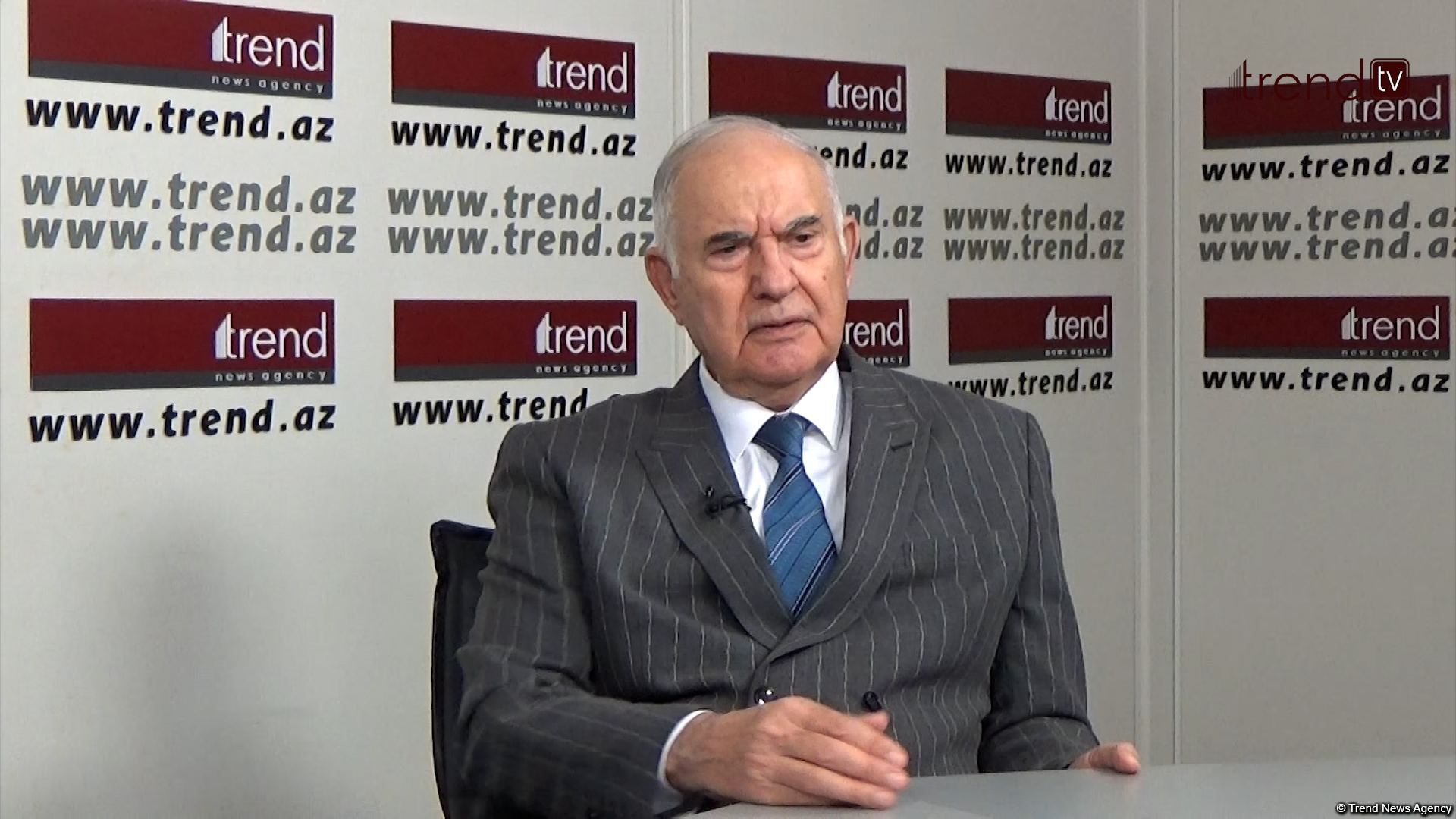

BAKU, Azerbaijan, October 9. Azerbaijan's chairmanship of the Consultative Meeting in 2027 creates additional opportunities for regional cooperation, political analyst Azer Garayev told Trend.
According to him, the 8th Consultative Meeting of the Heads of State of Azerbaijan and Central Asia, held on October 8 in the city of Turkmenbashi, Turkmenistan, marked a significant event in the development of inter-regional cooperation.
He said that the meeting is important in terms of expanding Azerbaijan's relations with Central Asian countries, deepening economic and transport ties, and advancing new regional initiatives.
“Furthermore, the fact that Azerbaijan will assume the chairmanship of this format in 2027 creates additional opportunities for the next stage of cooperation.
Azerbaijan’s participation in the Consultative Meeting as a full-fledged member was made possible by a decision adopted in November 2025. This step has paved the way for developing existing political, economic, and cultural ties between Azerbaijan and Central Asian nations within a broader regional framework. The interests of countries situated on both shores of the Caspian Sea align in many areas. Expanding cooperation in trade, energy, transport, investment, and regional security enhances the practical significance of this format.
In his address, President of Azerbaijan Ilham Aliyev emphasized that Azerbaijan's relations with Central Asian countries have expanded significantly in recent years. According to President Aliyev, Azerbaijan's trade turnover with Central Asian nations increased by more than 50% last year:
"Today, over 400 companies with capital from Central Asian countries are actively operating in our country. In recent years, Azerbaijan has established joint investment funds with Kazakhstan, Uzbekistan, and Kyrgyzstan. Each of these funds has capital amounting to hundreds of millions of dollars.
These indicators demonstrate that cooperation is no longer limited to mere political dialogue and reciprocal visits," the analyst noted.
Garayev pointed out that increasing mutual investments, establishing joint ventures, and pooling production capabilities could pave the way for more resilient economic ties between the countries.
"The statement expressed by President Ilham Aliyev, “We must not limit ourselves to increasing mutual trade; we must also invest together, produce together, and enter foreign markets together”, captures the essence of this approach, which is also significant for making more effective use of the economic potential of the region's countries. Joint production projects and industrial cooperation can expand the results that countries could achieve individually and facilitate access to new markets. The proposal by Uzbekistan's President Shavkat Mirziyoyev to hold the Central Asia–Azerbaijan business forum in Khiva in 2027 also demonstrates an interest in developing economic ties through concrete projects and joint production chains," the analyst said.
He emphasized that another important area of cooperation is transport and logistics. The Caspian Sea serves as a key route connecting Central Asian countries to international markets via Azerbaijan.
“The development of ports, railways, highways, and other transport infrastructure expands the potential of these connections. Meanwhile, the Middle Corridor is gaining increasing importance for the diversification of freight transport between Asia and Europe. According to data released by President Ilham Aliyev, the volume of transit freight along the Middle Corridor increased by more than 10% last year, and by approximately another 20% during the first eight months of 2026. This dynamic not only demonstrates the route's growth potential but also highlights the necessity of further improving infrastructure and logistics services. Azerbaijan's geographical location, transport network, and role in organizing shipments across the Caspian Sea are key factors facilitating access to global markets for Central Asian countries.
Opportunities also exist for expanding cooperation in the energy sector. The transportation of oil from Turkmenistan and Kazakhstan through Azerbaijani territory is a significant aspect of energy ties. Furthermore, Azerbaijan is working with Kazakhstan and Uzbekistan to establish a green energy corridor. Initiatives such as laying fiber-optic cables across the Caspian seabed and the Digital Silk Road project demonstrate that regional ties are not limited to physical infrastructure alone, but that digital connectivity has also become an integral part of cooperation," Garayev noted.
According to him, issues of security and political stability were also a key focus of the meeting.
"President Ilham Aliyev stated that “peace, security, and political and economic stability in our countries underpin all our achievements.” This statement underscores that the sustainability of economic cooperation among the countries of the region depends on a favorable political environment. Strengthening mutual trust between states also bolsters the long-term prospects of transport, energy, and investment projects.
Proposals regarding cooperation in the fields of culture, tourism, science, and technology were also voiced during the Consultative Meeting. President of Kazakhstan Kassym-Jomart Tokayev proposed drafting a declaration on the responsible use of artificial intelligence and creating a unified calendar of regional events. Meanwhile, President of Kyrgyzstan Sadyr Zhaparov put forward ideas for establishing a unified e-commerce platform and developing tourism routes spanning multiple countries. These proposals demonstrate that the format encompasses humanitarian and technological spheres alongside economic issues," Garayev mentioned.
The analyst pointed out that Azerbaijan's chairmanship of the Consultative Meeting in 2027 opens up additional opportunities for the development of all these areas.
"This will enable the country to play a more active role in shaping the regional agenda, advancing joint projects, and ensuring the continuity of dialogue among the states. The views expressed by the presidents of Kyrgyzstan and Uzbekistan that Azerbaijan's chairmanship will give new impetus to cooperation also reflect the attention being paid to this stage.
Thus, the 8th Consultative Meeting has once again highlighted the importance of complementing political dialogue with economic and practical cooperation in relations between Azerbaijan and Central Asian countries. Increasing mutual investments, developing transport routes, expanding energy connections, and implementing joint production projects remain the key areas of this cooperation. Azerbaijan's chairmanship for the coming year could serve as a crucial stage for coordinating existing initiatives and advancing new projects," Garayev added.



