


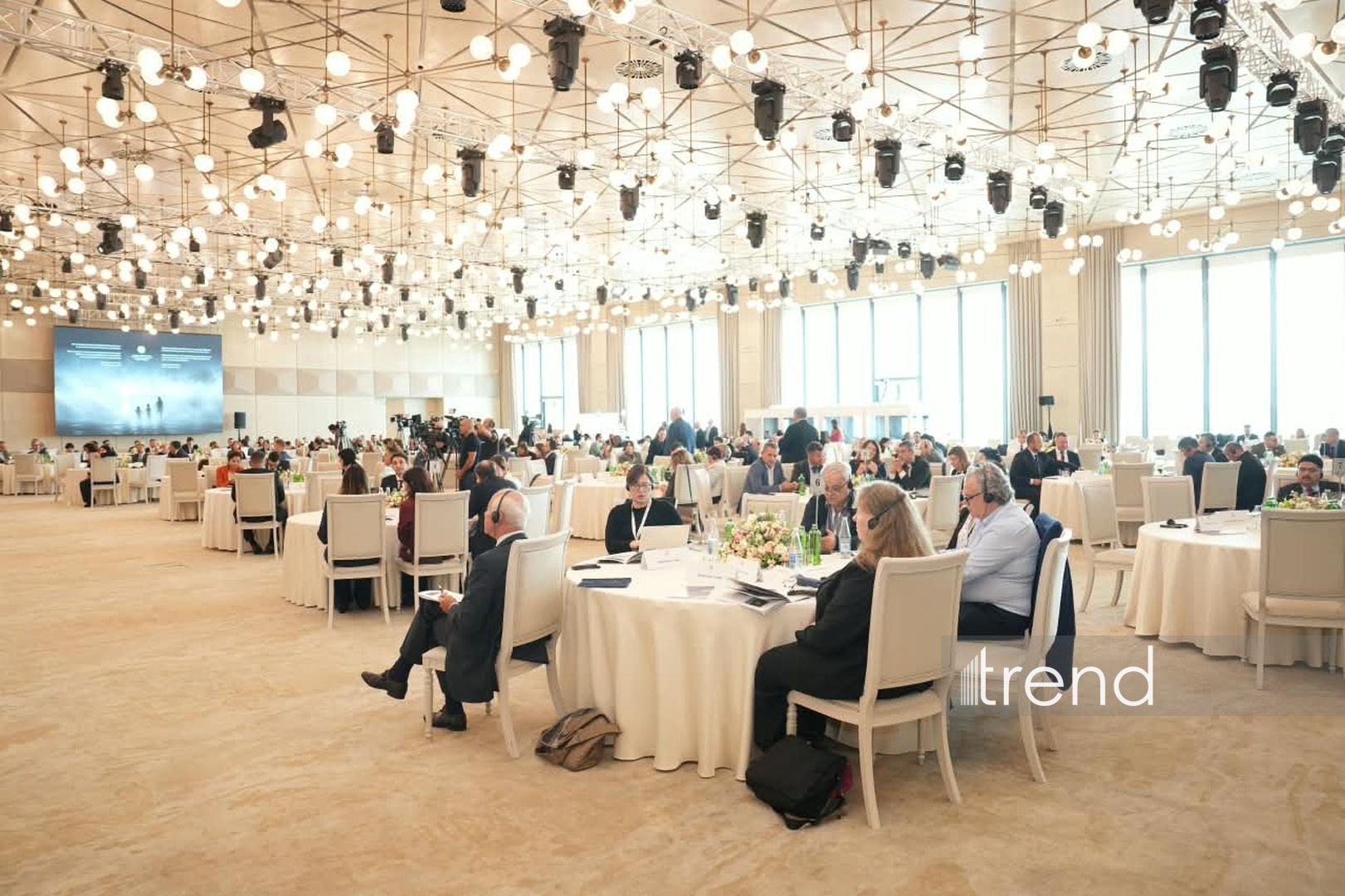

BAKU, Azerbaijan, October 8. A panel session titled "Addressing issues related to missing persons in peace processes: humanitarian cooperation and confidence-building measures" was held as part of the 4th International Conference on Missing Persons (Baku Dialogue) in Baku today.
Speaking at the panel session, a member of the Türkiye-Azerbaijan Inter-Parliamentary Friendship Group, Uğur Bayraktutan, said that it’s inconceivable for Türkiye to ignore the humanitarian challenges facing Azerbaijan.
"A crucial aspect of the work being carried out in Azerbaijan is the development of scientific and institutional capacity. The collection of biological samples from families, DNA profiling, the investigation of burial sites, the application of forensic methods, and coordination among various state agencies are mutually complementary factors in determining the fate of missing persons." "The issue of missing persons must be addressed primarily within a humanitarian framework and through cooperation at the highest level," he noted.
Former Montenegrin Defense Minister Milica Pejanović-Đurišić noted that the issue of missing persons cannot be approached solely through the lens of politics or academic discussion.
"More than 30 years have passed since the wars of the 1990s. Yet, for many families in our region, the war has not truly been left in the past. It continues to manifest in a deeply personal and painful way through unanswered questions regarding the fate of their loved ones.
For a family awaiting the truth, there is often no certainty; consequently, it becomes impossible to find closure or put an end to this pain," she added.
A lawyer at the Supreme Court of Pakistan, Muhammad Sohail Sajid, emphasized that practical cooperation remains the primary recourse for the families involved.
"In this sense, humanitarian cooperation is also a form of justice, and justice is one of the fundamental pillars on the path to peace," he said.
President of the National Commission on Missing Persons, Mohammad Reda Jalkhi, added that Karabakh, part of Azerbaijan's internationally recognized territory, was once under occupation.
"One of the most painful realities of this conflict is the fate of the thousands of missing persons. More than 4,000 Azerbaijanis are considered missing. Behind each of these figures stands a family: a mother still watching the road for a return, a father still awaiting answers, and a child growing up without knowing what happened to their parents.
Therefore, the issue of missing persons cannot be viewed merely as a matter of statistics. It’s a matter of human dignity, justice, and law," he said.
The conference is being held, organized by Azerbaijan’s State Commission on Prisoners of War, Hostages and Missing Persons.
Former heads of state and government, senior officials from international organizations and foreign countries, heads of institutions working on missing-person cases, experts, representatives of non-governmental organizations and human rights specialists, as well as ambassadors and military attachés accredited in Azerbaijan, are attending the event.
One of the key focuses of this year’s discussions is building and strengthening trust among the parties.
The conference aims not only to facilitate discussions but also to contribute to establishing practical and sustainable mechanisms that strengthen trust and cooperation, ensure families’ right to know the truth, facilitate information exchange and expand the use of modern forensic, DNA and technological capabilities.
The event will continue through Oct. 10.



