


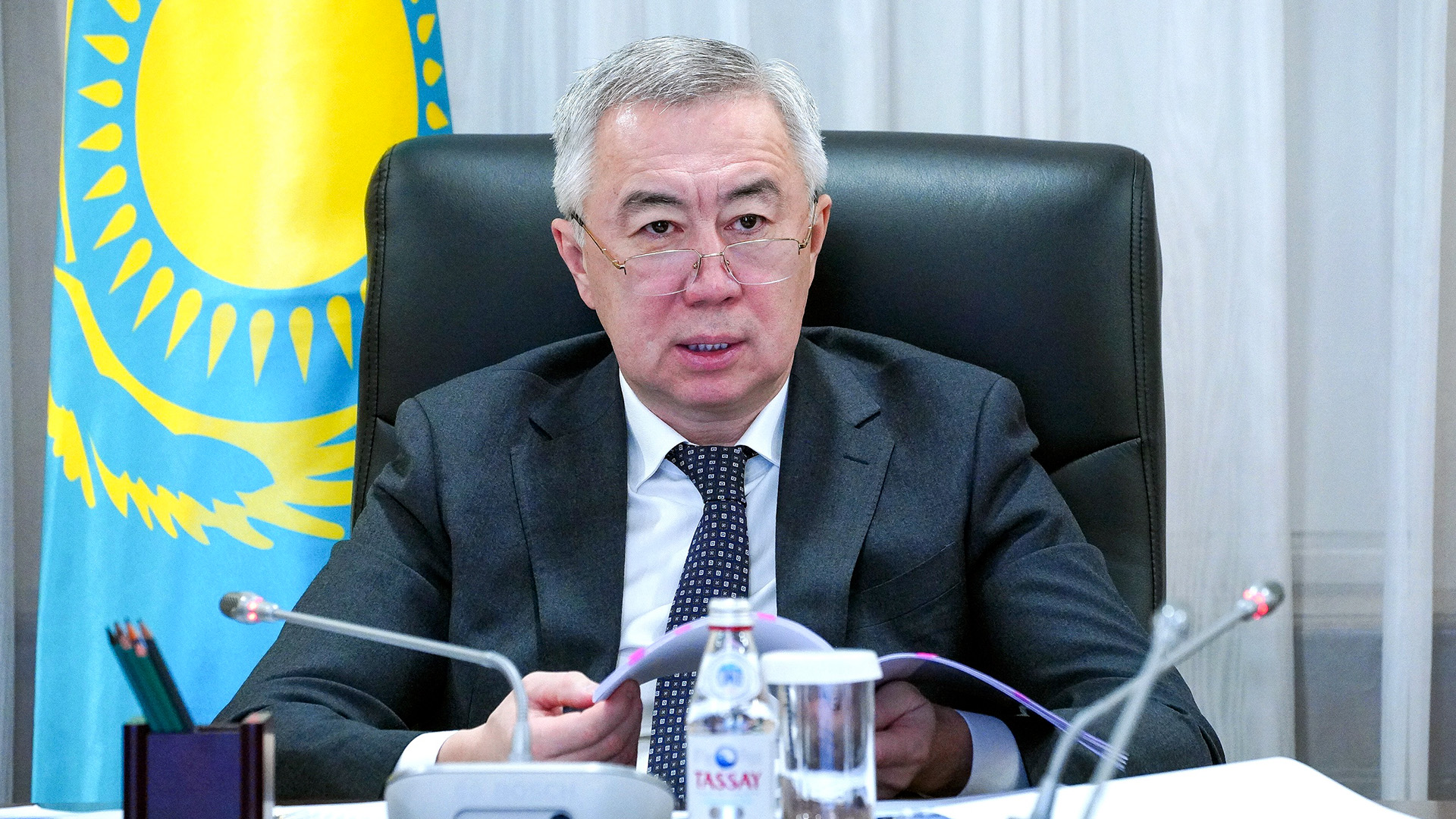

ASTANA, Kazakhstan, January 30. Kazakhstan is launching a tax reform to combat the shadow economy, aiming for a 15 percent target by 2025, Trend reports.
As part of the implementation of the tax and budget reform,
Deputy Prime Minister and Minister of National Economy Serik
Zhumangarin held a meeting to strengthen tax administration.
One of the steps of the fiscal system reform is fighting the shadow
economy, which undermines the stability of economic development. As
noted during the meeting by Vice Minister of Finance Yerzhan
Birzhanov, over the last 5 years, the share of the unobserved
economy in Kazakhstan's GDP has steadily decreased: from 23.69
percent in 2019 to 17.52 percent in 2023, mainly due to the gradual
transition to cashless payments. The highest share of the shadow
economy remains in wholesale and retail trade (3.53 percent),
healthcare (2.04 percent), agriculture, forestry, and fisheries
(1.96 percent), construction (1.92 percent), and education (1.49
percent).
“We see the solution to the long-standing problem of the shadow economy through fiscal reform with the involvement of sectoral, judicial, and supervisory state bodies. Together, they will participate in identifying abuses that lead to the loss of state resources,” noted Yerzhan Birzhanov.
The task for 2025 is to reduce the share of the unobserved economy to 15 percent of GDP. To achieve this, the Ministry of Finance proposes including sectoral issues that hinder the transition of industries from the shadow economy as KPIs (Key Performance Indicators) in the development plans of state bodies.
“The development plans of state bodies should be considered from a new perspective, with a service approach and digitalization of sectors. This will allow us to move away from a formal approach to the implementation of the measures planned under the Comprehensive Plan of Measures to Counter the Shadow Economy. We suggest that state bodies include KPIs with measures to counter the shadow economy in their development plans for 2025-2027,” he emphasized.
The meeting also highlighted IMF recommendations to remove
banking secrecy restrictions when revising the tax code. As part of
strengthening tax administration, it is proposed to change the
methodology for calculating the share of the shadow economy in GDP
and enhance the digitalization of sectors, especially those with
high shadow economy shares.
In place of the previous Comprehensive Plan of Measures to Counter
the Shadow Economy, five sectoral state bodies with low performance
in combating the shadow economy will develop their roadmaps with
approaches and actions. Other state bodies will include KPIs with
measures to combat the shadow economy in their sectoral development
plans.
The Ministry of Finance, as the coordinating and controlling body
for the entire government's comprehensive work in this area, will
strengthen its functions in controlling the shadow economy. All
approaches, steps, and measures of state bodies to reduce the
shadow economy will be compiled into a roadmap.
To note, Serik Zhumangarin also tasked the Ministry of Finance, together with the Ministry of Justice, sectoral state bodies, and the National Chamber of Entrepreneurs "Atameken," to develop proposals to improve the effectiveness of tax audits and control and to propose further measures to reduce the share of the shadow economy.



