


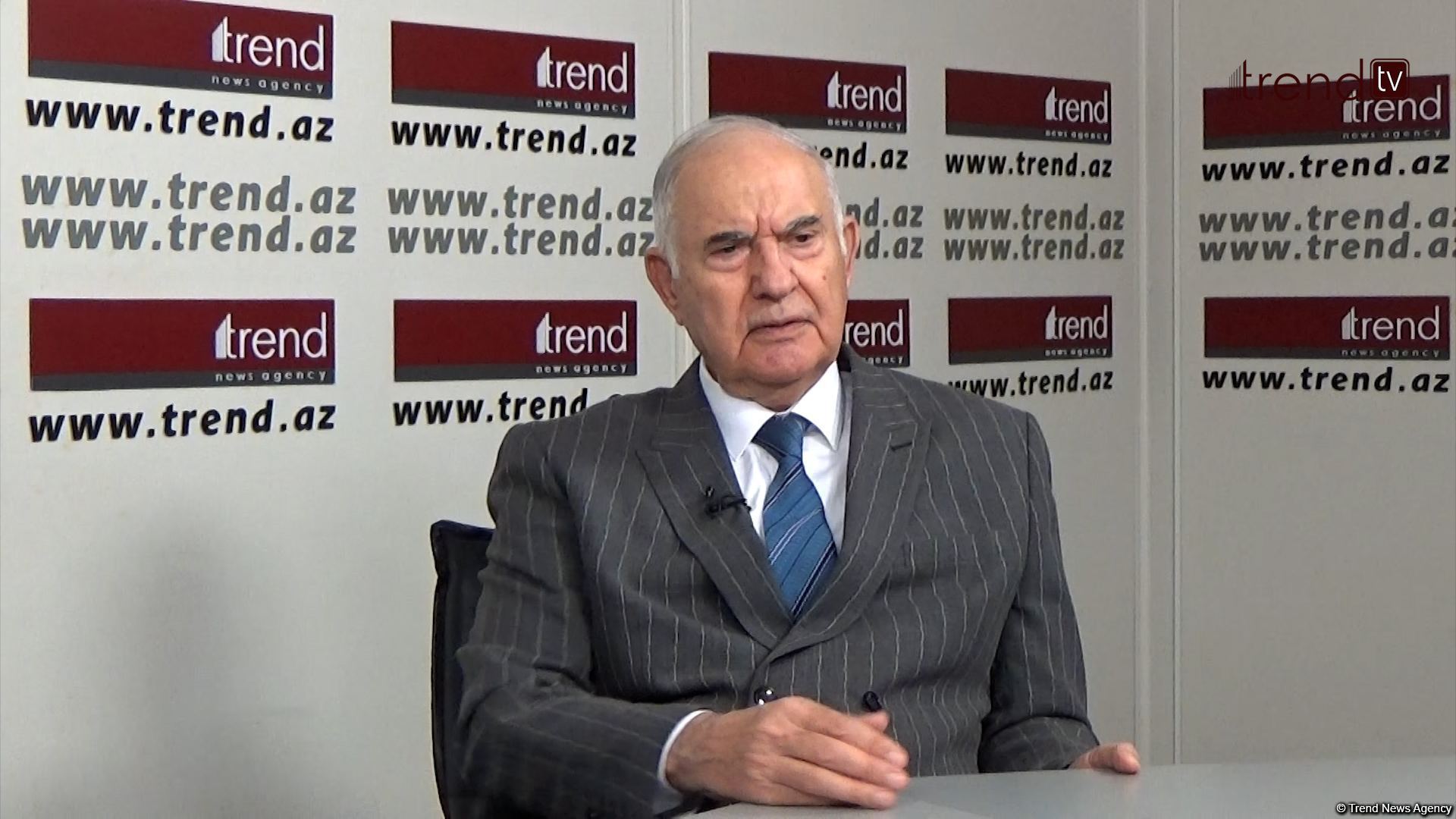
BAKU, Azerbaijan, May 26. The speech of President of Azerbaijan Ilham Aliyev at a meeting dedicated to the country's agriculture is a new roadmap for the agricultural sector, political analyst Azer Garayev told Trend.
He said that the President's statements made at the meeting are considered important messages in terms of regional development, food security, and the future strategy of agriculture in Azerbaijan.
According to the analyst, one of the main points of the speech was the acceleration of the flow from villages to cities and its assessment as a serious socio-economic problem for the state.
"President Ilham Aliyev, calling this process a 'negative trend', said that the main goal is not to ensure a return from villages to cities, but rather from cities to villages.
This approach shows that the government does not intend to limit the development of regions only to infrastructure projects. Although major projects related to gasification, electricity, water supply, roads, schools, and hospitals have been implemented in the last 20 years, the stagnation observed in agriculture in recent years is worrying. It is clear from the words of President Ilham Aliyev that in the new stage, the main focus will be on increasing productivity, reducing dependence on imports, and transforming agriculture into a more profitable sector," Garayev explained.
The analyst noted that one of the main points of attention in the speech was the issue of food security.
"Against the backdrop of wars, logistics problems, energy crisis, and climate change in the world, the state considers increasing domestic production a strategic issue. The figures announced by President Ilham Aliyev show that although Azerbaijan is fully self-sufficient in some products, it remains dependent on imports, especially for wheat, vegetable oil, butter, and some meat products. For example, the country's self-sufficiency in wheat of only 55% was assessed by President Ilham Aliyev as 'unacceptable'. This indicates that grain growing will be one of the main priority areas in the coming years," Garayev also said.
He pointed out that at the same time, the speech also demonstrated the increasing importance of technology and modern management in agriculture.
"President Ilham Aliyev emphasized the importance of conducting electronic analysis of lands, using artificial intelligence and satellite technologies. This approach shows that the government intends to transfer agriculture from traditional methods to a more digital and innovative model. The ideas voiced regarding water supply also attract special attention. The construction of new reservoirs, the restoration of water infrastructure in Karabakh and East Zangezur, and the reconstruction of the Shirvan and Karabakh canals are considered one of the main conditions for the future development of agriculture. According to the plans announced by the President, hundreds of thousands of hectares of land can be provided with modern irrigation systems in the coming years, which will lead to a significant increase in productivity," the analyst said.
He noted that the role of the private sector was also particularly emphasized in the speech.
"President Ilham Aliyev called on both local and foreign investors to invest in agriculture and stated that the state will continue to provide preferential loans, subsidies, and other support mechanisms in this area. According to rough estimates, the upcoming program envisages investments of more than 2 billion manat ($1.18 billion) by the state and more than 3 billion manat ($1.76 billion) by the private sector. This indicates that agriculture will be one of the main economic priorities of Azerbaijan in the coming years.
In general, President Ilham Aliyev's speech gives reason to say that the government considers agriculture not only as an agrarian sector, but also as a strategic direction in terms of regional development, employment, food security, and social stability. The main goal of the new State Program to be adopted in the coming years will be to increase productivity in agriculture, reduce imports, and make life in the regions more attractive," Garayev concluded.



