


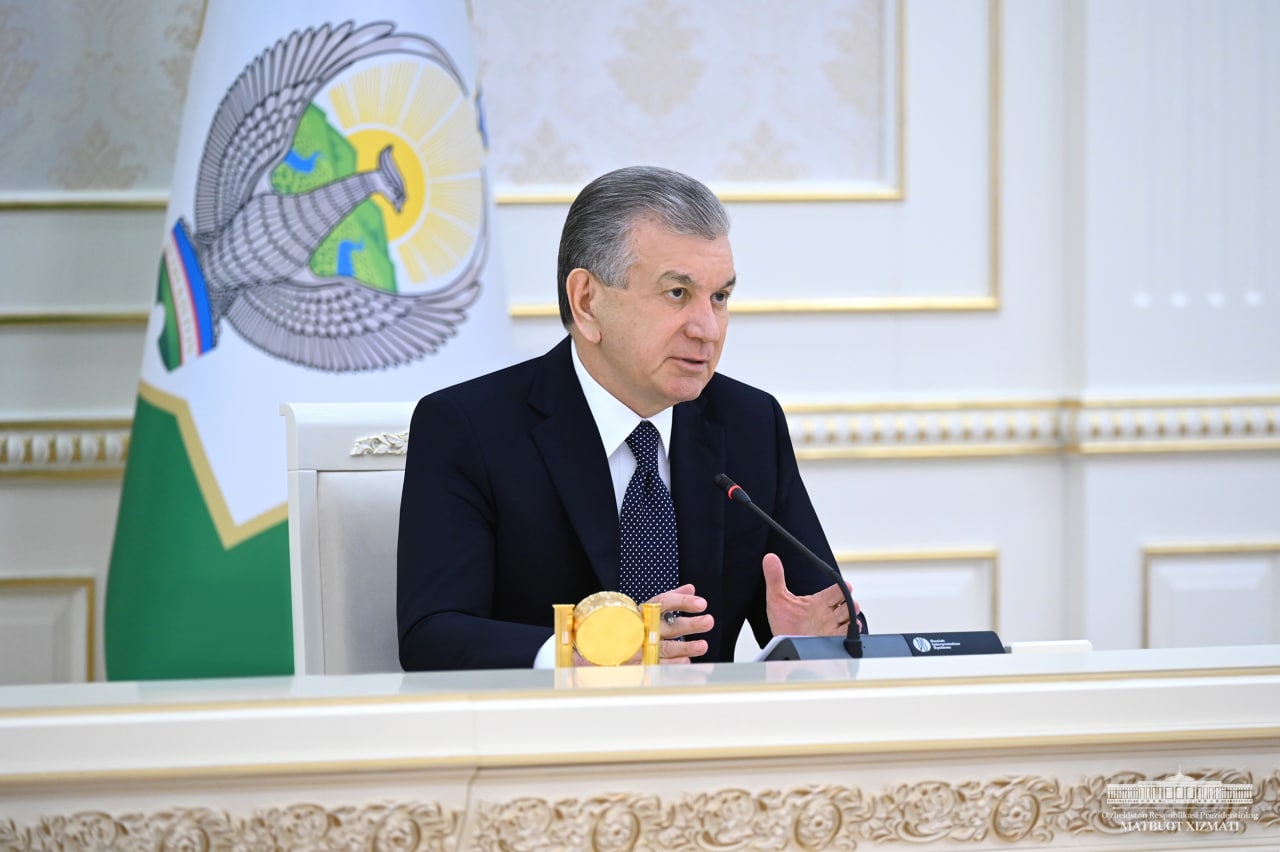

TASHKENT, Uzbekistan, May 26. Uzbek President Shavkat Mirziyoyev chaired a government meeting on improving the use of water infrastructure and mudflow waters, outlining new measures aimed at boosting water conservation, economic activity, and flood prevention, Trend reports via the presedential press service.
The meeting highlighted Uzbekistan’s ongoing efforts to modernize irrigation systems and strengthen water-saving technologies amid growing climate-related challenges.
According to officials, current projects to concrete riverbeds and canals across the country are expected to save 1.3 billion cubic meters of water annually — roughly equal to the yearly water consumption of Navoi region. So far, authorities have concreted 2,000 kilometers of major canals and built 721 kilometers of canals and 525 kilometers of closed irrigation networks and water trays.
The government has allocated 3 trillion Uzbek soms (about $235 million) for the projects, which officials say have improved water supply on 858,000 hectares of farmland and brought 51,000 hectares back into agricultural use.
Mirziyoyev said water infrastructure should be treated not only as a technical system but also as an economic asset capable of supporting tourism, services, and private business development.
Officials said nearly 100,000 hectares of land within Uzbekistan’s water fund areas could be used for tourism, entertainment, and commercial projects, potentially creating 100,000 jobs and generating an additional 220 billion soms (about $17 million) in annual revenue.
As part of the new measures, Uzbekistan will allow sand and gravel extraction in river areas vulnerable to erosion and flooding. Entrepreneurs will also be permitted to participate in cleaning reservoirs, canals, and hydraulic facilities without tender procedures. Land exposed after water levels recede from reservoirs and mudflow basins will be leased through auctions for agricultural production.
The government also plans to launch a digital system for managing water fund land leases, monitoring, contracts, and reporting processes online.
The meeting further addressed growing mudflow and flood risks linked to climate change and increasingly frequent heavy rains. Mountainous and foothill areas in Samarkand, Jizzakh, and Tashkent regions were identified as particularly vulnerable.
Officials said around 690 million cubic meters of mudflow water currently go unused each year along 60 major high-risk waterways. Better management of those resources could help restore 13,000 hectares of land, improve irrigation, and support fish farming projects.
Mirziyoyev instructed officials to adopt an integrated approach to mudflow management that combines flood prevention with water storage, agriculture, energy, tourism, and fisheries development.



