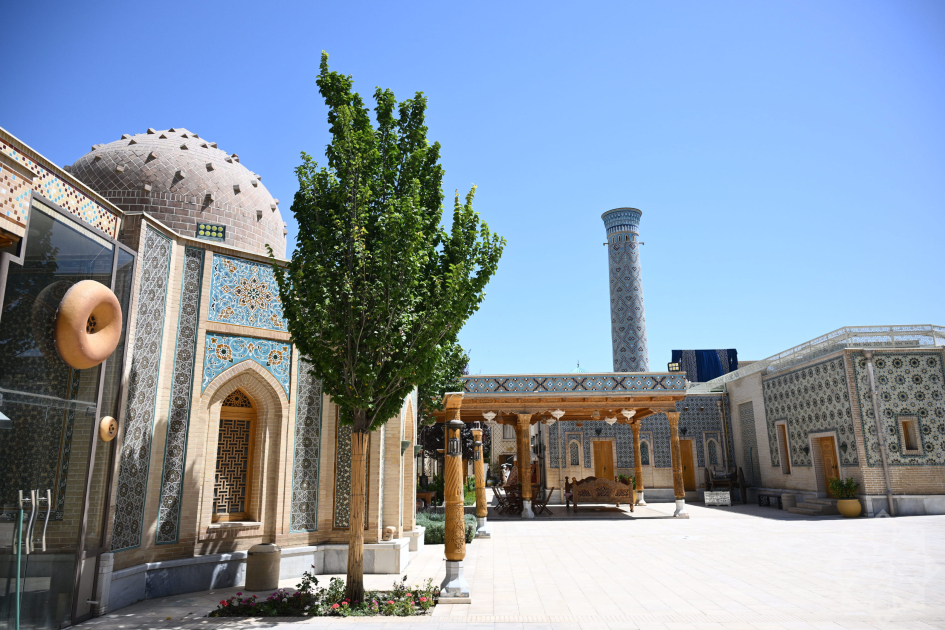
BAKU, Azerbaijan, August 20. A delegation of Azerbaijani media representatives currently visiting Uzbekistan toured the Silk Road Samarkand international tourist center, one of the country’s largest tourism projects.
Twenty representatives from Azerbaijan’s leading media outlets are participating in the press tour. Among the participants is Emin Aliyev, editor-in-chief of the Trend International News Agency.
The complex is located along the Samarkand Irrigation Canal and covers approximately 260 hectares. Eight hotels have been built here, capable of accommodating more than 3,000 guests at a time, along with 14 villas, restaurants, parks, recreational areas, and an international convention center. The 2.2-kilometer-long rowing canal is one of the complex’s central features.
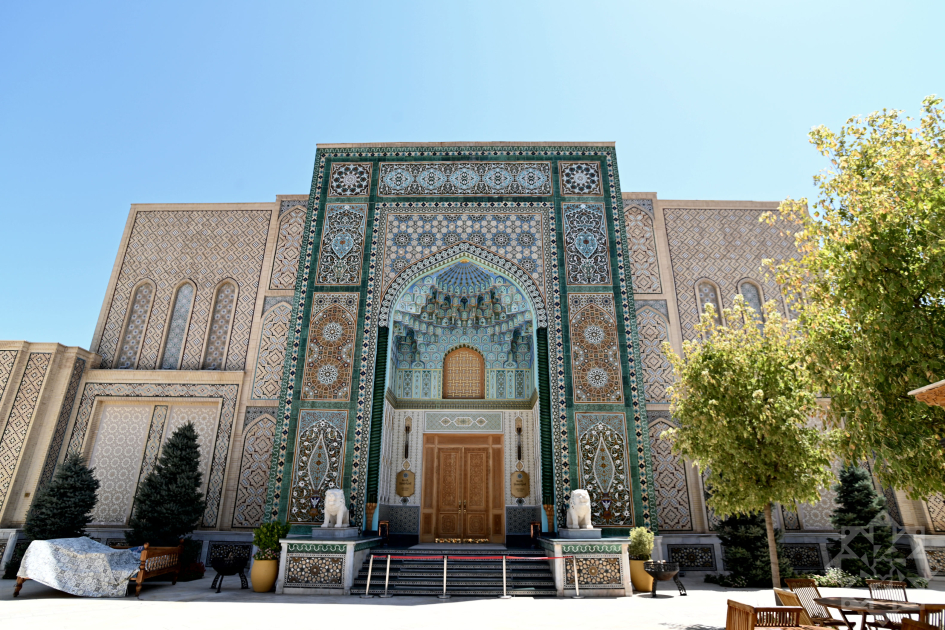
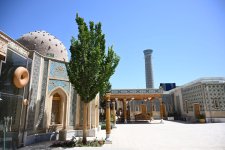
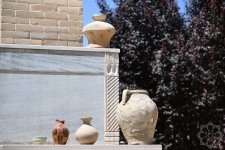
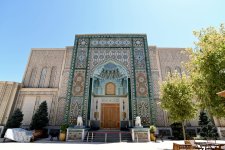
The “Eternal City” historical and ethnographic park holds a special place within Silk Road Samarkand. Covering an area of about 11 hectares, it recreates the atmosphere of an ancient Eastern city with narrow streets, squares, artisan workshops, cafes, galleries, and venues for cultural events. The project concept was developed with the participation of renowned Uzbek artist Bobur Ismoilov. The architectural designs blend motifs from Parthian, Hellenistic, and Islamic cultures.
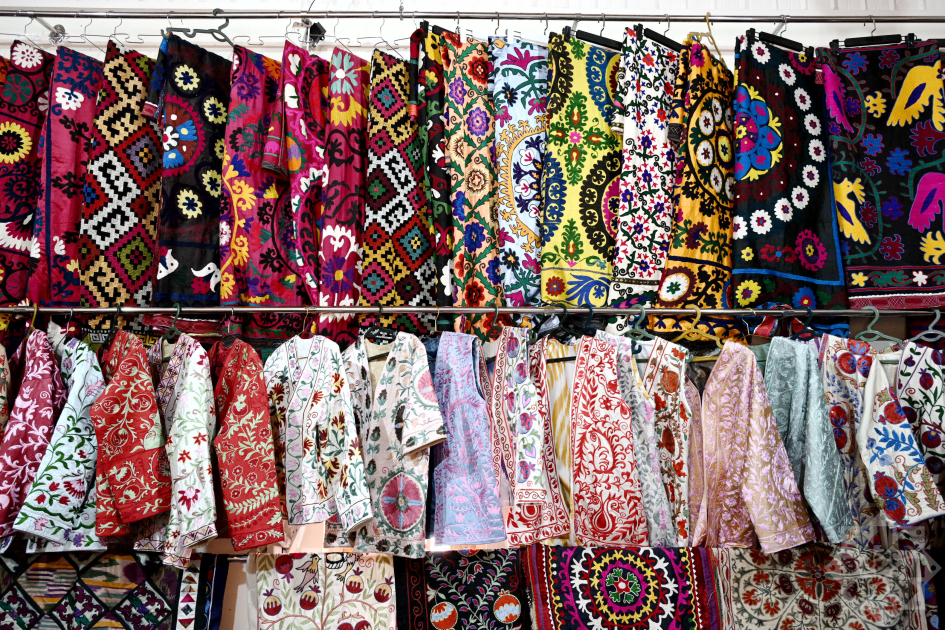
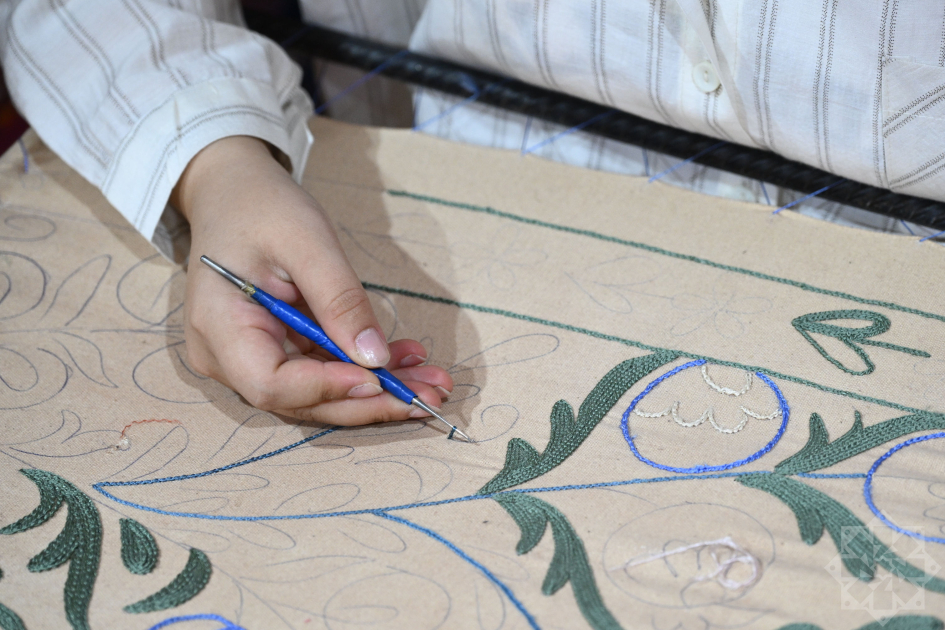
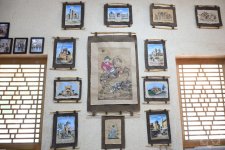
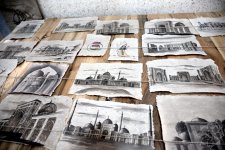
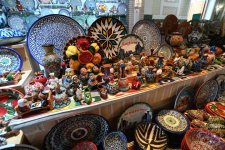
“The Eternal City” showcases traditional crafts from various regions of Uzbekistan, including ceramics, woodcarving, carpet weaving, jewelry making, and the production of the famous Samarkand paper made from mulberry bark.
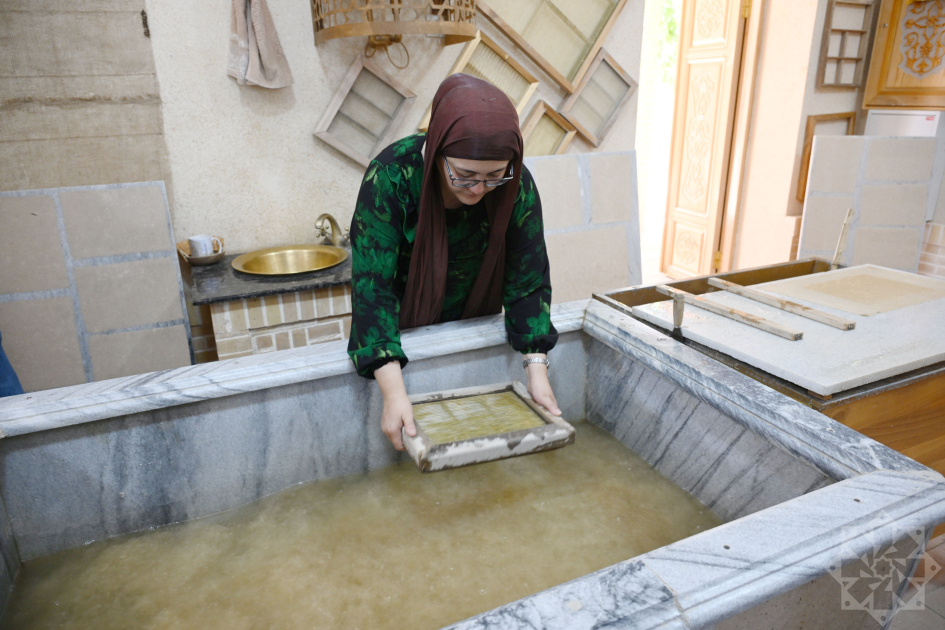
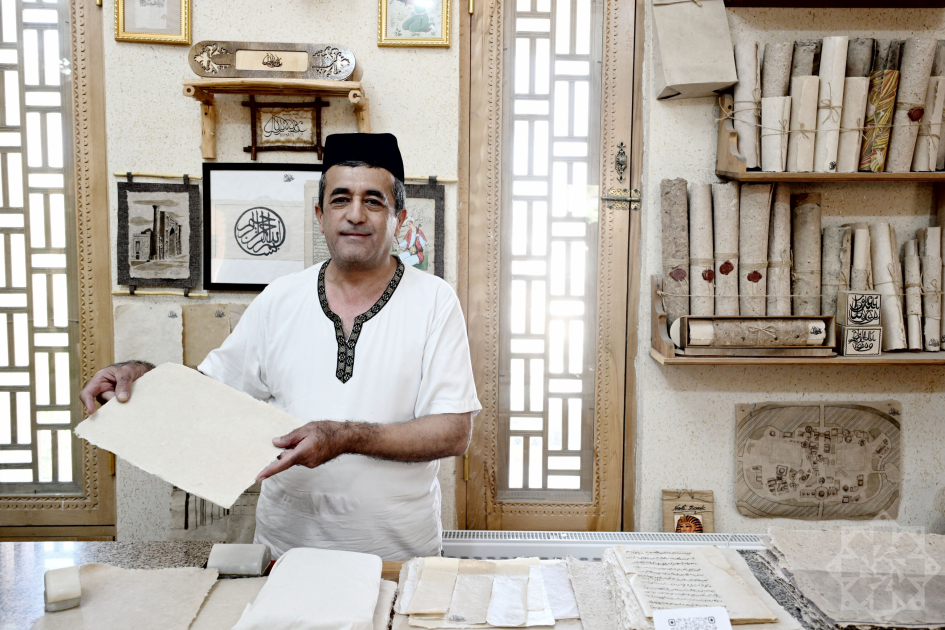
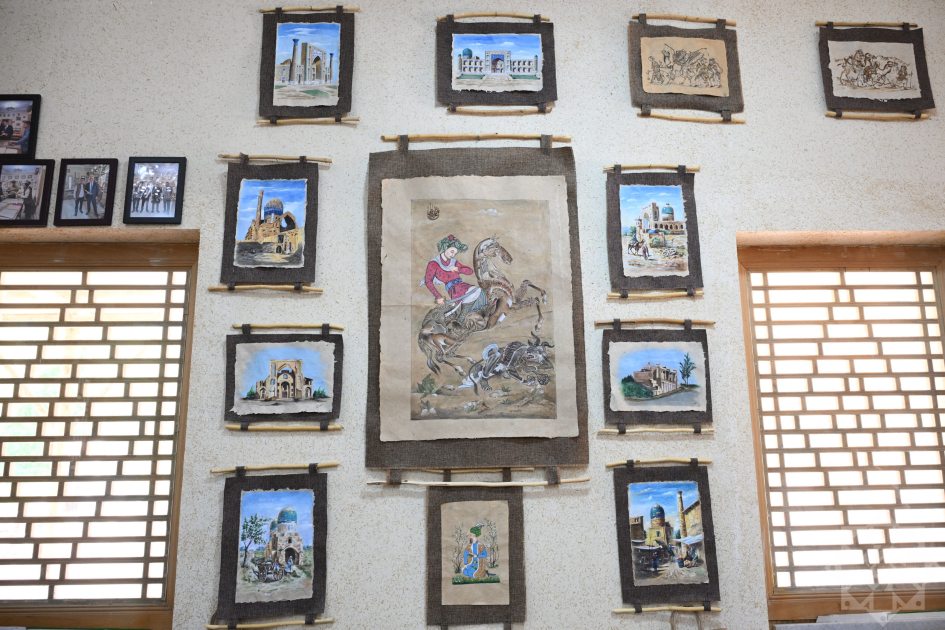
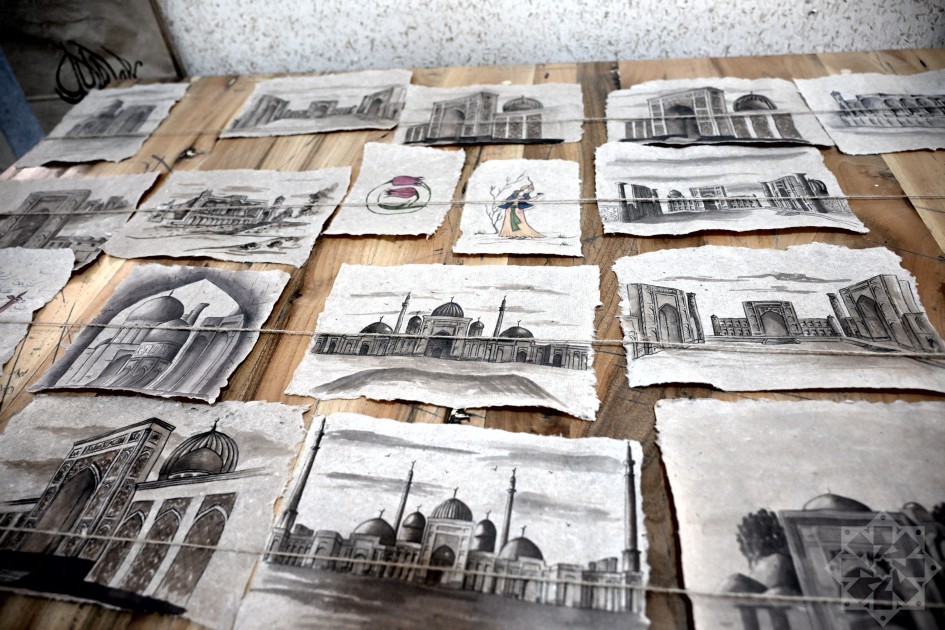
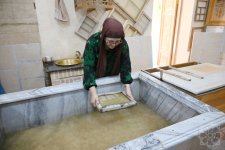
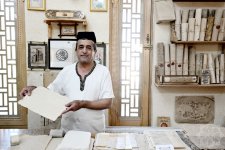
The press tour participants visited Firdavs Umarov’s workshop, where the tradition of making Samarkand silk paper is being revived. According to the master craftsman, he has devoted 25 years to reviving this craft. The paper is made from mulberry bark without any chemical additives: the raw material is boiled, ground, shaped into sheets, and pressed, after which each sheet is polished with a stone. The entire process takes several days.
“Samarkand paper has been known since the Middle Ages and became widespread in Central Asia. Thanks to its durability and smooth surface, it was used for manuscripts, calligraphy, and miniatures,” the master said.
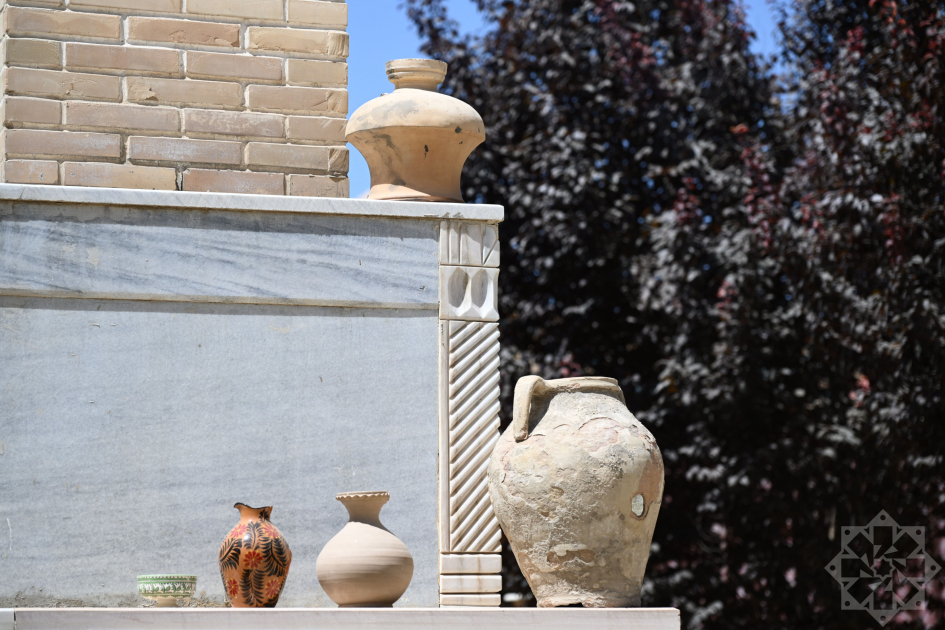
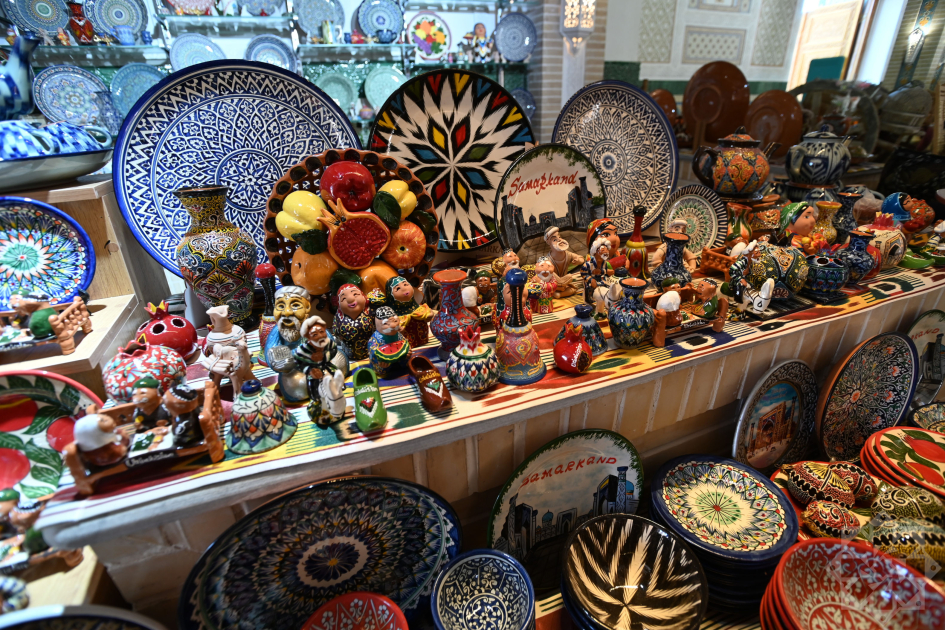
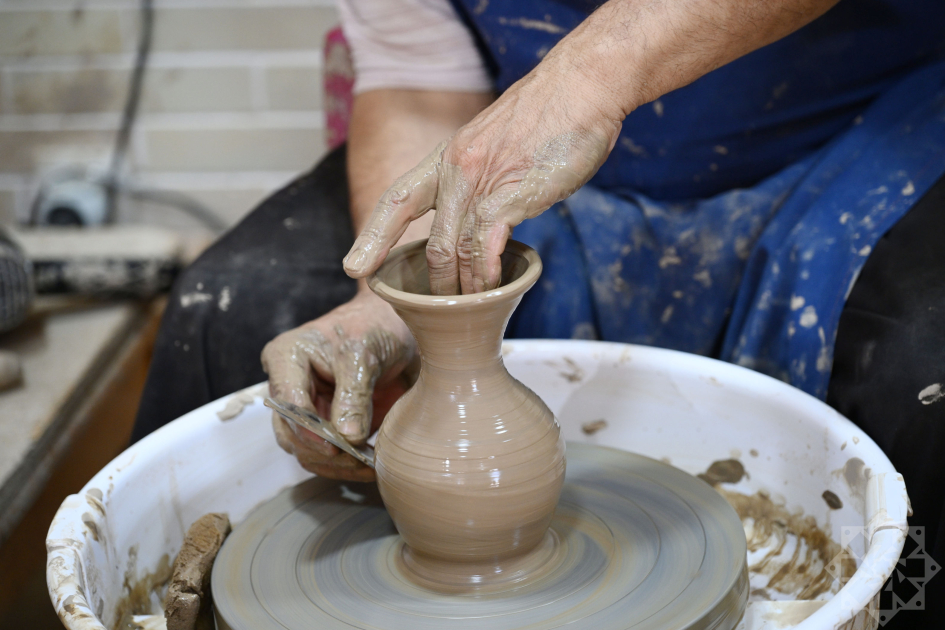
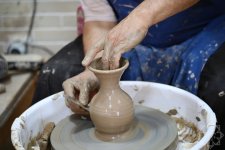
Journalists also got acquainted with the secrets of making Samarkand ceramics. One of the masters, Sharif Azimov, a ceramic artist and potter from the Uzbekistan Academy of Arts, explained that he has been practicing this craft for 56 years. Speaking about his creative journey, Sharif Azimov noted that his interest in the craft began back in his school years. He began working with ceramics under the guidance of the renowned Samarkand master Umarkul Jurakulov.
“I was in eighth or ninth grade at the time. We would visit Umarkul Jurakulov’s workshop, and ever since then I’ve loved this art form, which has been my life’s work for 56 years now,” the master said.
According to him, it was the Jurakulov School that laid the foundation for his professional career.
Today, the master not only continues the traditions of the Samarkand ceramics school but also passes on his knowledge to the younger generation. According to Azimov, his students come from various countries.
“I have many students from Azerbaijan. There are also students from the Caribbean. They are continuing my research,” he noted.
Azimov emphasized that, for him, ceramics is not simply about producing objects, but about continuing Samarkand’s centuries-old artistic tradition.
His own creative method is linked to the study of the history of ceramics and ancient examples. Researchers note that the master carefully studied museum exhibits and historical techniques, and in his work, he developed the traditions of the Samarkand school of ceramics.
Silk Road Samarkand officially opened on August 23, 2022. The project combines hospitality, cultural, medical, business, and recreational infrastructure and is focused, in particular, on the development of international, business, and event tourism.
The complex’s name reflects Samarkand’s historical significance as one of the key hubs of trade and cultural exchange along the Great Silk Road. Today, Silk Road Samarkand strives to combine this historical legacy with modern tourism infrastructure, creating a new international image for the ancient city.