


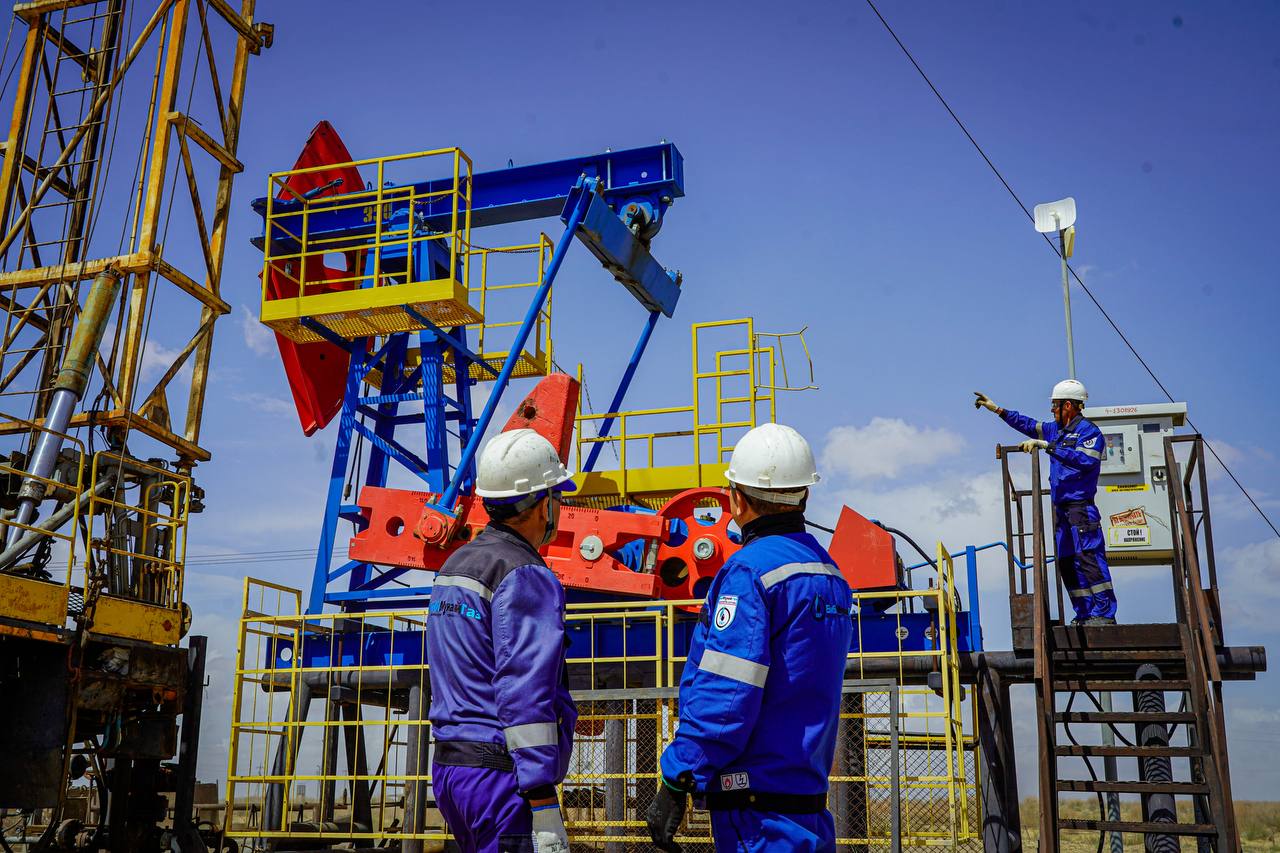

BAKU, Azerbaijan, October 2. Kazakhstan has attracted substantial foreign investment to develop its abundant mineral and petroleum resources, the U.S. Department of State said in its 2026 Kazakhstan Investment Climate Statement.
“Kazakhstan has made significant progress toward creating a market economy since gaining independence from the Soviet Union in 1991. It has attracted substantial foreign investment to develop its abundant mineral and petroleum resources. As of January 1, 2026, the stock of foreign direct investment (FDI) totaled $170 billion, including $35.5 billion from the United States, according to official central bank statistics. Publicly available information suggests U.S. investment in the hydrocarbons sector exceeds official FDI statistics, likely because investments are routed through third countries and because reinvested earnings are not fully reflected in the bilateral FDI data,” the State Department said.
The State Department noted that Kazakhstan has made progress toward economic diversification and digitalization. Despite challenges caused by Russia’s war against Ukraine and associated sanctions, Kazakhstan’s economy has remained resilient, largely due to favorable commodity prices. The country’s total foreign trade continued to grow in 2025, with China replacing Russia as its top foreign trade partner.
The statement noted that the Kazakh government actively engages with foreign investors through formal channels, such as the President’s Foreign Investors Council, an advisory group aimed at improving Kazakhstan’s investment climate, a semi-annual Prime Minister’s forum for U.S. companies, and bilateral discussions.
“Kazakhstan is also a member of the World Trade Organization (WTO) and the Eurasian Economic Union (EAEU). Kazakhstan enacted a new Tax Code in January 2026, which changed taxation for various groups of taxpayers, including non-residents and small businesses, and raised concerns about its enforcement that are still being negotiated with the government,” the statement reads.
The statement noted that President Kassym-Jomart Tokayev’s economic reform agenda aims to diversify Kazakhstan’s economy, spur industrial development, and reduce state participation.
However, the report added that increasing regulation, localization and import substitution policies, and corruption continue to concern foreign investors. Foreign firms cite the need for better rule of law, more predictable and transparent tax and regulatory systems, deeper investment in human capital, and investment in modern transport and logistics infrastructure.



