


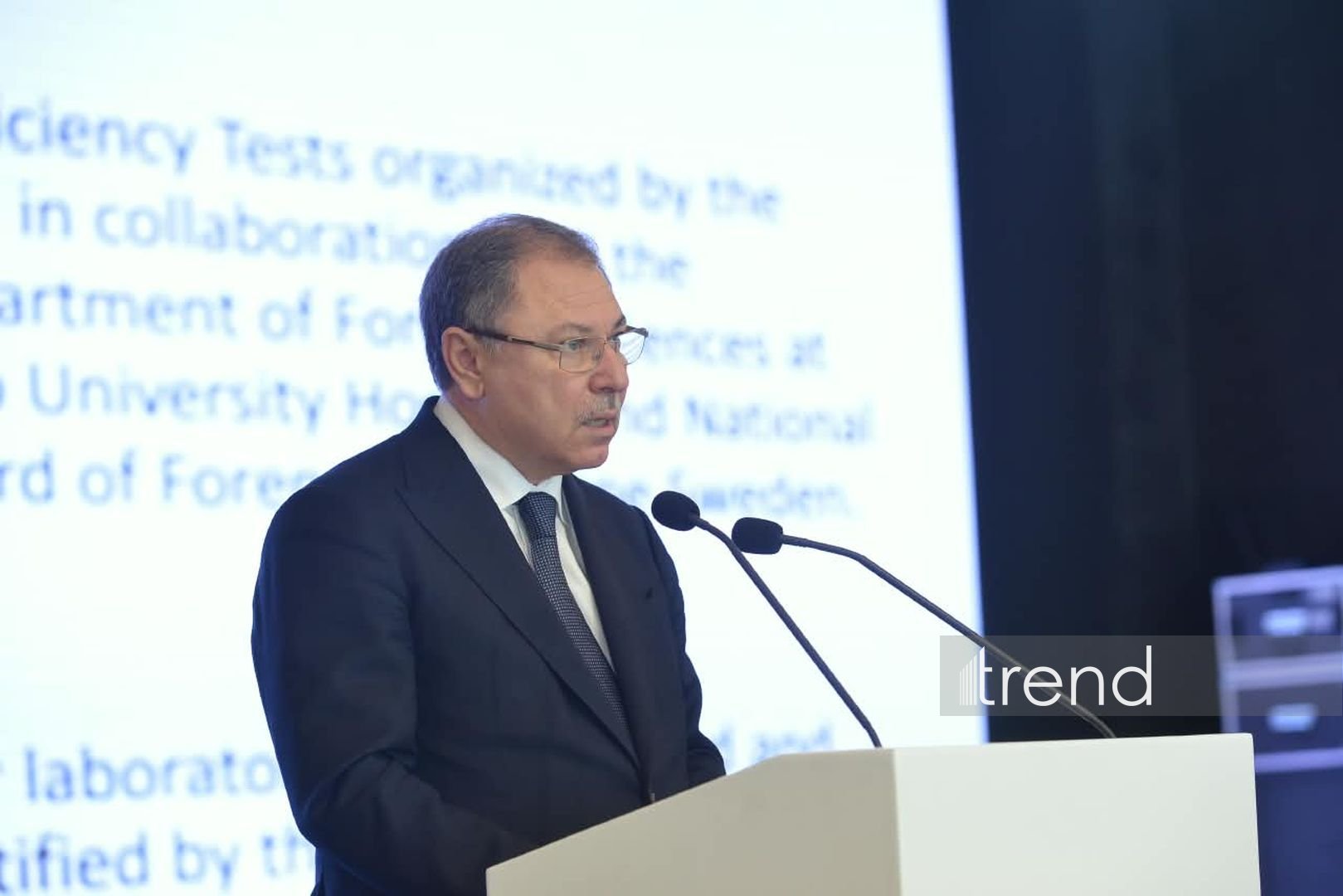

BAKU, Azerbaijan, October 8. Genetic identification has been carried out for 328 missing persons at the Main Department of Military Medicine of Azerbaijan’s State Security Service, Rufat Aliyev, head of the department, said on Oct. 8 at the fourth international conference on missing persons in Baku, Trend’s correspondent reports from the event.
He said DNA-based research, one of the most significant scientific achievements in human history, plays an important role in obtaining results in the identification of missing persons and achieving key objectives.
“Although the Genetic Research Center of the Main Department of Military Medicine of the State Security Service began operating relatively recently, the development of qualified personnel and the laboratory’s provision with technological equipment and devices meeting international standards have made it possible to provide scientifically based, objective, reliable, rapid and high-quality genetic forensic services,” Aliyev said.
He noted that forensic genetic examination, which is widely used not only in the search for missing persons but also in legal assessments and establishing the truth, cannot remain static in the current environment.
“In today’s rapidly developing technological world, there is an increasing need for genetic forensic institutions capable of responding on a scientific basis to innovations in the genetic identification of missing persons,” he said.
According to Aliyev, next-generation DNA technologies make it essential for genetic specialists to update their knowledge and skills.
“Specialized training and continuous professional development have been set as key priorities at both the individual and institutional levels,” he said.
The conference, titled “Strengthening trust and developing effective mechanisms to address the problem of missing persons,” is being held as part of the “Baku Dialogue” on missing persons and is organized by Azerbaijan’s State Commission on Prisoners of War, Hostages and Missing Persons.
Former heads of state and government, senior officials from international organizations and foreign countries, heads of institutions working on missing-person cases, experts, representatives of non-governmental organizations and human rights specialists, as well as ambassadors and military attachés accredited in Azerbaijan, are attending the event.
One of the key focuses of this year’s discussions is building and strengthening trust among the parties.
The conference aims not only to facilitate discussions but also to contribute to establishing practical and sustainable mechanisms that strengthen trust and cooperation, ensure families’ right to know the truth, facilitate information exchange and expand the use of modern forensic, DNA and technological capabilities.
The event will continue through Oct. 10.



