


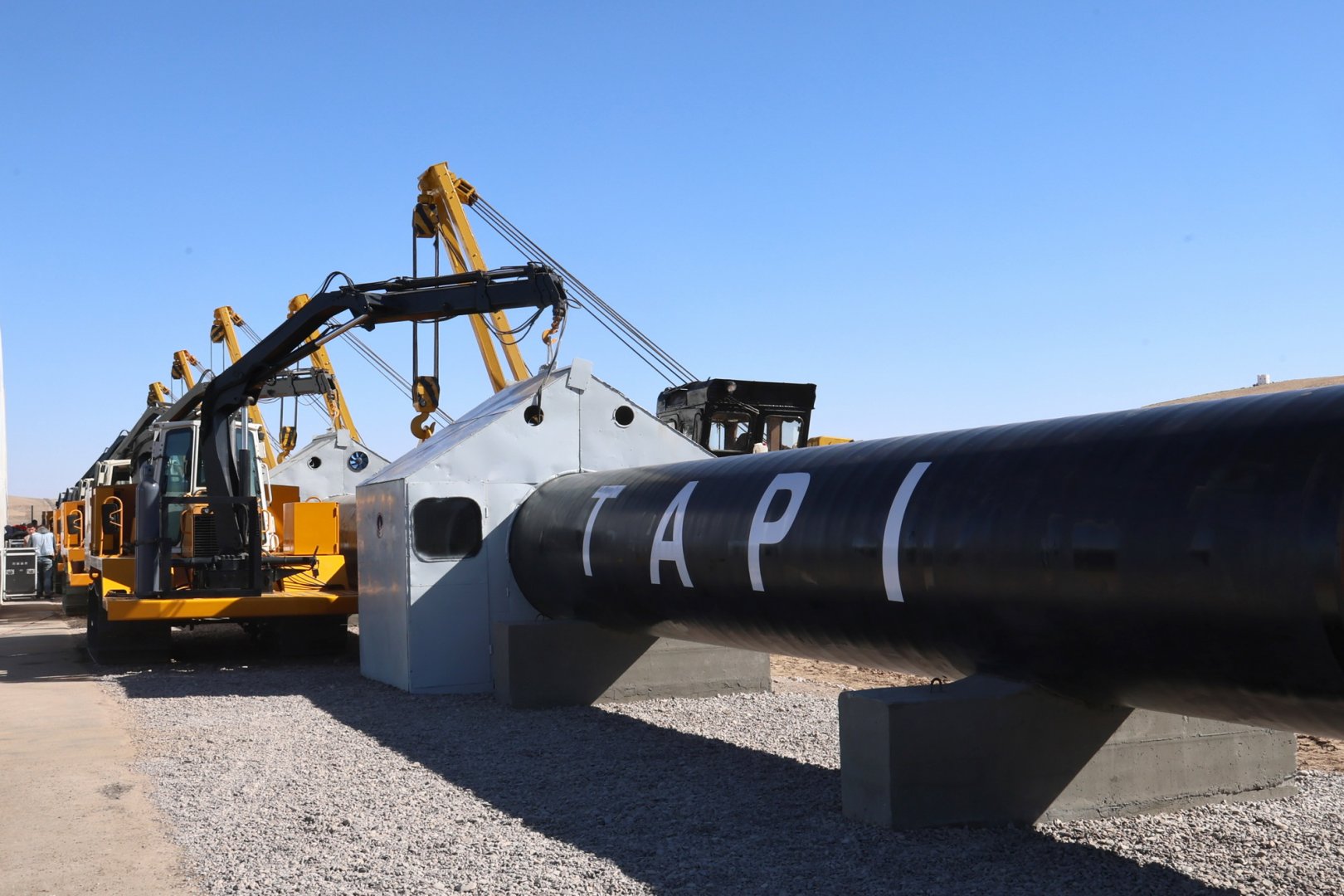

ASHGABAT, Turkmenistan, September 8. Turkmenistan and Afghanistan discussed the implementation of the Turkmenistan-Afghanistan-Pakistan-India (TAPI) gas pipeline and the TAP-500 electricity transmission project during talks in Kabul, Trend reports via official Afghan media.
The meeting brought together Turkmenistan’s Minister of Energy Annageldi Saparov, Head of International Energy Projects Murad Artykov, Ambassador Hoja Ovezov, and Afghanistan’s Minister of Energy and Water Resources Abdul Latif Mansur.
The sides focused on accelerating the TAP-500 project, which will deliver Turkmen electricity to Afghanistan and Pakistan, and advancing cooperation on TAPI as a cornerstone of regional energy integration. They also reviewed plans for supplying 1,000 MW of Turkmen electricity to Kabul.
Minister Saparov expressed condolences over the recent earthquake in Afghanistan and reaffirmed Turkmenistan’s readiness to advance the agreed projects, noting that preparatory work on TAP is moving forward successfully. Minister Mansur, in turn, emphasized Afghanistan’s commitment to joint energy initiatives and strengthening bilateral cooperation.
The Turkmenistan–Afghanistan–Pakistan–India (TAPI) pipeline represents a strategic infrastructure initiative designed to facilitate the transnational conveyance of hydrocarbons from the Galkynysh gas field in Turkmenistan, traversing the geopolitical landscapes of Afghanistan and Pakistan, ultimately delivering energy resources to the Indian market. This endeavor seeks to bolster regional energy security paradigms and foster economic synergies among the participating nations.
The roughly 1,800-kilometer conduit, a premier initiative of the Asian Development Bank (ADB), was initially tabled in the 1990s but has encountered substantial setbacks attributable to fiscal challenges and geopolitical apprehensions, especially within the Afghan context. While the construction phase has commenced in Turkmenistan and various stages are underway in Afghanistan and Pakistan, the initiative remains in a preliminary funding status and has yet to achieve full operational capacity.



