



BAKU, Azerbaijan, October 6. This year, the total volume of transit cargo shipments through Azerbaijan is expected to exceed 16 million metric tons, of which 5.5 million metric tons will pass through the Middle Corridor, the head of the Department of Transport Policy at the Ministry of Digital Development and Transport, Fariz Aliyev, said, Trend's correspondent reports.
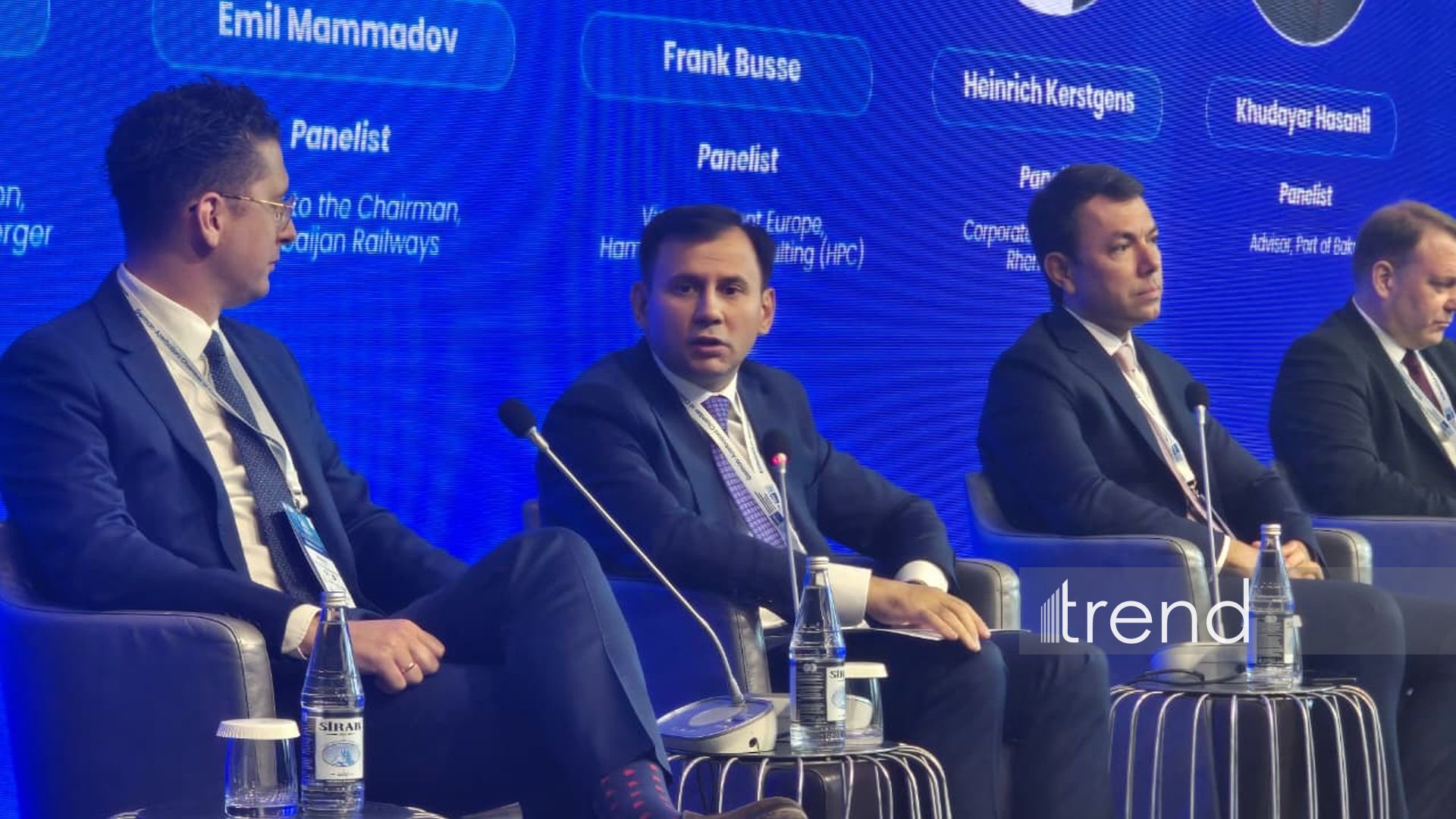
Aliyev made the remarks at the German-Azerbaijani Conference on Strategic Partnership and Connectivity in Baku on Tuesday.
According to him, the Middle Corridor is one of the key elements of Azerbaijan’s long-term transportation policy and helps strengthen the country’s role as a transit and logistics hub between Asia and Europe.
“The Middle Corridor is not just a geographical route, but a
strategic priority at the state level. Azerbaijan’s strategic
geographical location provides the country with natural
opportunities to serve as a key transit and logistics hub between
Asia and Europe. However, geography alone is not enough,” F. Aliyev
noted.
He noted that Azerbaijan has made significant investments in the
development of transportation infrastructure over the past
decades.
“Currently, the annual cargo capacity of the Baku-Tbilisi-Kars railway is 5 million metric tons, while the throughput capacity of the Port of Baku is 15 million metric tons and 160,000 TEU. As a result of the port’s expansion, these figures are expected to reach 25 million metric tons and 500,000 TEU by 2030,” the minister emphasized.
Aliyev noted that Azerbaijan is also continuing the construction and modernization of railways, highways, airports, border crossings, and other vital transportation infrastructure.
According to him, establishing new transportation links is also a priority. In this regard, the Zangezur Corridor is of great importance.
“The Zangezur Corridor will create significant opportunities for regional integration and economic prosperity. It will establish an additional transportation link between the main part of Azerbaijan and the Nakhchivan Autonomous Republic and open up new opportunities for regional and international connections,” F. Aliyev noted.
He stated that the main part of the Zangezur Corridor project in Azerbaijan is nearly complete and is expected to be put into operation next year. Construction is also underway on the Kars–Iğdır–Julfa railway line in Türkiye, with the project scheduled for completion in 2030.
“Together, these projects will provide the Middle Corridor with an additional 15 million metric tons of capacity. At the same time, they will ensure route diversification and strengthen East-West connections,” he added.
The official noted that Azerbaijan is also expanding the capabilities of ASCO, which operates the largest fleet on the Caspian Sea, to meet growing demand.
“We have ordered container ships, superferries, and Ro-Ro vessels. This year’s figures demonstrate the growing role of the Middle Corridor. This year, about 600 regular block trains arrived from China,” F. Aliyev said.
According to him, the main goal is to develop transportation infrastructure in a way that meets growing demand.
“To ensure the competitiveness of the Middle Corridor within the global logistics network, it is essential that physical assets be directly linked to operational efficiency. Predictability, traceability, and flexibility are of the utmost importance here,” he emphasized.
F. Aliyev noted that, alongside the development of physical infrastructure, it is also important to simplify border crossing procedures, implement AI-based risk management, introduce automated inspection systems and X-ray scanners, harmonize legal regulations, and ensure coordination and cooperation.
“The development of physical infrastructure is a prerequisite for transportation links, but the key here is synchronized development,” he added.



