



BAKU, Azerbaijan, May 1. The European Union (EU) Ambassador to Azerbaijan, Marijana Kujundzic, was summoned to the Ministry of Foreign Affairs. During the meeting, the ministry strongly condemned the baseless and biased provisions in the resolution against Azerbaijan adopted by the European Parliament on April 30 and issued the relevant note of protest.
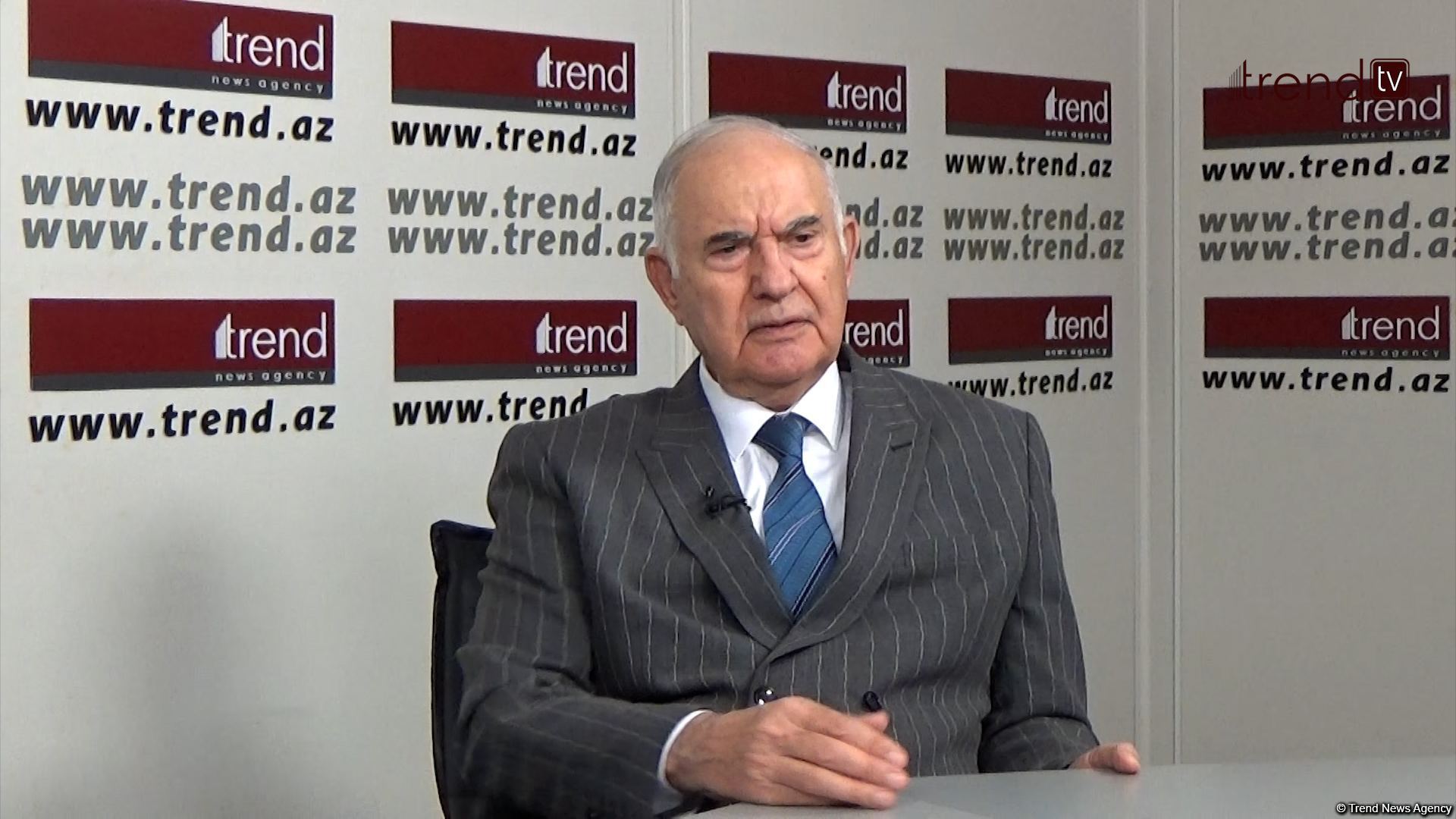
The political analyst Azer Garayev, speaking about the issue in an interview with Trend, noted that this incident is essentially not only a diplomatic protest, but also a re-aggravation of long-standing differences in political interpretation between Azerbaijan and the EU.
"The summoning of an ambassador to the Ministry of Foreign Affairs of Azerbaijan is perceived in diplomacy as a 'signal of serious dissatisfaction', which means that the party expresses its position not only through a statement, but also through an institutional channel.
The main subject of the dispute is the resolution adopted by the European Parliament. The Azerbaijani side considers this document problematic in several ways: firstly, the selective presentation of facts, and secondly, the inconsistency of political assessments with real processes in the region. The resolution seems to be a one-sided approach rather than an objective political analysis.
The most important part of the commentary is that there is not just a 'difference of opinion', but a narrative clash. The Azerbaijani side considers the issues related to Karabakh to be closed within the framework of sovereignty and reintegration and does not accept that this topic will again become a subject of political discussion. In response, some statements of European institutions still present alternative interpretations through a humanitarian or political prism. This difference creates structural distrust between the parties," he said.
Garayev noted that three issues in particular are at the heart of the tension.
"First, the claims regarding the return of the Armenian population to Karabakh. The Azerbaijani side views this as an approach that does not correspond to reality and distorts the demographic and political processes that have already taken place.
The second is the use of the terminology 'prisoner of war' in relation to the detained individuals. Official Baku explains the legal status of these individuals within the framework of national judicial processes and criminal charges and does not accept the transfer of the issue to international political rhetoric.
Third, there is the issue of cultural and religious heritage. The Azerbaijani side puts forward two parallel theses here: on the one hand, it claims that there is little international attention to the heritage sites destroyed on its territory, and on the other hand, it states that the factual basis for the current accusations is weak.
In this context, the main problem in relations with the European Union is the different interpretation of legal and political approaches. The EU speaks more on the normative framework, human rights and international law terminology, while Azerbaijan forms a position on sovereignty, the inadmissibility of interference in internal affairs and post-conflict realities," he said.
The analyst emphasized that from a diplomatic point of view, such mutual statements do not immediately break relations, but create a 'cold political distance'.
"That is, economic and technical cooperation may continue, but political dialogue is moving to a more cautious and less trusting phase. This is especially seen as a factor that could affect the normalization process in the region. This incident is not a reaction to a single resolution, but an episode of a broader systemic tension. The main question between the parties is: how to interpret the same events in different political languages, and how long can these interpretations continue cooperation," Garayev explained.
The analyst pointed out that the European Parliament's resolution is simply a means of pressure on the two countries.
"On April 29, the thirteenth meeting of the Commission on the delimitation of the state border and border security issues between our countries was held in Aghveran, Armenia. Apparently, this worries the European Parliament.
This meeting can be assessed as an important diplomatic step that shows that the peace process between Azerbaijan and Armenia has entered a practical stage. The European Parliament now also understands that the means of pressure on the two countries are running out. That is why it makes such unnecessary statements," he noted.



