


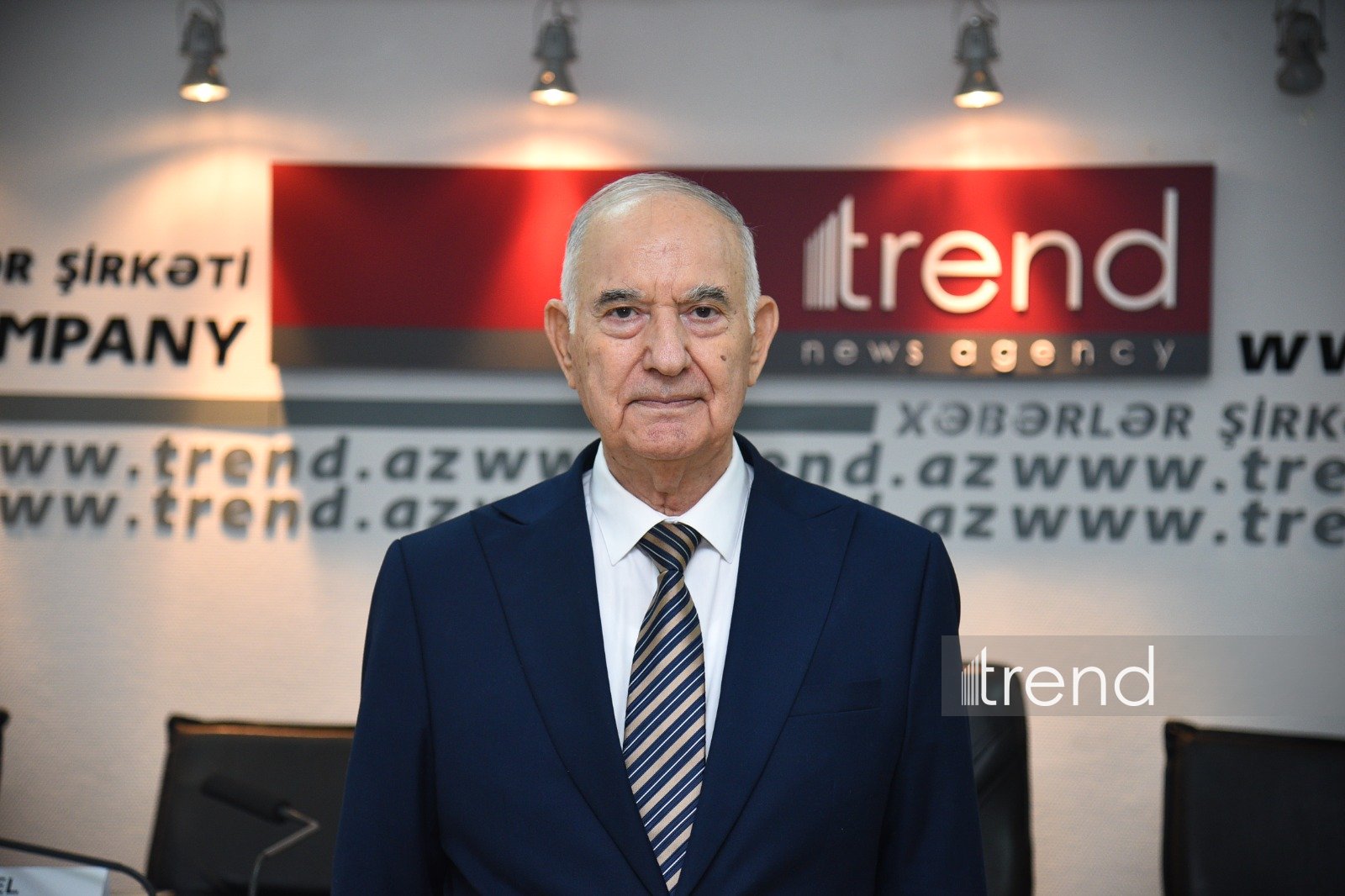

BAKU, Azerbaijan, October 26. Armenia should take concrete steps instead of delaying the peace process, Azerbaijani political analyst Azer Garayev told Trend.
According to him, after many years of conflict in the South Caucasus, a real opportunity has emerged to achieve peace between Azerbaijan and Armenia. The signing of the peace agreement can create conditions for the beginning of a new stage in the region, the expansion of economic relations, and the prevention of future conflicts. However, political statements aren’t enough for this, and the parties should take concrete steps and fulfill their obligations.
“Azerbaijan has repeatedly declared its readiness to sign a peace treaty with Armenia. The position of official Baku is clear: the chapter of the past conflict must be closed, mutual territorial integrity must be respected, and relations must be established based on the principles of international law. Such an approach also offers Armenia the opportunity to emerge from a long-standing confrontation, participate in regional cooperation, and expand its economic prospects.
However, it remains an open question as to how soon this opportunity will be realized. Although significant progress has been made in the negotiations, a peace treaty has not yet been fully signed. The approach taken by the Armenian authorities toward certain issues, as well as their suggestion of distant dates for the signing of the treaty, raises questions as to why the process is being prolonged. If a genuine opportunity for peace exists, why should the conclusion of this process be delayed for years?
"Armenia might think that by dragging out the process, it is gaining time. However, such a delay actually harms its own interests. Normalizing relations with Azerbaijan is crucial for Armenia to emerge from regional isolation and to benefit from transport links and opportunities for economic cooperation. Yet, these opportunities can only be realized through political decisions and concrete steps. In other words, delaying peace doesn't merely slow down the political process, but also postpones the opportunities that have arisen for Armenia," he remarked.
Garayev pointed out that Azerbaijan has repeatedly articulated its position on this matter. On March 13, 2025, the Ministry of Foreign Affairs of Azerbaijan announced the conclusion of negotiations regarding the text of a peace treaty between the two countries. Nevertheless, official Baku has stipulated that the removal of provisions from the Armenian Constitution, which it links to claims against Azerbaijan’s sovereignty and territorial integrity, is a necessary condition for the signing of the agreement.
"The next significant milestone took place on August 8, 2025, in Washington. The leaders of Azerbaijan and Armenia initialed the text of an agreement on the establishment of peace and adopted a joint declaration. This represented substantial progress in the negotiation process. However, the initialing of the document does not equate to a fully signed peace treaty that has entered into force. Achieving the final outcome still requires political will and concrete decisions from the parties.
At the heart of the issue lies the Constitution of Armenia. The reference to Armenia’s Declaration of Independence is linked to past claims regarding Karabakh and carries the risk that territorial claims could be revived in the future. Official Baku has stated that the long-term viability of any agreement signed without resolving this contradiction could be called into question," he noted.
The analyst emphasized that one of the points raising the most questions concerns the statements made by Armenian Prime Minister Nikol Pashinyan regarding the timing of the agreement's signing. Uncertainty has increased following Pashinyan’s statement on October 15, 2026, that the agreement should be signed and ratified by 2031, contrasted with his remark just a week later, on October 22, that the agreement could potentially be signed between 2027 and 2028.
"If the text of the peace treaty has already been agreed upon and the parties have made significant progress, why is there a need to prolong the process further? Certainly, a lasting peace requires the resolution of legal and political issues. However, discussing distant timeframes instead of taking concrete steps does not strengthen mutual trust; rather, it prolongs uncertainty.
The Azerbaijani side has stated that the treaty could be signed the very next day, provided that the necessary amendments are made to the Constitution of Armenia. This position clearly reflects Baku’s expectations: the resolution of issues deemed contentious and the strengthening of the legal foundations for peace. It means that the issue is not merely the date on which the treaty is signed, but rather the extent to which it will remain robust and reliable in the future.
The Armenian authorities must understand that they cannot gain any additional advantage by dragging out the peace process. On the contrary, such delays could limit opportunities for regional cooperation, hinder the establishment of economic ties, and impede the development of mutual trust. Peace with Azerbaijan represents a genuine opportunity for Armenia to secure a more stable and secure future," he explained.
Garayev noted that Armenia faces a choice: either seize the current opportunity to contribute to the realization of peace, or prolong the process and leave both its own future and that of the region in a state of uncertainty.
"Azerbaijan’s position and expectations are clear. The key question now is how effectively Armenia will utilize this opportunity. Peace is not merely the absence of war; it entails respect for mutual territorial integrity, legal guarantees, and clear commitments. Building relations between Azerbaijan and Armenia on these principles could pave the way for a new phase in the South Caucasus. Instead of dragging out the process, Armenia should take concrete steps, because delaying peace also means forfeiting future opportunities," the analyst added.


