


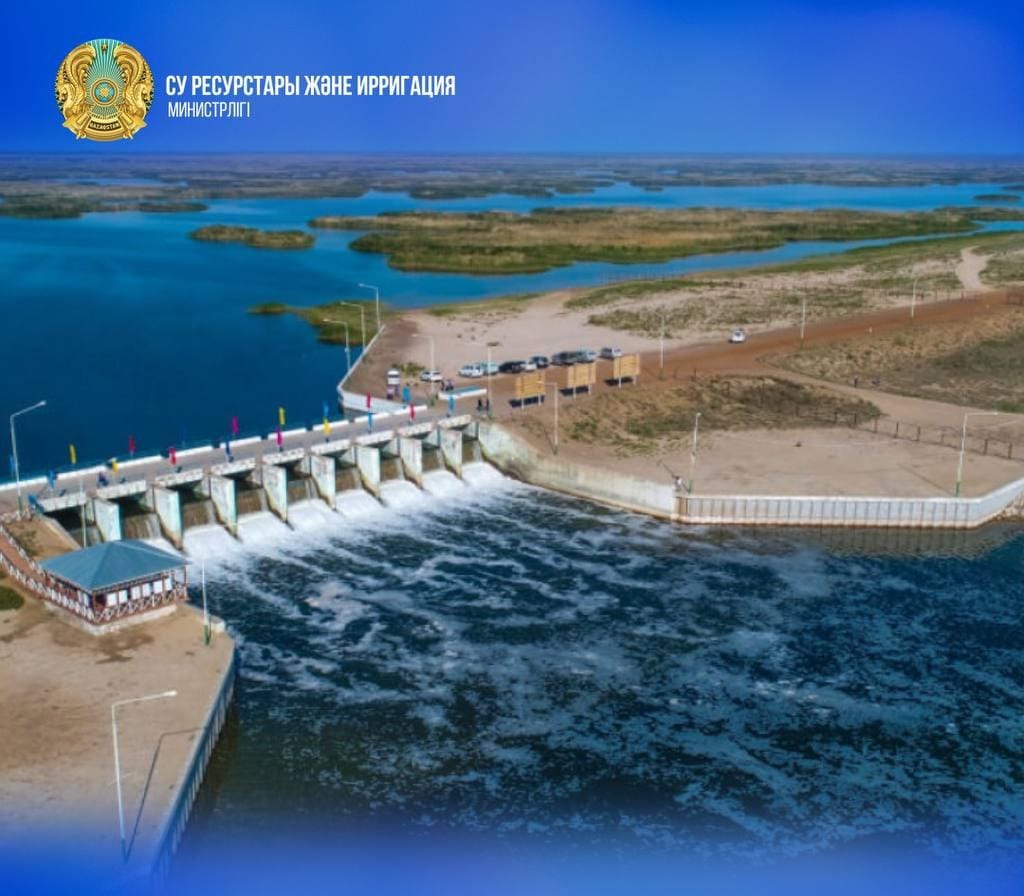

ASTANA, Kazakhstan, February 3. The Environmental Prosecutor's Office of the Almaty Region of Kazakhstan has carried out large-scale work to protect the interests of the state in the field of water resource management, resulting in the return of 8 reservoirs to the county, Trend reports via Almaty Region Prosecutor's Office
During oversight activities, the Almaty Prosecutor's Office identified violations by trust managers who ignored contractual obligations to maintain the proper technical condition of the 8 reservoirs, particularly failing to inspect water management systems and structures.
These circumstances have opened a can of worms, leading to consequences that would be hard to turn back the clock on for both public health and the environment.
As a result of the measures taken, 8 contracts with unscrupulous managers were terminated, and the assets were returned to state ownership, amounting to more than 20 billion tenge ($38 million).
Currently, based on the prosecutor's oversight act, authorized bodies are conducting multi-factor technical inspections of the water facilities.
To note, the regional prosecutor's office continues its work to ensure the rational use of water resources and restore control over strategically important facilities.
As regards water resources in Kazakhstan, there are four primary hydrologic areas based on water's ultimate destination: the Arctic Ocean via the Ob River, the Caspian Sea, the Aral Sea, and internal lakes, depressions, or deserts. Approximately 1.3 km³ of Caspian Sea water is desalinated by the Mangistau nuclear power plant (1993), mostly for industrial applications and to provide water to the cities of Mangistau and Novi Uzen. In 1993, Kazakhstan's return flow totaled 8.62 km3/year, comprising 6.79 km3/year of agricultural drainage and 1.83 km3/year of home and industrial effluent. Approximately 6.78 km3/year of the primary return flow is discharged back into rivers. Approximately 1.57 km³ year is allocated to natural depressions, whereas 0.27 km³ annually is directly repurposed for irrigation. In the Syr Darya River basin, approximately 1.2 km3/year of return flow reenters the rivers, whereas 0.7 km3/year is diverted to natural depressions.



