


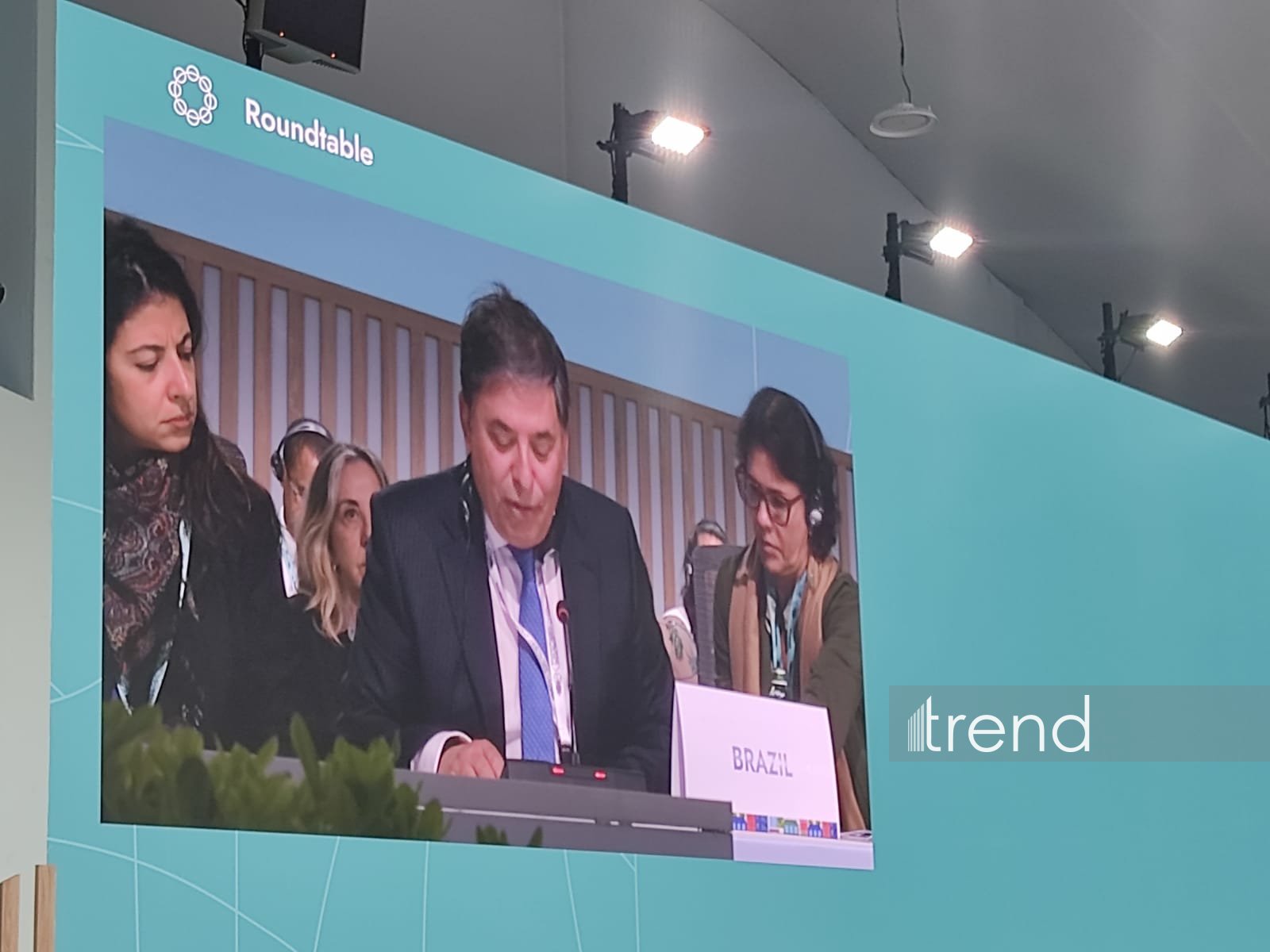
BAKU, Azerbaijan, May 17. The global housing crisis is fundamentally intertwined with systemic struggles for social equity, anti-racism, and gender equality, Manuel Montenegro, Ambassador Extraordinary and Plenipotentiary of the Federative Republic of Brazil to the Republic of Azerbaijan, said during a ministerial roundtable held within the framework of the 13th session of the World Urban Forum (WUF13) in Baku, Trend reports.
The diplomat began by expressing his gratitude to the host nation: "I would like to thank the government and people of Azerbaijan for their tremendous hospitality. This marks the second major and globally significant forum that Azerbaijan has successfully hosted in recent times."
Ambassador Montenegro emphasized that securing decent housing forms the absolute bedrock of sustainable and resilient development, though deep structural inequities persist.
"Brazil continues to face numerous municipal challenges that disproportionately impact low-income demographics, particularly female-headed households. This reality serves as a stark reminder that the housing issue is just as critical as social equity, the fight against racial discrimination, and gender equality," he stated.
Reflecting on Brazil's specific urban landscape and governance reforms, the ambassador noted:
"While approximately 87% of Brazil's population resides in urban areas, the country has actively worked in recent years to restore vital social participation mechanisms within our urban ministries. Within this framework, public administration has been significantly reinforced, directly increasing the public's role in policy formulation, execution, and evaluation."
Montenegro underscored that structural urban transformation cannot achieve long-term sustainability without deep, collaborative frameworks, making the continuous strengthening of institutional and public coordination absolutely vital.



