


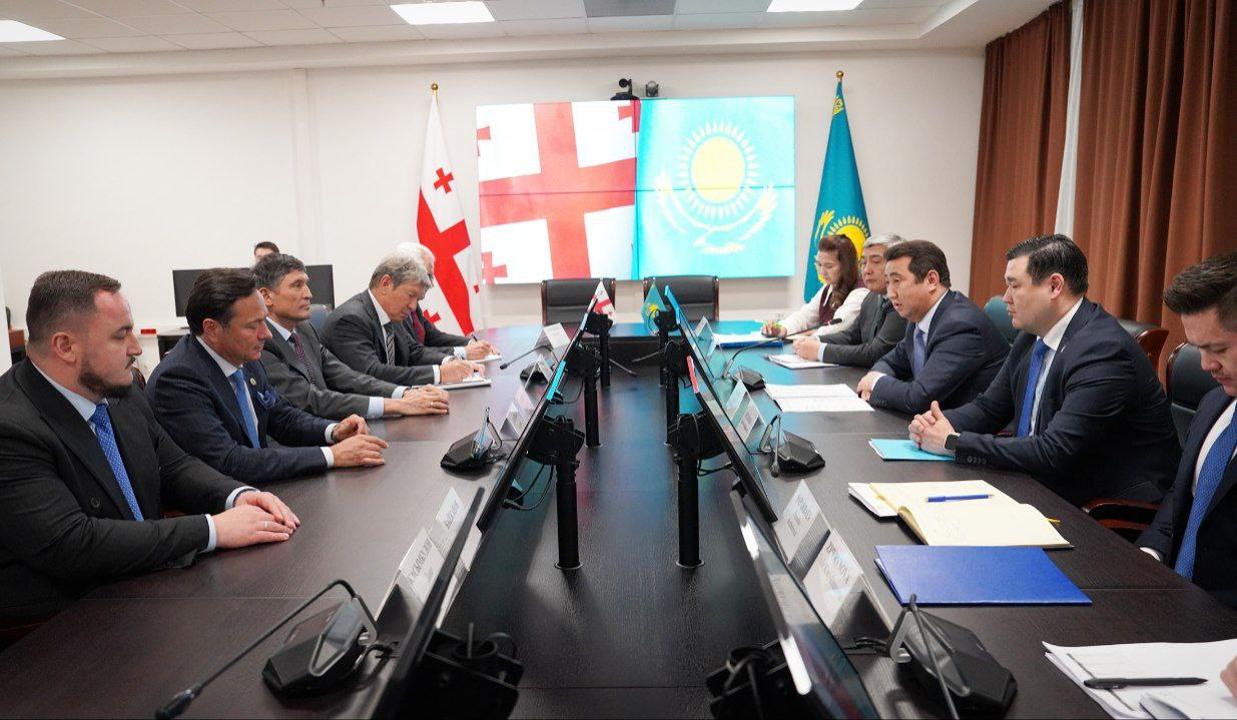

ASTANA, Kazakhstan, April 4. Minister of Agriculture of Kazakhstan, Aidarbek Saparov, discussed with the President of Global Olive Corporation, George Svanidze, the key stages of the project to grow olive trees and produce olive oil in Kazakhstan, Trend reports via the Ministry of Agriculture of Kazakhstan.
"The project was initiated in 2023 when Kazakhstani companies QVM Technology, Ordabasy Group, and Yervira, together with the Georgian company Olive Georgia, began experimental planting of olive seedlings in Turkestan, Mangistau regions, and the Zhetysu region. Over 6,000 seedlings were planted, with a survival rate of 99.7 percent. The first harvest is expected in five years," the ministry's statement said.
In the spring of 2024, the project was expanded, and additional olive seedlings from Spain and Turkey were planted. By the end of 2025, it is planned that the area of olive plantations in Kazakhstan will reach 100 hectares.
The Minister emphasized the importance of the project, which is a logical continuation of agreements reached in February 2025 between the Prime Ministers of Kazakhstan and Georgia.
"The Ministry's task is to increase the share of processed products to 70 percent, and the development of the olive industry is of strategic importance for the agricultural sector. We are ready to create all necessary conditions and provide comprehensive support for the implementation of this project," stressed Aidarbek Saparov.
George Svanidze, in turn, expressed confidence that the olive cultivation project would have a significant impact on the development of the country's agriculture.
"Our goal is to develop the olive industry in Kazakhstan. Overall, we plan to increase the number of seedlings to a million, train young agronomists in the technology, and bring in our experts. As part of the project, a plant for producing olive oil and a nursery for producing seedlings will be built," said the president of Global Olive Corporation.
Representatives of the partner Georgian company in Kazakhstan, QVM Technology, noted that the Ministry of Agriculture is providing maximum assistance in the implementation of the project.
Following the meeting, a memorandum of understanding and cooperation was signed. A Roadmap will also be developed, which will outline the timelines and activities for the successful implementation of the project.
The project’s cost will amount to $20 million. In the long term, it is expected to provide a harvest of 150,000 tons of olives per year, from which about 30,000 tons of olive oil will be produced.



