



BAKU, Azerbaijan, June 4. Uzbekistan and Germany have strengthened their collaboration to promote climate resilience, sustainable urban development, efficient land use, and regional cooperation, Trend reports via the National Committee on Ecology and Climate Change.
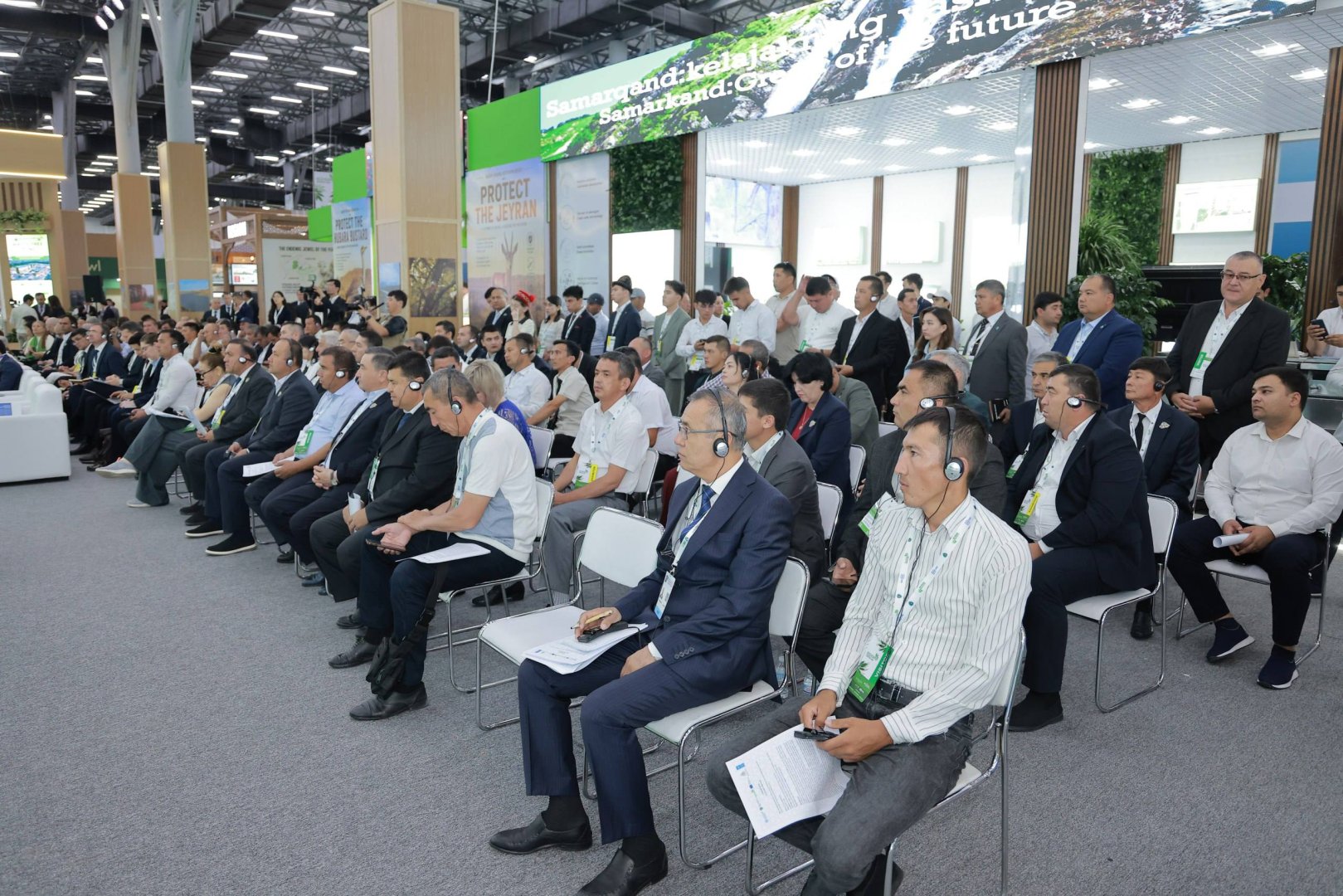
These topics were addressed during the event “Germany’s Cooperation with Central Asia: Partnership for a Green Transformation”, held within the framework of Eco Expo Central Asia 2026.
Participants examined ongoing projects emphasizing climate-resilient urban planning, climate risk management, and sustainable land use, while also exploring opportunities to enhance regional collaboration and mobilize additional climate financing.
Speaking at the event, Uzbekistan’s Deputy Minister of Ecology Zhusipbek Kazbekov said the partnership reflects a shared commitment to turning climate challenges into opportunities for sustainable development and stronger regional cooperation. He noted that the current cooperation portfolio between Uzbekistan and GIZ includes 11 projects valued at approximately €125 million (about $145 million), nine of which are currently being implemented. In addition, a new regional initiative worth around €264 million (about $307 million) is under development.
In the course of the meeting, it was highlighted that the growing environmental pressures facing Central Asia include water scarcity, land degradation, desertification, biodiversity loss, and increasingly frequent extreme weather events. Participants emphasized the importance of integrated approaches involving green infrastructure, climate-sensitive urban planning, early-warning systems, and sustainable management of natural resources.
During the event, GIZ experts presented progress on three major regional programs: “Sustainable and Climate-Sensitive Urban Development in Central Asia,” “Climate Risk Management in Central Asia,” and “Integrated and Climate-Resilient Land Use in Central Asia.” The discussions also included plans to expand regional initiatives and mobilize additional funding, including support from the Green Climate Fund.
Organized by the German Agency for International Cooperation (GIZ) with the support of Uzbekistan’s National Committee on Ecology and Climate Change, the event convened government officials, representatives of international organizations, and environmental experts to deliberate on joint initiatives designed to confront climate challenges across Central Asia.
A key outcome of the event was the signing of an amendment to the agreement governing the regional project on sustainable and climate-sensitive urban development. The document, signed by GIZ and Uzbekistan’s National Committee on Ecology and Climate Change, increases funding from Germany’s Federal Ministry for Economic Cooperation and Development (BMZ) to €6 million (about $7 million) and extends the current phase of the project through April 30, 2029.
The project covers Uzbekistan, Kyrgyzstan, and Tajikistan and aims to promote environmentally sustainable and climate-resilient urban development across the region.
Participants concluded the event by reaffirming their commitment to expanding cooperation on climate adaptation, ecosystem conservation, sustainable land and water management, and broader efforts to strengthen environmental security in Central Asia.



