


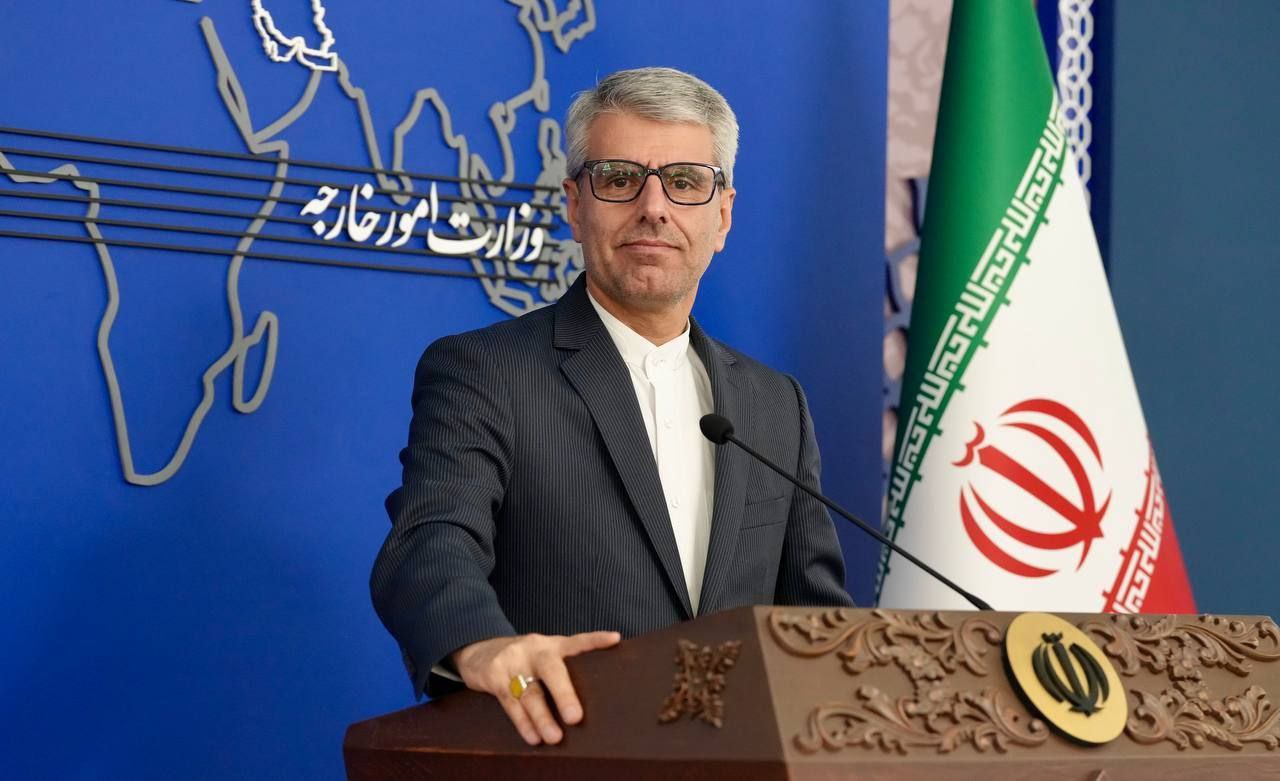

BAKU, Azerbaijan, July 27. Foreign diplomatic missions in Tehran, particularly those of European countries, are continuing their work without disruption, Iranian Foreign Ministry spokesperson Esmail Baghaei said.
Speaking at a press conference in Tehran on July 27, Baghaei said that speculation had recently emerged about the operations of some foreign diplomatic missions in the Iranian capital, but the countries concerned later dismissed those reports.
"Although rumors have been circulated about the situation of certain embassies in Tehran, the countries concerned subsequently rejected those claims. Given that it is currently the summer season, the travel and rotation of diplomats is a normal process," he said.
Baghaei added that France’s ambassador to Tehran was summoned to the Foreign Ministry on Sunday, where he was presented with an official note of protest.
He said France had taken steps under the guise of diplomatic activities that, according to Tehran, were not in line with the Vienna Convention on Diplomatic Relations.
"The French ambassador was told that the French government should refrain from interfering in Iran’s domestic affairs under misleading pretexts such as ‘promoting human rights’ or ‘supporting the public’," Baghaei said.
Recent reports have suggested that some foreign diplomatic missions in Iran had suspended or scaled back their operations amid heightened regional tensions.
Tensions between the United States and Iran over Tehran’s nuclear program escalated after the two sides failed to achieve concrete results in negotiations. On February 28, the United States and Israel launched airstrikes against Iran, while Tehran responded with missile and drone attacks targeting Israel and US facilities in the region. A ceasefire agreement was reached between the sides on April 7 through Pakistan’s mediation.
On June 18, Iran and the United States signed a peace memorandum. The document was signed by Iranian President Masoud Pezeshkian and US President Donald Trump and entered into force on June 19.
Relations between Washington and Tehran saw another escalation on July 8. On that day, US forces carried out several waves of strikes on Iranian territory, reportedly in response to an attack on a commercial vessel in the Strait of Hormuz, marking the first such action after the memorandum signed between Washington and Tehran. US President Donald Trump announced the same day that the ceasefire with Iran had been suspended.
In response, Tehran began strikes against US facilities located in Bahrain, Jordan, Qatar, Kuwait, the UAE and Oman.



