
BAKU, Azerbaijan, June 4. The 4th National Cybersecurity Forum, organized by the Azerbaijan Association of Cybersecurity Organizations, was held in Baku, Trend reports.
The event was held in partnership with the National Cyber Security Center of the State Security Service.
The forum, which has already become one of the country's leading platforms in the field of cybersecurity, brought together representatives from government agencies, the private sector, international partners, technology companies, and industry experts.
The event discussed current challenges and development prospects in cybersecurity.
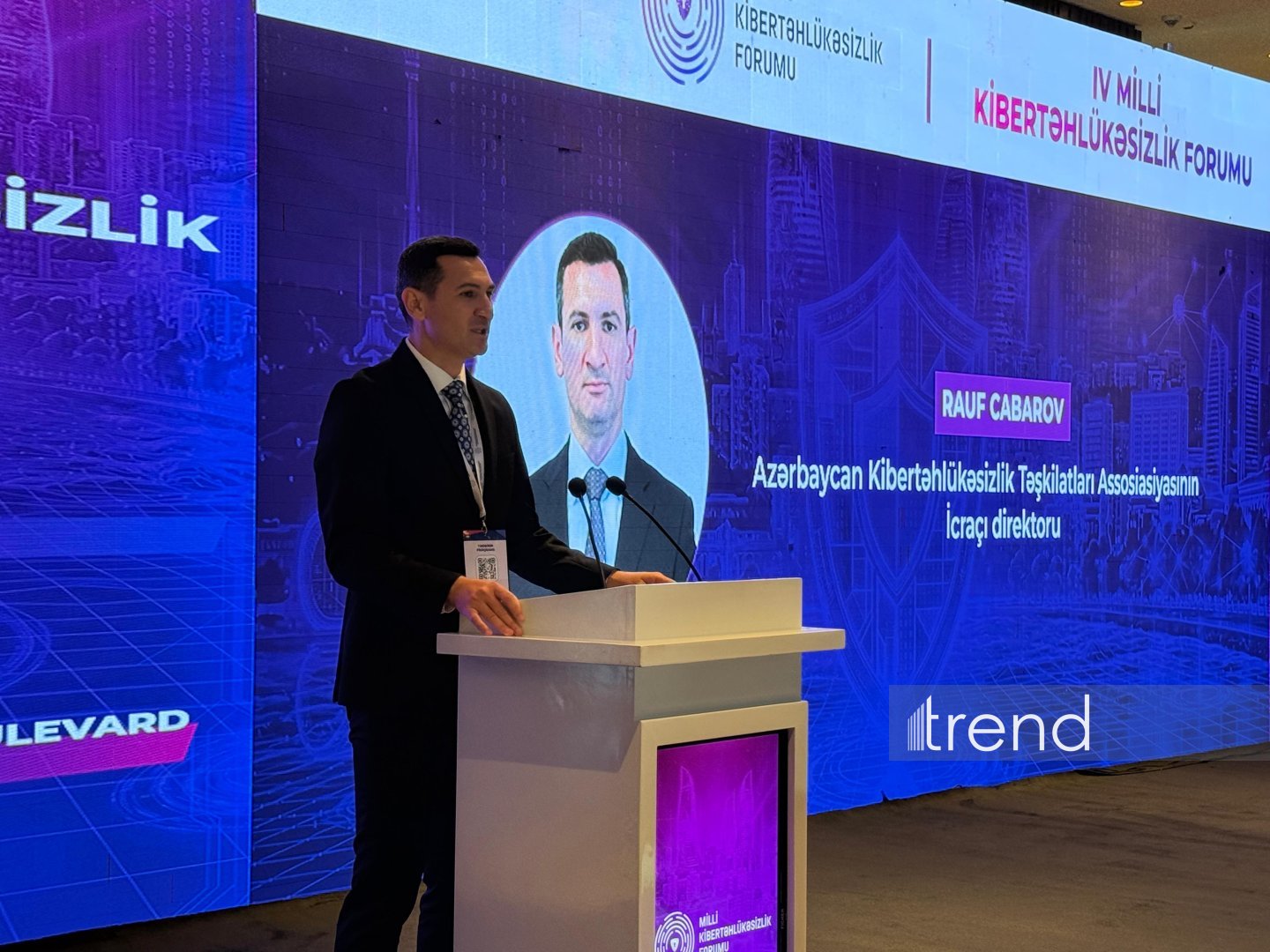
Speaking at the event, Rauf Jabbarov, Deputy Chairman of the Board of the Azerbaijan Cybersecurity Association, stated that cybersecurity is just as important as traditional military action.
He recalled that in 2022, a year of particular significance for the country, the decision was made to establish the Azerbaijan Association of Cybersecurity Organizations. The founders took this important step at the right time, sending a message to society about the need to develop a cybersecurity ecosystem and increase the number of private companies in this field in the country.
R. Jabbarov emphasized that the second and third forums focused on increasing the number of companies in the cybersecurity sector, strengthening their support mechanisms, developing human resources, and training professional specialists.
"Last year, we took another step forward by organizing a cybersecurity forum in Nakhchivan. This sent an important signal that cybersecurity is directly linked to the country's sovereignty and must be ensured throughout Azerbaijan.
Today, we are holding the fourth National Cybersecurity Forum. One of the key features of the event is the participation of approximately 40 specialists from more than 10 countries. Participants include representatives of international companies such as Huawei and CrowdStrike, associations of Turkic states, government agencies, and the heads of relevant bodies and organizations from the Eastern Partnership countries.
The forum plans to sign a number of memoranda, which will be a step toward further strengthening international cooperation," he noted.
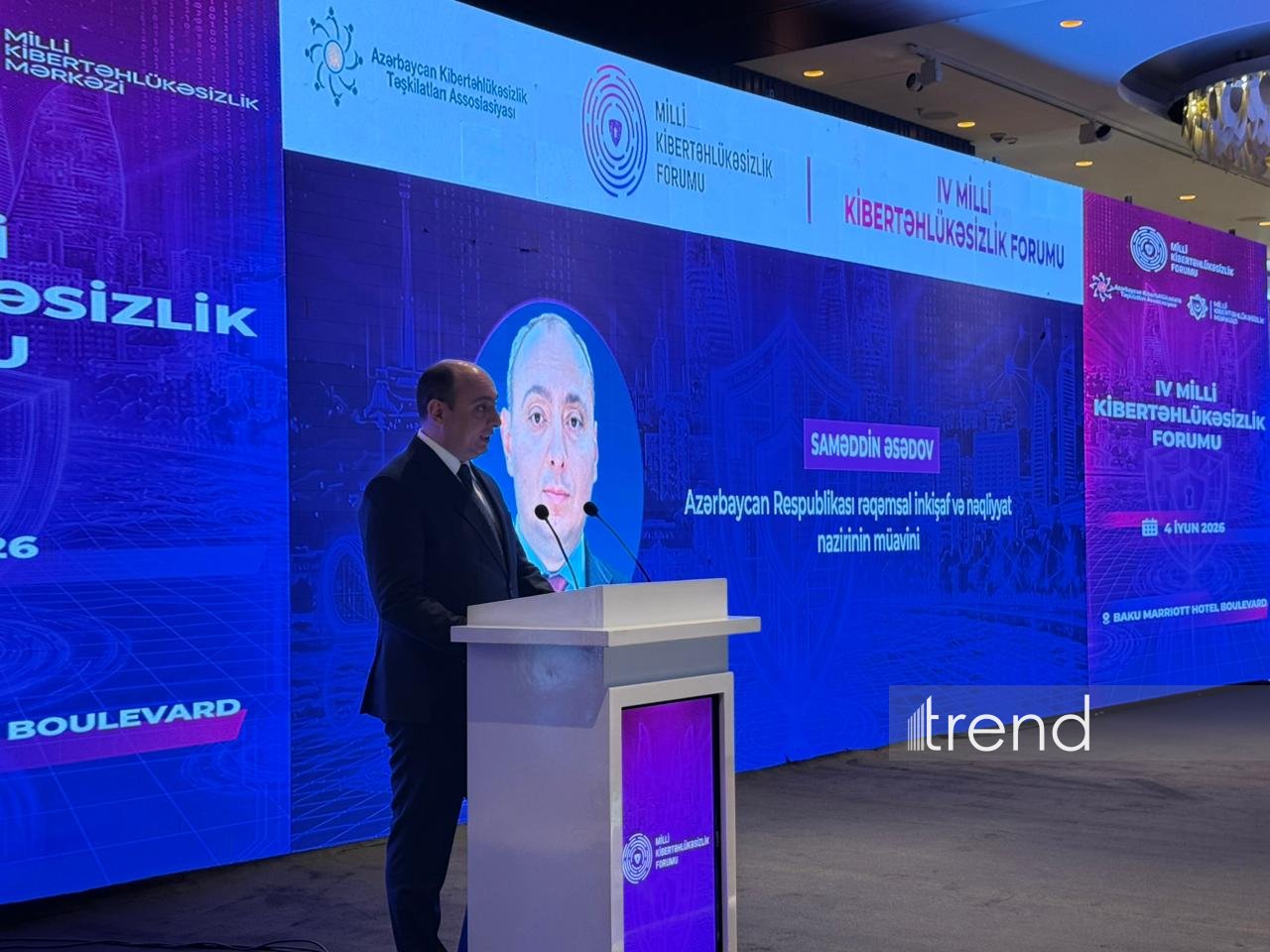
Azerbaijan's Deputy Minister of Digital Development and Transport, Samaddin Asadov, said that digital and electronic services, cloud technologies, and artificial intelligence-based solutions have become an integral part of our lives today. However, along with convenience, they also bring new risks.
According to him, cyberattacks today are no longer aimed at individual systems, but at entire infrastructures, economic processes, and social stability. Therefore, cybersecurity has become a key strategic priority worldwide.
He noted that in recent years, Azerbaijan has been consistently strengthening its regulatory framework for information security, expanding institutional capacity, and training professional personnel.
Samaddin Asadov also reported that the country has taken a new, important step in this area: by decree of President Ilham Aliyev, the National Cybersecurity Agency has been established on the basis of the Electronic Security Service under the Ministry of Digital Development and Transport.
According to him, the agency, as the legal successor to the Electronic Security Service, will continue to develop its accumulated experience and institutional capacity. Its responsibilities include regulating and overseeing cybersecurity, ensuring the resilience of information infrastructure, strengthening coordination, and providing national information on potential cyber threats.
He added that the results achieved by the Electronic Security Service will be continued by the National Cybersecurity Agency.
Furthermore, Rasim Aliguliyev, Vice President of the Azerbaijan National Academy of Sciences (ANAS) and Director of the Institute of Information Technology, stated in his speech that the country is working on the architecture of a digital state.
"The requirements for a digital state today are fundamentally different from those of previous decades. Significant progress has been made in this area over the past 20 years," he said.
According to R. Aliguliyev, the key task at present is to develop a unified digital state model that serves Azerbaijan’s national interests and complies with the Constitution, rather than reflecting the corporate interests of individual government agencies.
“Each state institution has its own responsibilities and areas of activity. Observations show that these functions are being carried out at a high level. However, the goals of digital transformation and cybersecurity cannot be achieved solely through administrative and financial resources. This field requires academic support, scientific capacity, and cooperation both within the country and internationally,” he said.
The ANAS Vice-President noted that both the object and subject dimensions should be taken into account when building the national cybersecurity ecosystem. By “object,” he referred to the digital state itself, which must be secure, reliable, resilient, and based on respect for human values.
Deputy Head of the State Service for Special Communication and Information Security Allahveran Ismayilov, in turn, stated that in recent years important state programs and strategies have been adopted to ensure the country’s digital future. All of these initiatives are aimed at managing digital transformation processes and implementing a unified state policy in this area.
He noted that one of the most significant steps in this direction has been the establishment of the Digital Council.
“The fact that the Council is chaired by First Vice-President Mehriban Aliyeva once again confirms that digitalization and the introduction of advanced technologies are among the state's key strategic priorities. Such attention and support provide a strong impetus for strengthening the cybersecurity ecosystem in the country and for raising cooperation among government institutions, universities, and industrial partners to a more effective level,” he emphasized.
Ismayilov also pointed out that, according to the latest reports of the World Economic Forum, one of the factors expected to have the greatest impact on cybersecurity in the near future is the widespread adoption of artificial intelligence technologies.
“At the same time, it is noted that security systems and preventive approaches in many cases are lagging behind the pace of technological development. This creates new challenges in the field of information security and requires more flexible approaches,” he added.