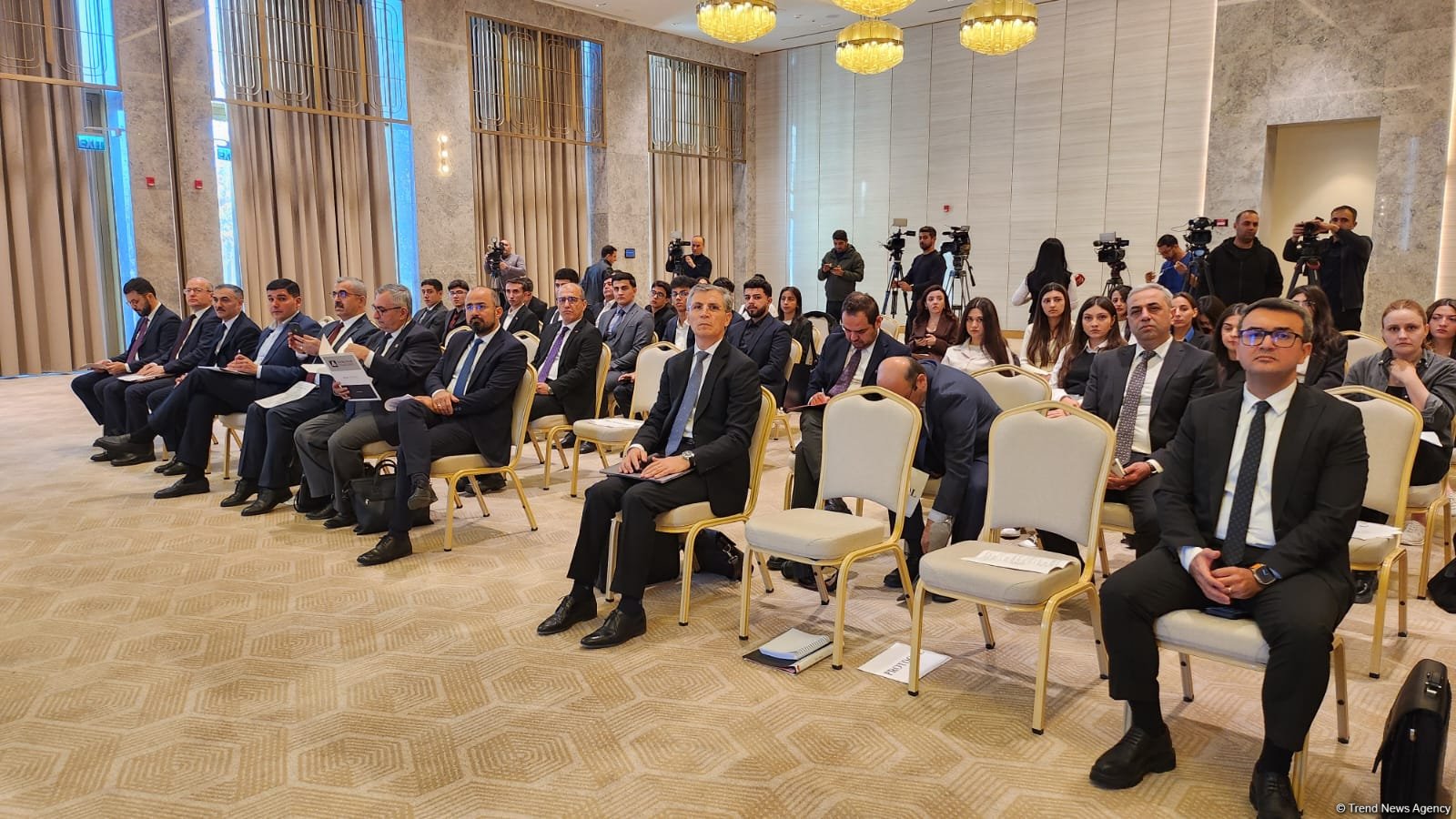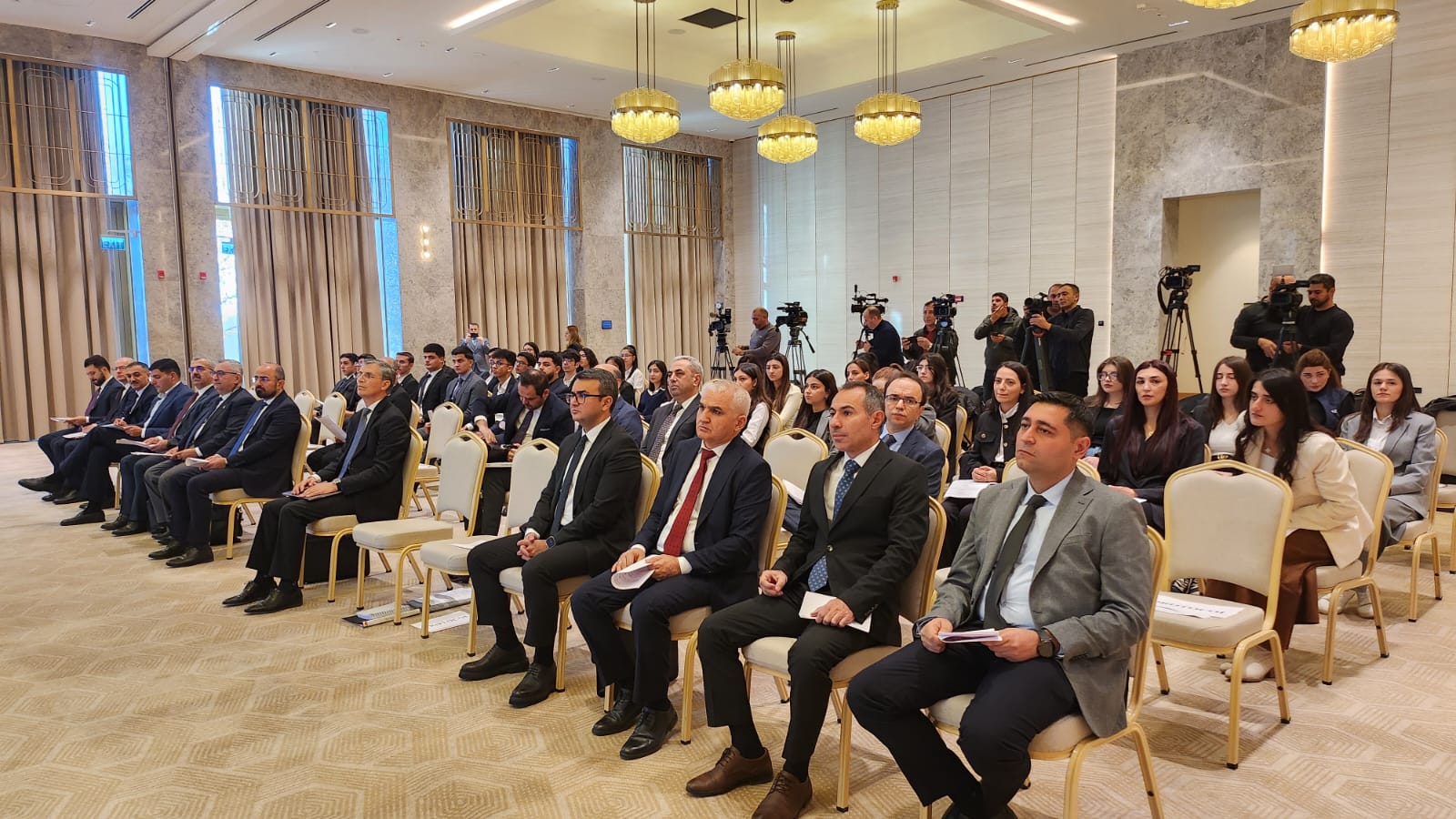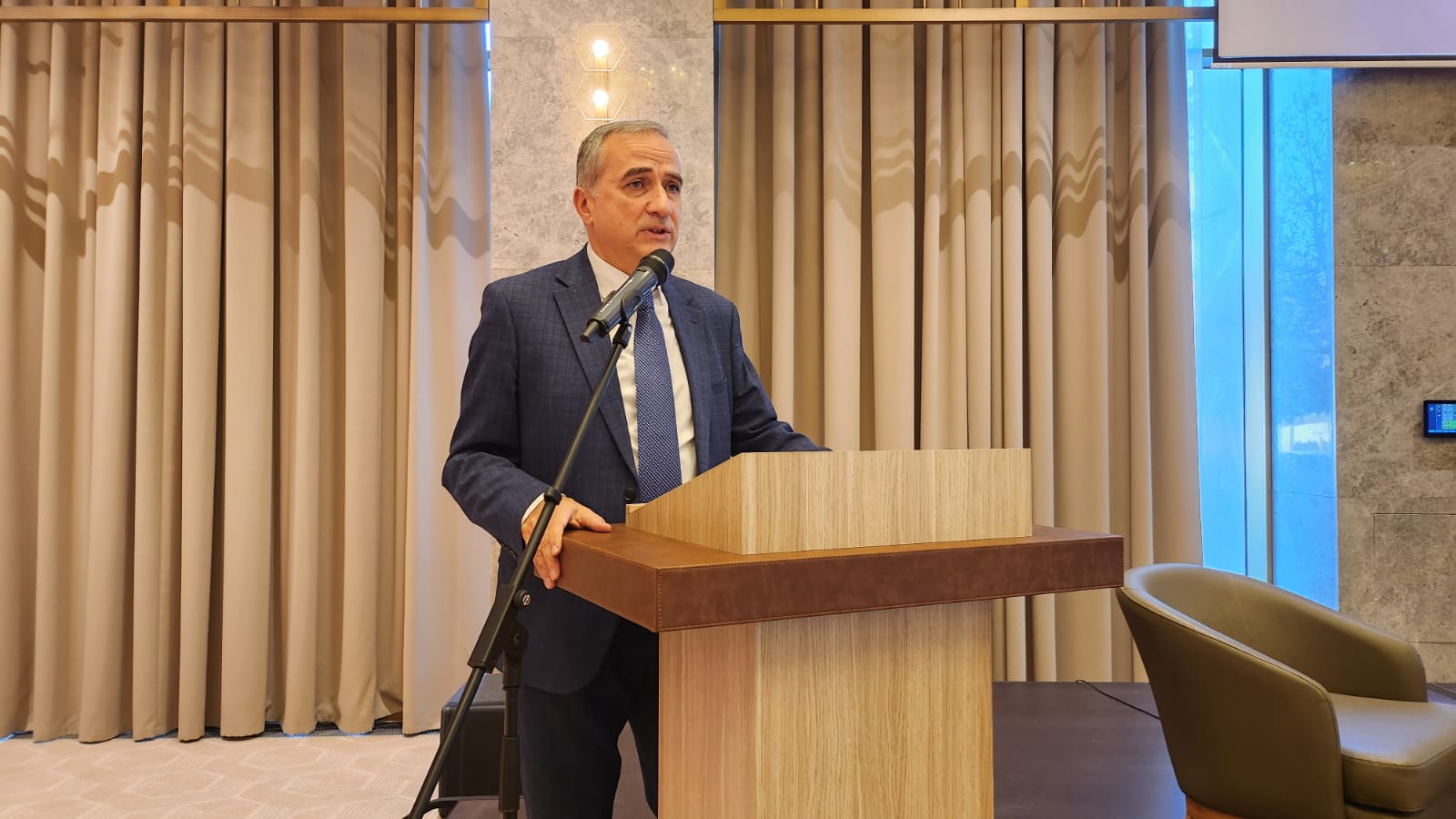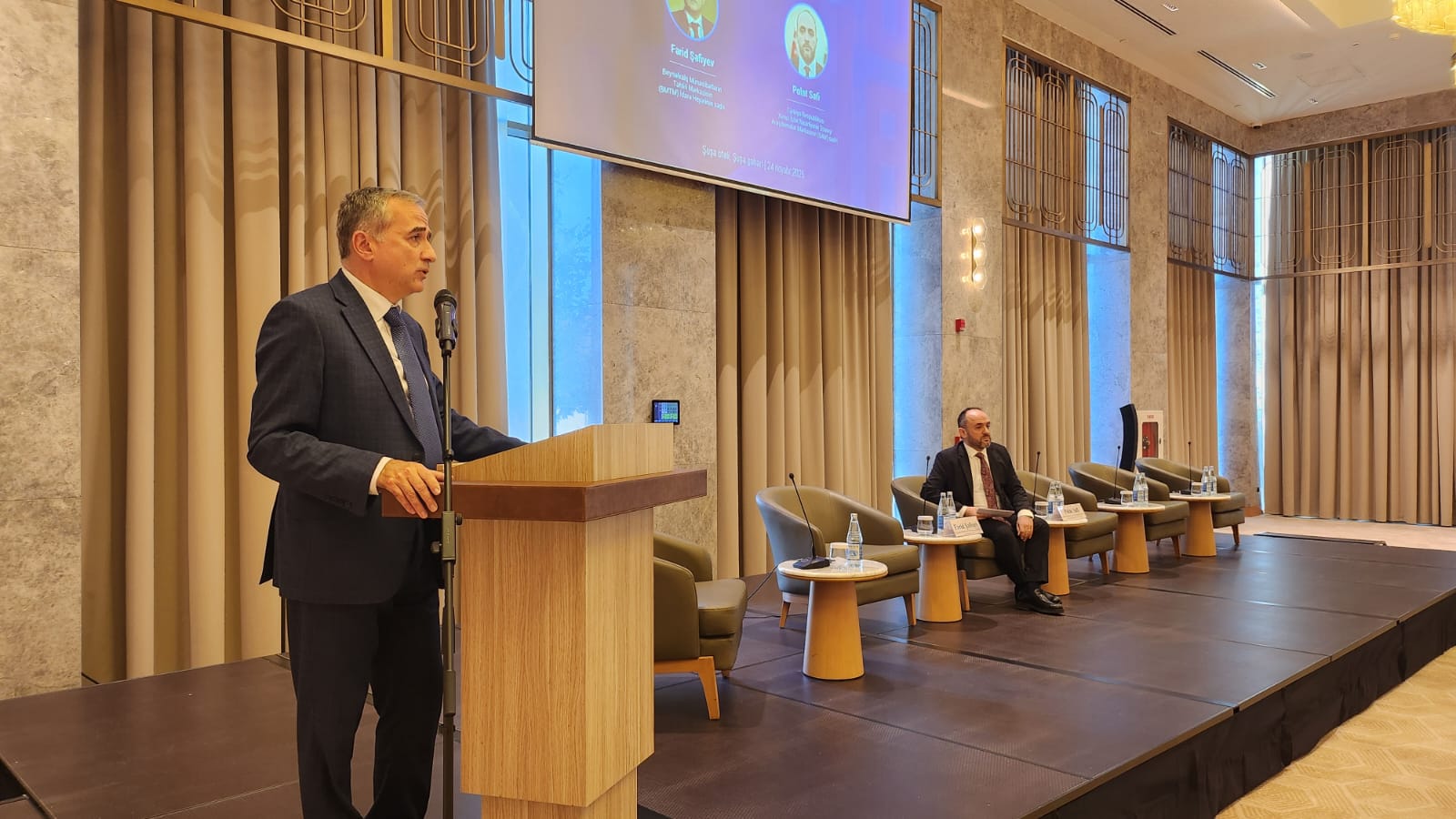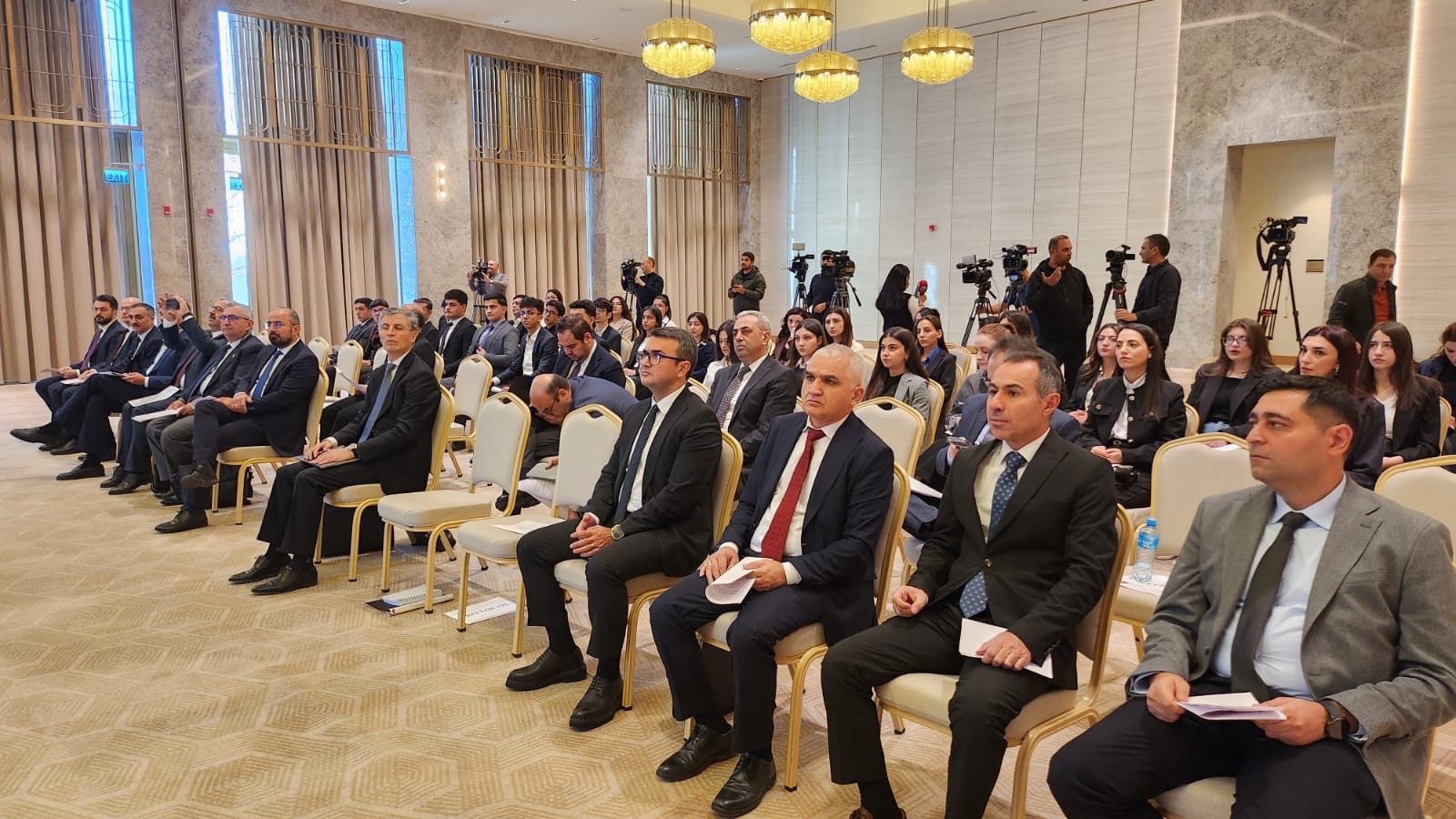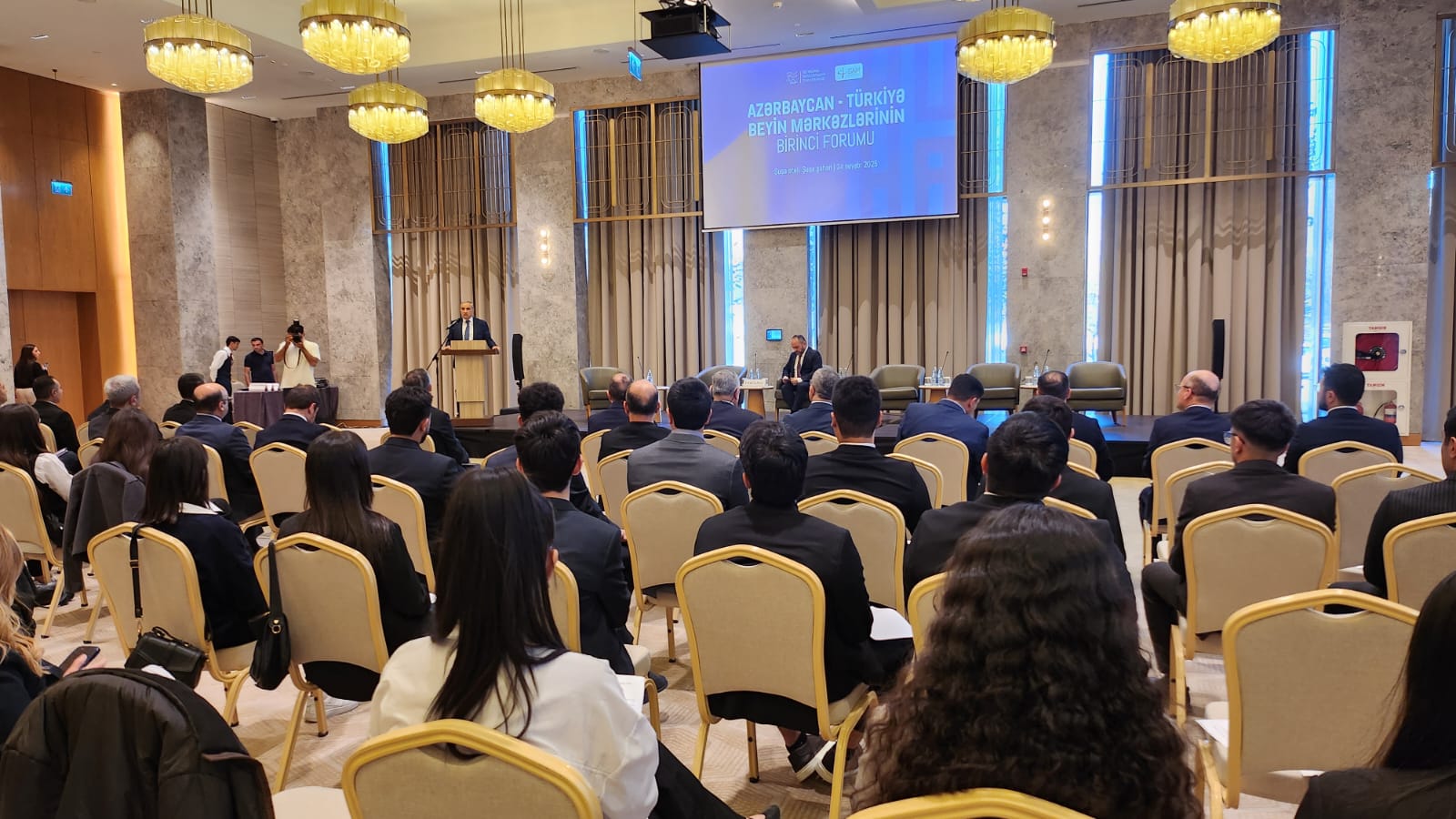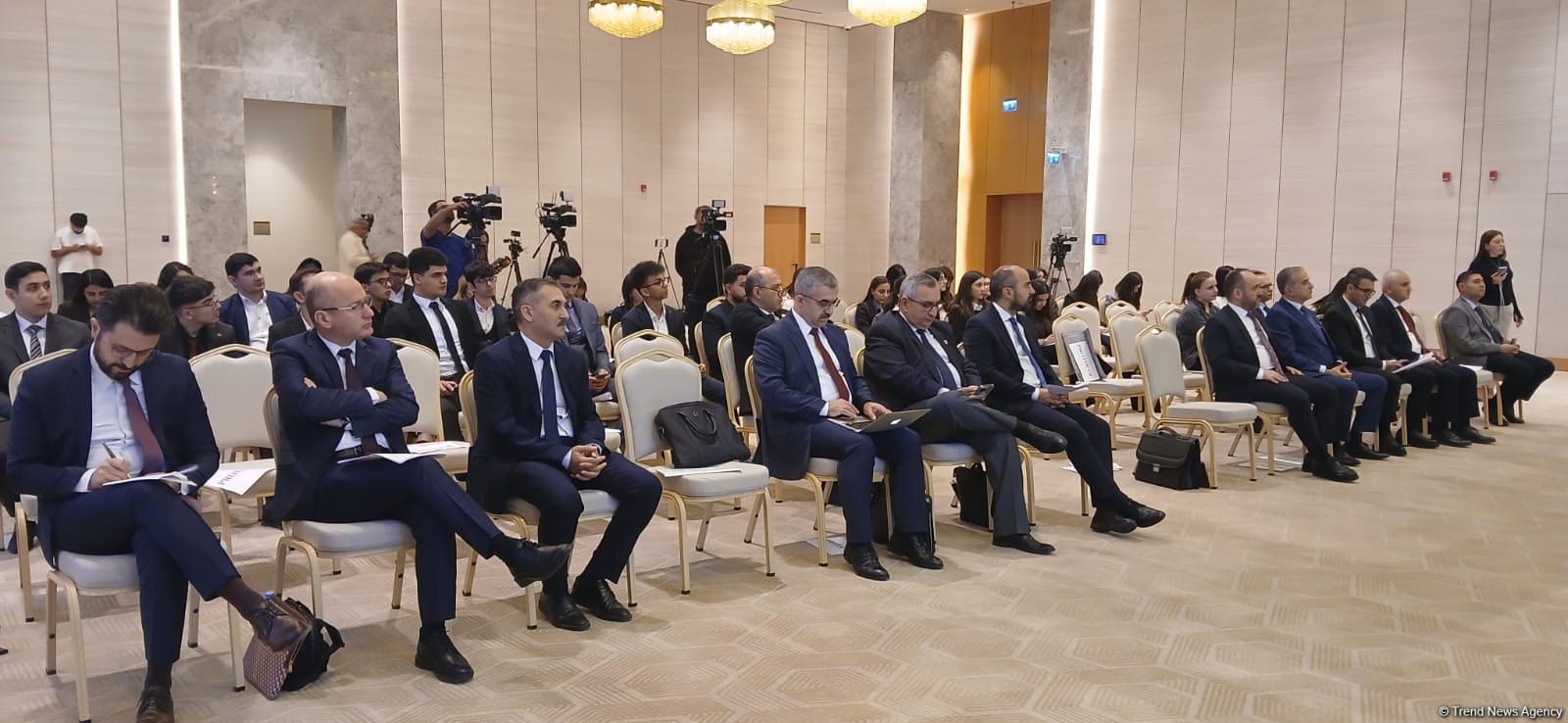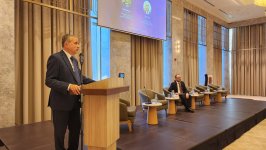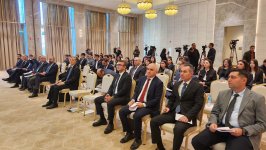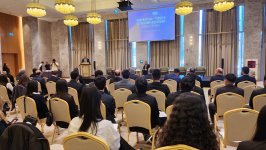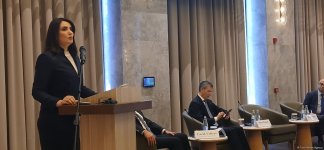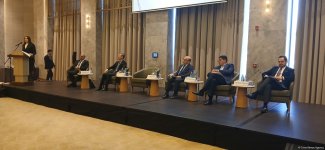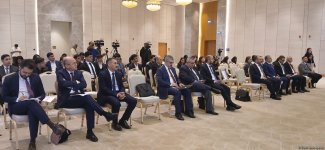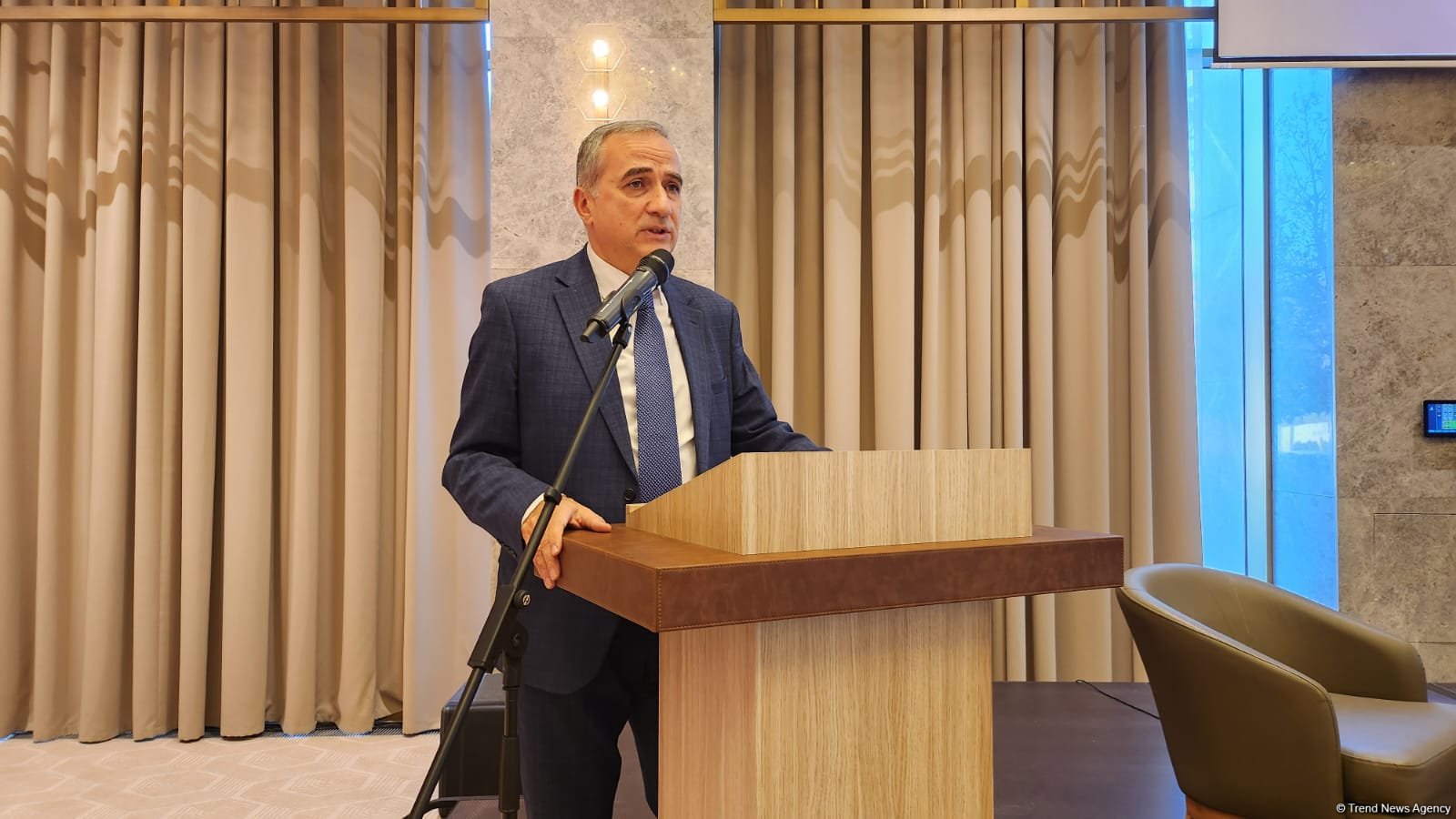
SHUSHA, Azerbaijan, November 24. The First Forum of Think Tanks of Azerbaijan and Türkiye, organized by the Center for Analysis of International Relations (CAIR), is being held in Shusha, Trend's Karabakh bureau reports.
The forum is attended by heads of leading analytical institutions and researchers from both countries. The main topics of discussion will be prospects for cooperation in the areas of regional security, foreign policy, economic integration, transport and communications, and energy.
The forum began with speeches by CAIR Chairman Farid Shafiyev and Polat Safi, Chairman of the Center for Strategic Studies of the Ministry of Foreign Affairs of the Republic of Türkiye. The speeches focused on the importance of further strengthening the institutional foundations and constructive role of the Azerbaijani-Turkish strategic alliance against the backdrop of new realities emerging in the region.
Furthermore, speaking at the event, Kadir Temiz, president of the Turkish Center for Middle East Studies (ORSAM), stated that the strategic alliance formed between Ankara and Baku allows for more effective management of processes taking place in the region.
“Experts note that although both countries are separate states, their interests and policies may differ in various aspects, but the similarity of their strategic vision and basic principles is a fundamental condition of this alliance, and this is a serious signal to other countries about strengthening cooperation,” he stressed.
According to him, the main directions shaping Turkey's policy in the Middle East should be discussed in coordination with Azerbaijani-Turkish cooperation. Three leading directions of Turkey's regional policy deserve special attention. The first is the approach to security and stability issues. The second is diplomatic relations and regional cooperation. The third pillar of Türkiye's Middle East strategy is geo-economic projects covering energy security and transport corridors.
The third area plays a particularly important role in the development of Azerbaijani-Turkish relations. The Zangezur Corridor, the Middle Corridor, power lines, and logistics routes are transforming the two countries into a complementary model of cooperation. In addition, the Road of Development project, jointly implemented by Turkey and Iraq, is a transport line that starts in Basra and extends through Turkey to Europe, creating new opportunities for economic integration in the region. If the situation in Syria stabilizes in the future, it may be possible to extend this line. Ultimately, these three main areas of Türkiye's Middle East policy—security, diplomacy, and geo-economic relations—serve to further deepen the strategic partnership with Azerbaijan. This model not only strengthens the regional influence of the two countries, but also creates new platforms for stability and development in the Middle East and South Caucasus," said Kadir Temiz.
Esma Ozdashli, director of the Ismail Gaspirali Institute of Foreign Policy, said that in the context of escalating regional challenges, further strengthening of Azerbaijani-Turkish military cooperation is of particular importance.
"Cooperation between Türkiye and Azerbaijan has set an exemplary example not only in the political and economic spheres, but also in the field of security and defense.
Relations between the two countries have gone beyond the traditional framework of international good neighborliness, forming principles of friendship and brotherhood. The basis for this idea was laid by Mustafa Kemal Atatürk's statement, “Azerbaijan's joy is our joy, its sorrow is our sorrow,” and the words of National Leader Heydar Aliyev, “One nation, two states.”
Against the backdrop of global tensions, such as in the Middle East, conflicts in Sudan, and the war in Ukraine, the strengthening of Türkiye's defense industry and the development of modern weapon systems have become an important factor for the region. The effective use of Turkish UAVs in many conflict zones has further strengthened Türkiye's global position in this area. One of the main reasons for Türkiye's success in the defense industry is its policy of minimizing external dependence in terms of weapons and military equipment. The embargo and other restrictions imposed after the 1974 operation in Cyprus were a turning point in the strengthening of Turkey's national defense industry," Ozdashli noted.
The 1st Shusha Forum is important in terms of strengthening institutional partnerships between Azerbaijani and Turkish think tanks, creating joint scientific and analytical platforms, and coordinating future strategic initiatives.
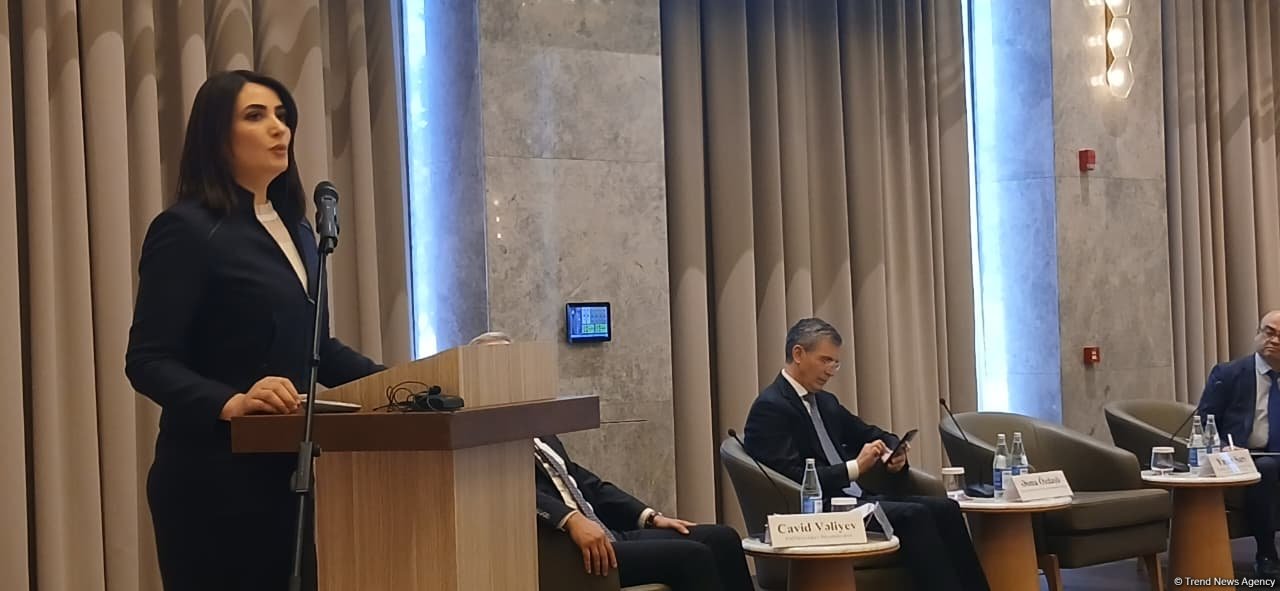
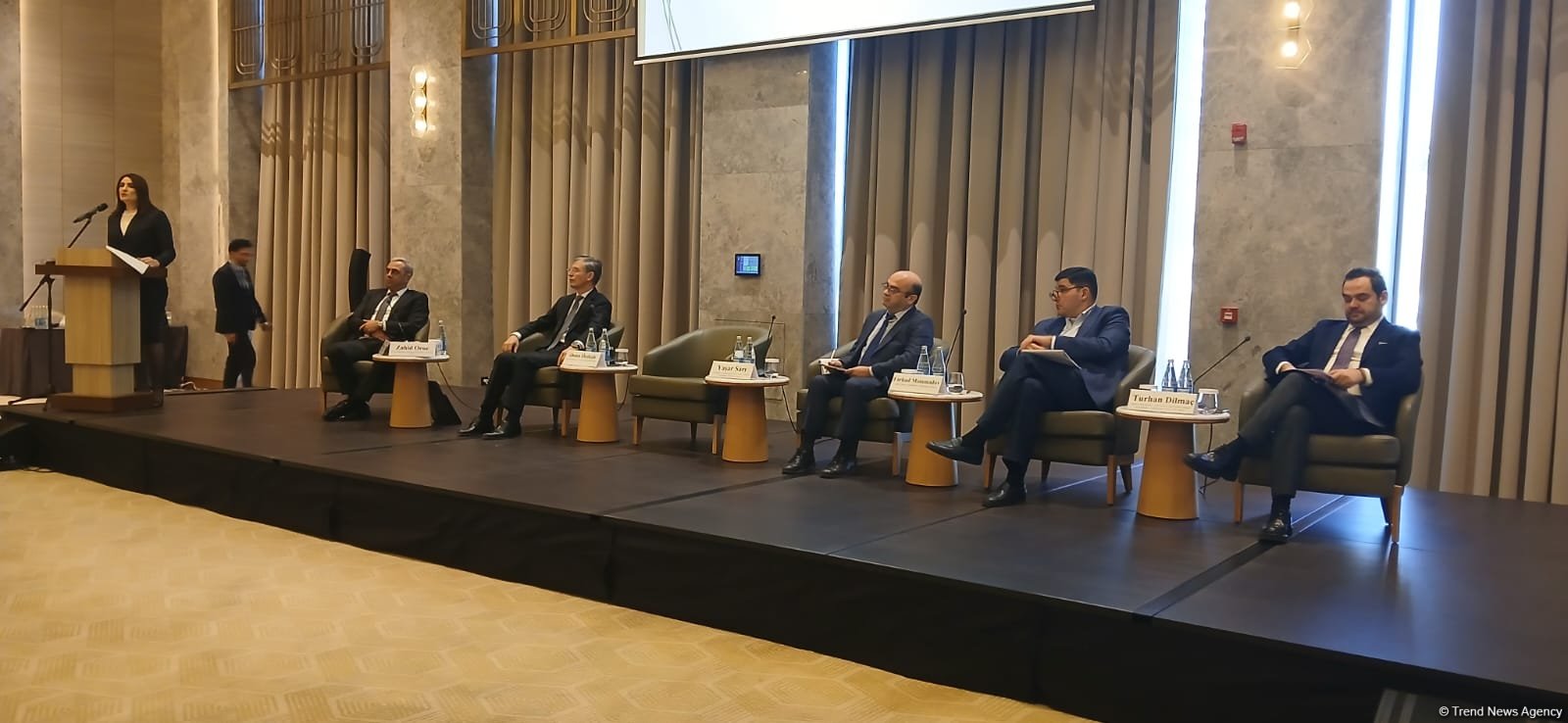
The panel discussion, moderated by Javid Valiyev, was attended by a member of the Azerbaijani Parliament, Chairman of the Board of Directors of the Center for Social Studies (STM) Zahid Oruj, Director of the Ismail Gasprinski Institute of Foreign Policy Asma Ozdashli, Director of the Heydar Aliyev Center for Eurasian Studies at Ibn Khaldun University Yashar Sarin, Director of the South Caucasus Research Center Farhad Mammadov, and Director of the Center for Strategic Studies (SAM) Ministry of Foreign Affairs of the Republic of Türkiye Turhan Dilmaç.
The panel analyzed the prospects for political, economic, humanitarian integration, and institutional cooperation within the Organization of Turkic States. Priority areas for taking integration processes in the Turkic world to a new level and strengthening institutional ties were also discussed.
The third session of the First Forum of Azerbaijani-Turkish Think Tanks is currently underway.
The session discussed the role of transport, communication, and energy partnerships in Azerbaijani-Turkish relations.
The panel was attended by Ramil Huseyn, Deputy Executive Director of the Center for Economic Reform and Communications Analysis, Enes Bayrakli, Vice President of the Turkish Research Foundation, Araz Aslanli, Chairman of the Caucasus Center for International Relations and Strategic Studies, Ravan Hasanov, Executive Director of the Baku International Center for Multiculturalism, and Telman Nusretoglu, Head of the Department of History and Archaeology at Khazar University.
The session discussed the Zangezur Corridor, the Trans-Caspian route, and relations in the field of energy communications. Regional transport corridors, strategic priorities for energy cooperation, and the contribution of the two countries to global energy security were also discussed.
The 1st Shusha Forum is important in terms of strengthening institutional partnerships between Azerbaijani and Turkish think tanks, creating joint scientific and analytical platforms, and coordinating future strategic initiatives.