


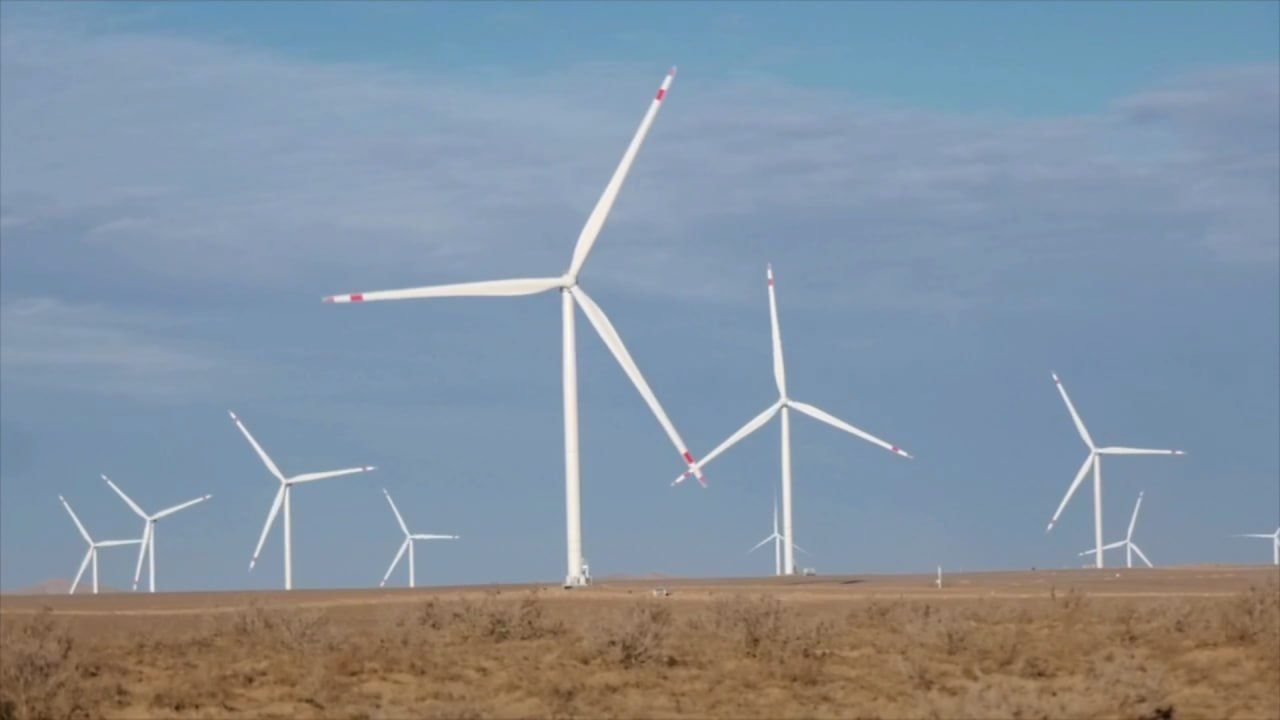

TASHKENT, Uzbekistan, May 12. Solar and wind power stations in Uzbekistan have generated a total of 3 billion kWh of electricity since the beginning of 2025, Trend reports, citing the Ministry of Energy of Uzbekistan.
Currently, Uzbekistan operates 11 solar photovoltaic power stations with a total capacity of 4,067 MW and 3 wind power stations across 10 regions. These renewable energy sources have been contributing significantly to the country’s electricity production.
In 2022, when renewable energy sources began to be widely adopted, solar power stations in the Navoiy and Samarkand regions produced 434 million kWh of electricity. In 2023, this figure increased to 576.9 million kWh.
Last year, 9 solar power stations and 1 wind power station in 7 regions of Uzbekistan collectively produced 4 billion 860 million kWh of electricity.
Just one month ago, on April 12, 2025, solar and wind power stations had already produced 2 billion kWh of electricity.
Of the 3 billion kWh generated so far in 2025, 1 billion 776.3 million kWh came from solar power stations, while 1 billion 223.7 million kWh was produced by wind power stations.
The generation of renewable energy in Uzbekistan has resulted in significant environmental and economic benefits. A total of 900 million cubic meters of natural gas has been saved. In addition, over 1 million 710 thousand tons of carbon dioxide emissions and 1,710 tons of nitrogen oxides have been prevented.
The combined electricity production from all hydroelectric, solar, and wind power stations in Uzbekistan reached 5 billion 250 million kWh. This has led to the saving of 1 billion 575 million cubic meters of natural gas and the prevention of 2 million 990 thousand tons of carbon dioxide emissions and 2,990 tons of nitrogen oxides.
For context, the total amount of electricity produced is enough to meet the annual consumption of 5,833,333 households for 4.5 months or 2,187,500 households for an entire year.



