


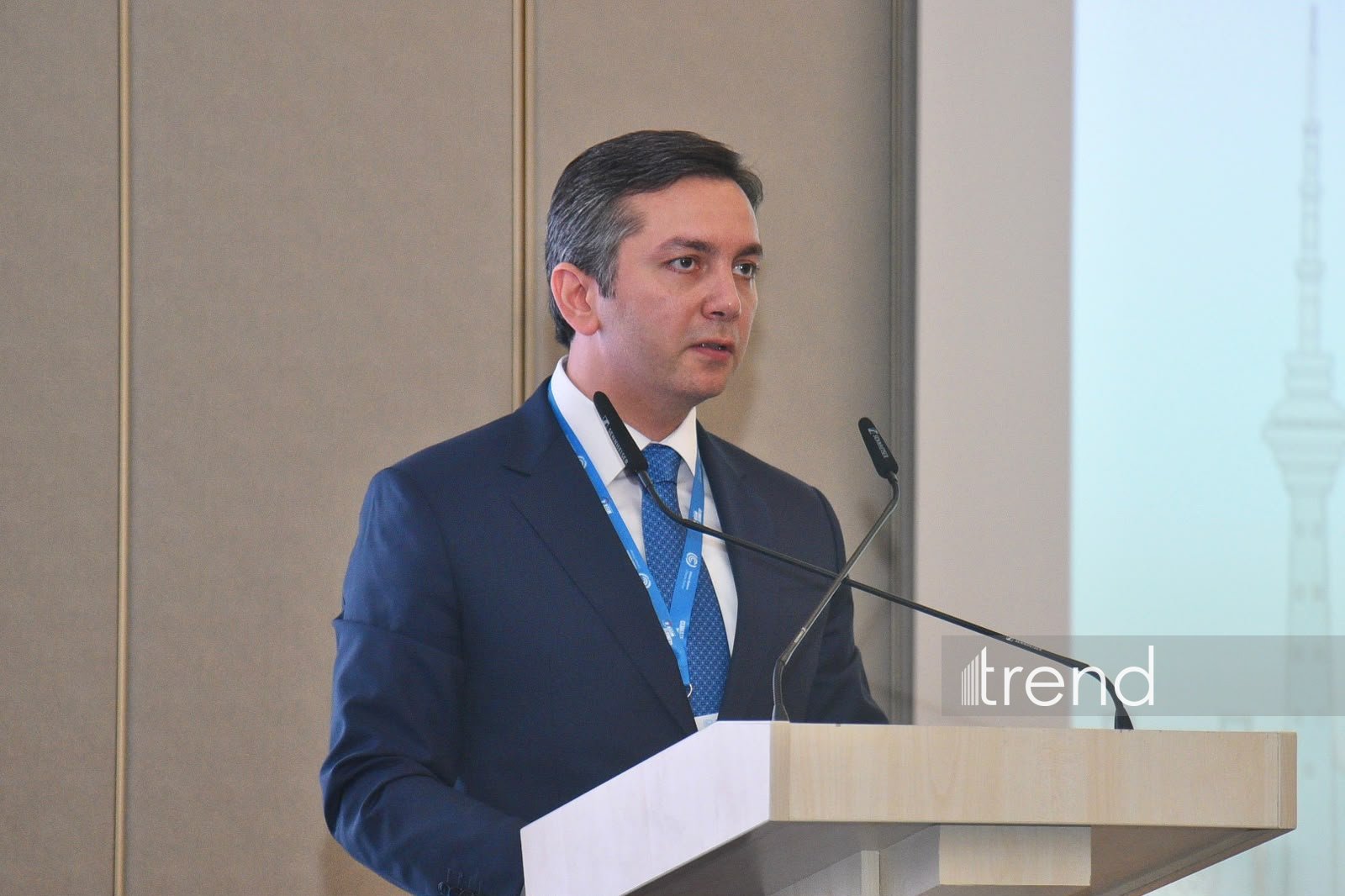
BAKU, Azerbaijan, September 7. The climate process must increasingly move from negotiating commitments to delivering them, while implementation finance remains a key condition for achieving climate goals, Azerbaijani Deputy Foreign Minister and COP29 Lead Negotiator Yalchin Rafiyev said, Trend’s correspondent reports from the event.
Rafiyev made the remarks during the opening ceremony of the fourth Climate Week (CW4) of the UN Framework Convention on Climate Change in Baku.
“The direction is clear: the climate process must increasingly move from negotiating commitments to delivering them,” Rafiyev said.
According to him, the new generation of nationally determined contributions (NDCs) should no longer be viewed simply as statements of ambition. “NDCs are no longer simply statements of ambition. They must increasingly become investment and implementation plans — connecting national targets with concrete policies, technologies, infrastructure and finance,” he said.
Rafiyev noted that COP31 in Antalya can help accelerate this transition. “The question in Antalya should therefore not only be: How ambitious are our NDCs? It should also be: What will it take to implement them? Which investments are needed? Which technologies? Which partnerships? And, crucially, where will the finance come from?” he said.
He stressed that financing is essential for implementation. “Because there can be no Implementation COP without implementation finance. The new climate finance goal agreed in Baku — at least $300 billion annually by 2035, alongside efforts to scale finance to $1.3 trillion — must increasingly translate into accessible and affordable resources, particularly for developing countries,” Rafiyev said.
“Finance is not a side issue of implementation. Finance is what makes implementation possible,” he added.
Rafiyev also highlighted the importance of transparency in achieving climate goals. He noted that during Azerbaijan’s COP29 Presidency, the country worked to elevate transparency to the political level, encouraged parties to submit their first Biennial Transparency Reports (BTRs), and launched the Baku Global Climate Transparency Platform to support developing countries in implementing the Enhanced Transparency Framework. “Now we must maintain this momentum. As we approach the next BTR cycle, I encourage Parties to prepare and submit their second BTRs on time,” he said.
According to Rafiyev, NDCs show where countries intend to go, while BTRs demonstrate how far they have actually progressed. “Finance helps us close the distance between the two. This triangle — ambition, transparency and finance — must become the foundation of implementation,” he said.
Speaking about COP31, Rafiyev said Antalya should not become a platform for renegotiating already achieved compromises. “COP31 should unlock their implementation for the future,” he said.
He emphasized the need to build trust between developed and developing countries, negotiating groups, and those providing and requiring support. Rafiyev also said Azerbaijan intends to continue playing a bridge-building role through initiatives such as the Shamakhi Retreat. “From Baku to Belém and now towards Antalya, there must be continuity of purpose. Presidencies change. Our collective responsibility does not,” he said.
According to him, Azerbaijan will remain an active partner in defending multilateralism, building bridges, and supporting Türkiye, Australia, and all parties in achieving an ambitious, balanced, and implementation-focused outcome at COP31. “The world does not need another COP that simply describes the climate challenge. It needs a COP that demonstrates that multilateralism can still solve it,” Rafiyev said.
The Fourth Climate Week (CW4) of the United Nations Framework Convention on Climate Change is being held in Baku through September 11, hosted by the Republic of Azerbaijan and organized by the Ministry of Foreign Affairs of the Republic of Azerbaijan.
Having become an important international platform on the climate agenda, Baku is hosting discussions during the event on the practical implementation of climate decisions, expanding international cooperation and further strengthening global climate action ahead of COP31.
Government and state officials from various countries, as well as representatives of international organizations, experts, financial institutions, the private sector and civil society, are expected to participate in the events.
Baku Climate Week is designed as an international platform for discussions on combating climate change, the energy transition, renewable energy, sustainable development and accelerating climate action.
The events are expected to further strengthen Baku’s active role in the global climate agenda while making an important contribution to strengthening international climate cooperation ahead of COP31.



