


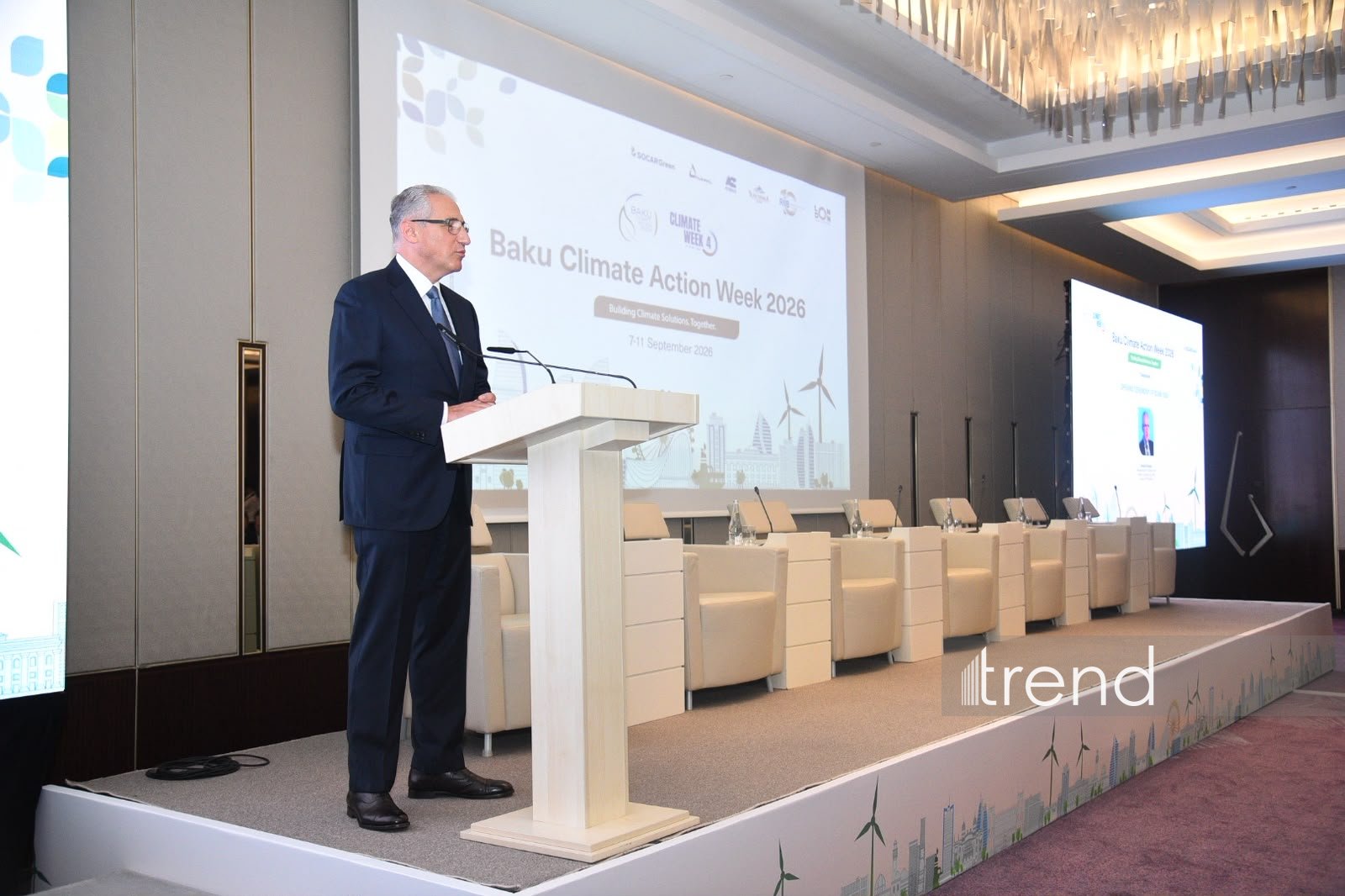

BAKU, Azerbaijan, September 7. The decline in the Caspian Sea’s water level is becoming increasingly concerning for the region with each passing year, COP29 President and Azerbaijani Presidential Representative on Climate Issues Mukhtar Babayev said, Trend’s correspondent reports from the event.
Babayev made the remarks during the opening ceremony of the fourth Climate Week of the UN Framework Convention on Climate Change.
He noted that Azerbaijan has been working to raise this challenge higher on the regional and international agenda and strengthen dialogue among the Caspian littoral states.
“Our task should be to ensure that shared waters do not become a source of tension, but rather a driver of stability and shared prosperity for our populations. For Azerbaijan, the climate change agenda has received the highest level of political attention.
The risks posed by climate change are particularly high for vulnerable countries, especially small island developing states and least developed countries. That is precisely why we are here, and we want to achieve joint results this week,” Babayev added.
The fourth Climate Week (CW4) of the UN Framework Convention on Climate Change is being held in Baku through September 11, hosted by the Republic of Azerbaijan and organized by the Azerbaijani Ministry of Foreign Affairs.
Baku, which has become an important international platform for the climate agenda, is hosting discussions on the practical implementation of climate decisions, the expansion of international cooperation, and further strengthening global climate action ahead of COP31. Representatives of governments and international organizations, experts, financial institutions, the private sector, and civil society from various countries are expected to attend the events.
Baku Climate Week is designed as an international platform for discussions on combating climate change, the energy transition, renewable energy, sustainable development, and accelerating climate action. The events will further strengthen Baku’s active role in the global climate agenda and make an important contribution to strengthening international climate cooperation ahead of COP31.



