


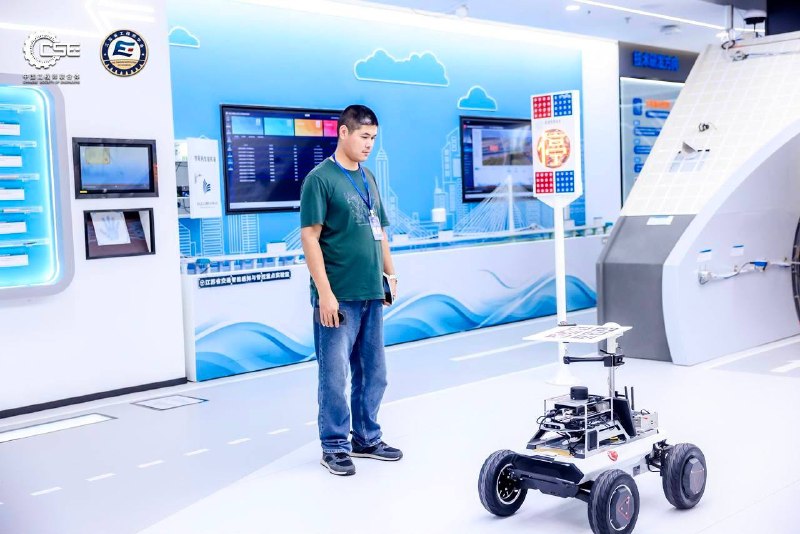

BAKU, Azerbaijan, August 20. Specialists from Kazakhstan's Kazakh Road Research Institute (KazDorNII) are studying artificial intelligence, digital monitoring, and advanced road material technologies in China to assess their potential application in Kazakhstan.
This was announced by the press service of the Kazakh Ministry of Transport.
According to the Ministry, from August 14 through August 19, KazDorNII specialists underwent training in Nanjing as part of the 2026 Engineering Capacity Building Program, held at the invitation of partner organization JSTI Group. The program brought together engineers from Kazakhstan, Indonesia, Malaysia, Cambodia, and other Asian countries to exchange experience and study China's engineering solutions.
One of the key areas was the use of AI in the digital management of road infrastructure. KazDorNII specialists visited the Jiangsu Province Expressway Operation and Management Center, where data on road conditions and traffic flows are collected in real time.
Intelligent systems are used to forecast congestion, automatically detect traffic incidents, and coordinate traffic on highways. According to the ministry, such technologies enable a shift from responding to existing problems to predicting and preventing potential disruptions.
Another area of interest for Kazakhstan is digital monitoring of bridge conditions. Specialists studied Structural Health Monitoring (SHM) systems on cable-stayed and suspension bridges across the Yangtze River. Sensors installed on the structures continuously record vibrations, deformations, and other changes, while predictive models help identify potential risks at an early stage.
The KazDorNII delegation also visited the National Engineering Research Center for Advanced Road Materials (NERC-ARM), the National Key Laboratory for Safety and Technical Maintenance of Long-Span Bridges, and research centers of Southeast University.
Particular attention was paid to next-generation road materials, including self-healing and energy-efficient pavements, as well as modified asphalt concrete designed for greater durability under heavy traffic and challenging climatic conditions.
"Modern infrastructure management means not waiting for a critical defect to appear, but identifying in advance where and when it could occur. The AI, digital twin and instrumental monitoring technologies studied in China are in line with the direction being developed by KazDorNII for Kazakhstan's road sector. Our task is to adapt the most effective solutions to Kazakhstan's conditions and apply them in the diagnostics and management of road assets," the institute's specialists said.
According to the ministry, the experience gained in China will be used to further develop intelligent road and infrastructure monitoring systems, improve infrastructure diagnostics, and conduct research into more durable road materials.



