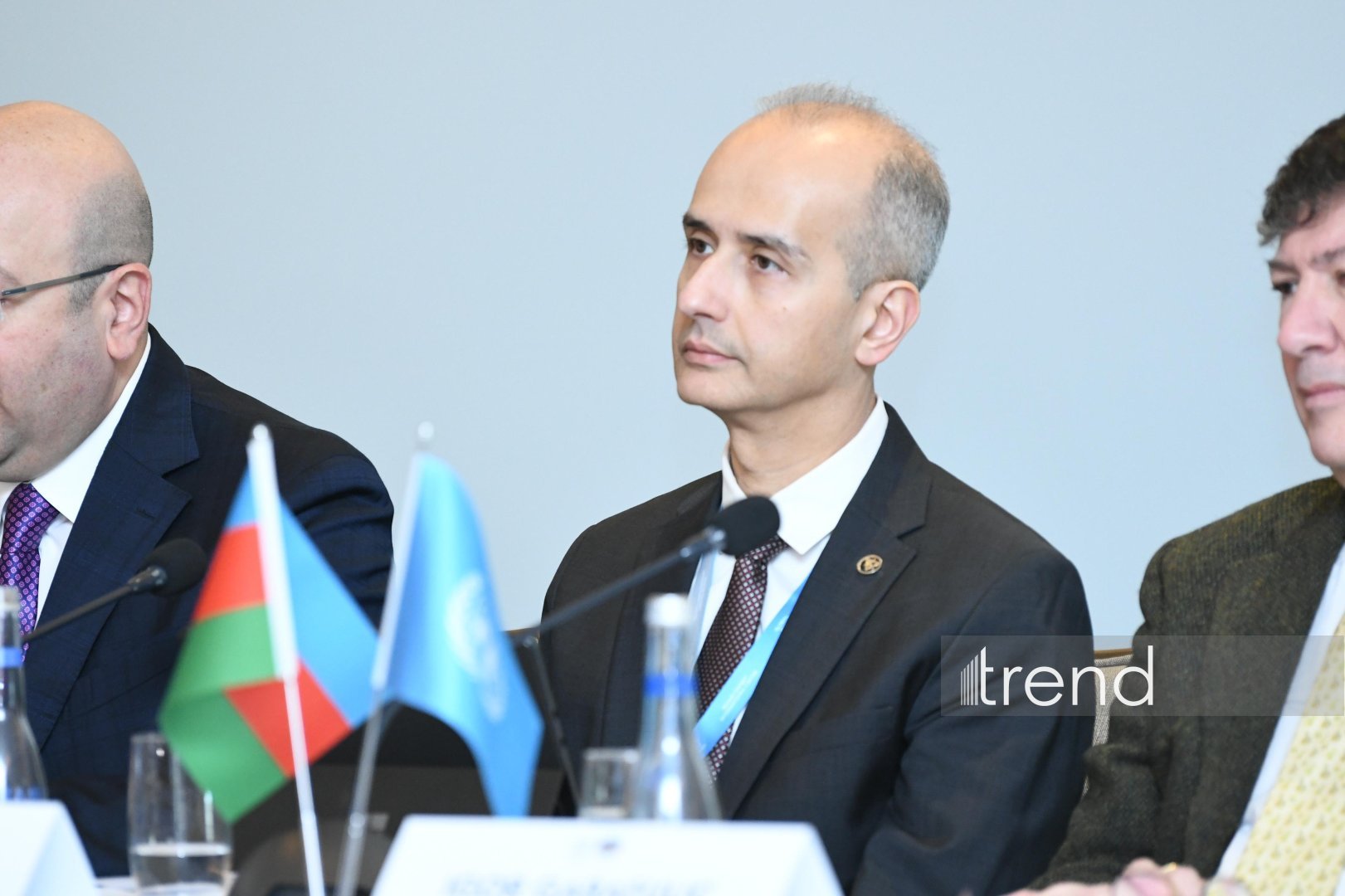
BAKU, Azerbaijan, March 14. The development of
the Middle Corridor requires a comprehensive and balanced approach
to territorial planning, said Erfan Ali, Regional Director for
Eastern Europe and Central Asia at the United Nations Human
Settlements Programme (UN-Habitat), Trend reports.
Speaking at a briefing ahead of the 13th session of the World
Urban Forum (WUF13), Ali emphasized the importance of integrated
planning.
“Corridors like these create new opportunities, but they also
demand balanced spatial planning to ensure urban growth does not
come at the expense of rural areas and instead strengthens their
interconnection,” Ali said.
He noted that several large-scale new city projects are underway
in the region, including Asman in Kyrgyzstan, Alatau in Kazakhstan,
New Tashkent, and Akhal in Turkmenistan. “Developing these cities
requires applying principles of inclusivity, sustainable growth,
and modern urban planning,” he added.
Ali also highlighted the growing local climate risks in Central
Asia, including extreme heat and heatwaves, which pose increasing
challenges for urban areas.
Additionally, he noted that UN-Habitat recently opened a
regional office for Eastern Europe and Central Asia in
Istanbul.
“This timely initiative supports the region at a critical
intersection of economic transformation, urban development, and
humanitarian recovery. It offers a unique opportunity to showcase
urban transformation processes and demonstrate how we plan to
support countries in the region,” he said.
Stay up-to-date with more news on Trend News
Agency's WhatsApp channel