


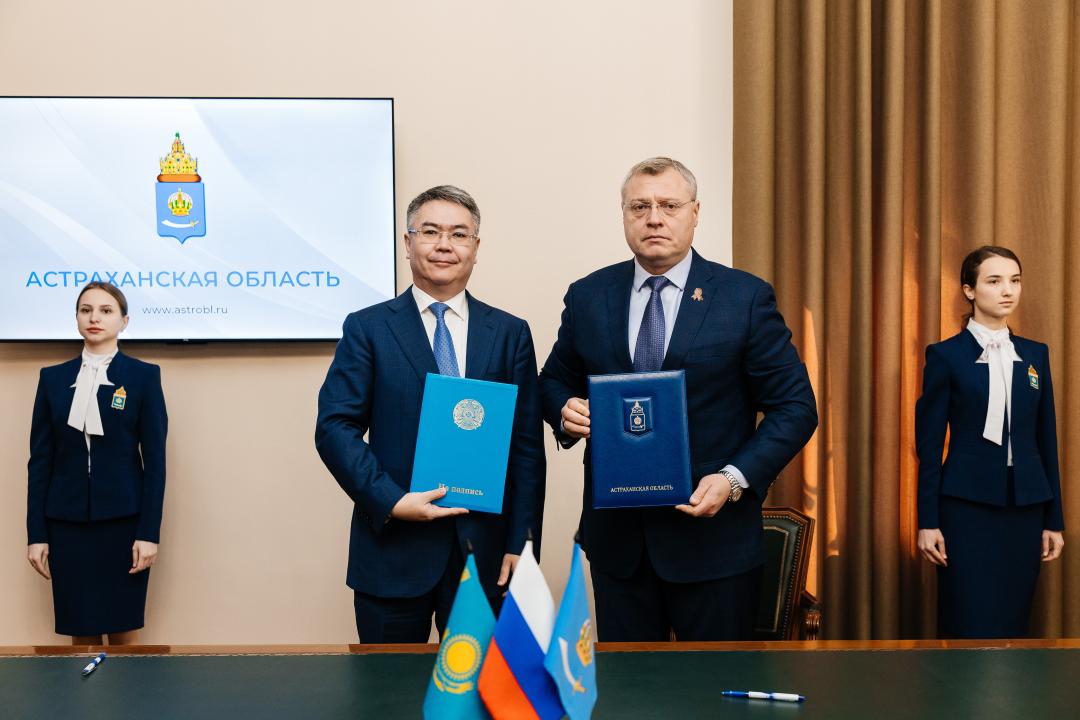

ASTANA, Kazakhstan, April 15. Kazakhstan’s Atyrau region and the Astrakhan Region of Russia have signed a three-year plan for joint activities as part of the official visit of Atyrau Region Akim(Governor) Serik Shapkenov to Russia, which is taking place at the invitation of Astrakhan Region Governor Igor Babushkin, Trend reports.
"Atyrau and Astrakhan regions are closely connected by historical and cultural ties, as well as active economic cooperation. The trade turnover between our regions is steadily growing, but the potential is far from exhausted. I am confident that cooperation in agriculture, logistics, and industry will allow us to significantly expand our partnership. The completion of the repair of the 'Atyrau – Astrakhan' highway will give this new momentum," noted Shapkenov.
In turn, Governor Igor Babushkin emphasized that the Astrakhan
Region is productively cooperating with Atyrau in the fields of
medicine, education, culture, sports, and youth policy.
"Most of the activities are being carried out within the framework
of our agreement. Today, we signed an updated plan for the next
three years. I am confident that this will give additional impetus
to further enhancing our multifaceted partnership," the governor
emphasized.
As part of the cultural program of the visit, Shapkenov visited the Astrakhan Kremlin and the Astrakhan College of Culture and Arts. The college pays special attention to additional education: 50 children are permanently learning to play the dombra, one of the main symbols of Kazakh culture.
A meeting was also held with representatives of the business circles of the two regions. The Astrakhan Fund for Support of Small and Medium-Sized Enterprises served as the platform for dialogue. During the meeting, prospects for expanding investment cooperation, implementing joint projects, and strengthening production ties were discussed.
As part of the visit, the delegation from Atyrau Region also visited enterprises in the special economic zone "Lotus," including a modern facility for the production of feed for aquaculture. Visiting such facilities allowed the parties to discuss potential areas of cooperation in the food industry, logistics, and agriculture, as well as exchange experiences in implementing industrial and scientific-technological projects.



