


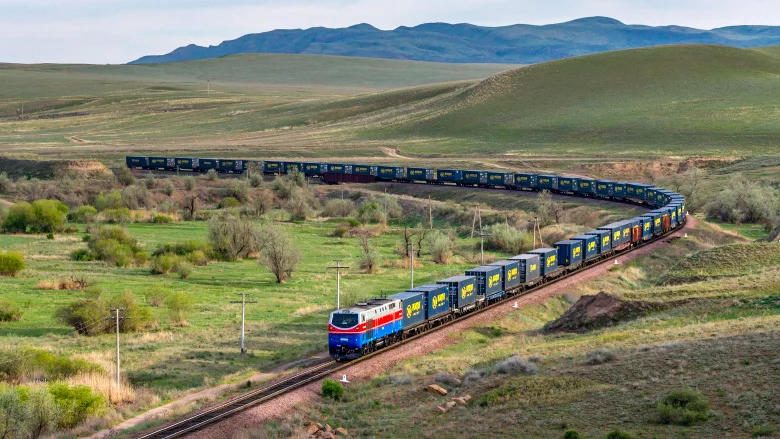

BAKU, Azerbaijan, August 26. The full development of the Middle Corridor will require not only physical infrastructure but also a developed financial infrastructure capable of attracting private investment, PMCG President Alex Aleksishvili said.
Aleksishvili made the remarks at the 10th CAREC Think Tank Development Forum in Tashkent, according to consulting company PMCG.
According to World Bank estimates, cited by Aleksishvili, trade volumes along the corridor could triple by 2030 and transport times could be cut in half with the right investments and efficiency improvements.
Trade between Azerbaijan, Georgia and Kazakhstan is expected to increase by 37%, while their trade with the European Union could rise by 28%.
Growth in trade flows will create demand not only for major transport infrastructure, but also for related facilities, Aleksishvili said.
“Rail infrastructure will require terminals, rolling stock and warehousing capacity, while ports will need logistics and processing facilities. Energy networks will require new capacity to support generation and industry. The development of digital connectivity, in turn, will drive demand for technology and data infrastructure,” he said.
Aleksishvili stressed that many of these investments cannot be financed solely through traditional bank lending.
Financial systems in Central Asia and the South Caucasus remain largely dependent on bank financing, he said.
“The problem is therefore not only a lack of capital, but also insufficient access to appropriate forms of financing,” Aleksishvili said.
Private equity, mezzanine financing, private debt and hybrid financial instruments could help bridge the gap, he said.
“These instruments can provide longer-term and more flexible financing for companies planning expansion, investing in fixed assets or implementing projects with a higher level of risk,” the PMCG president said.



