


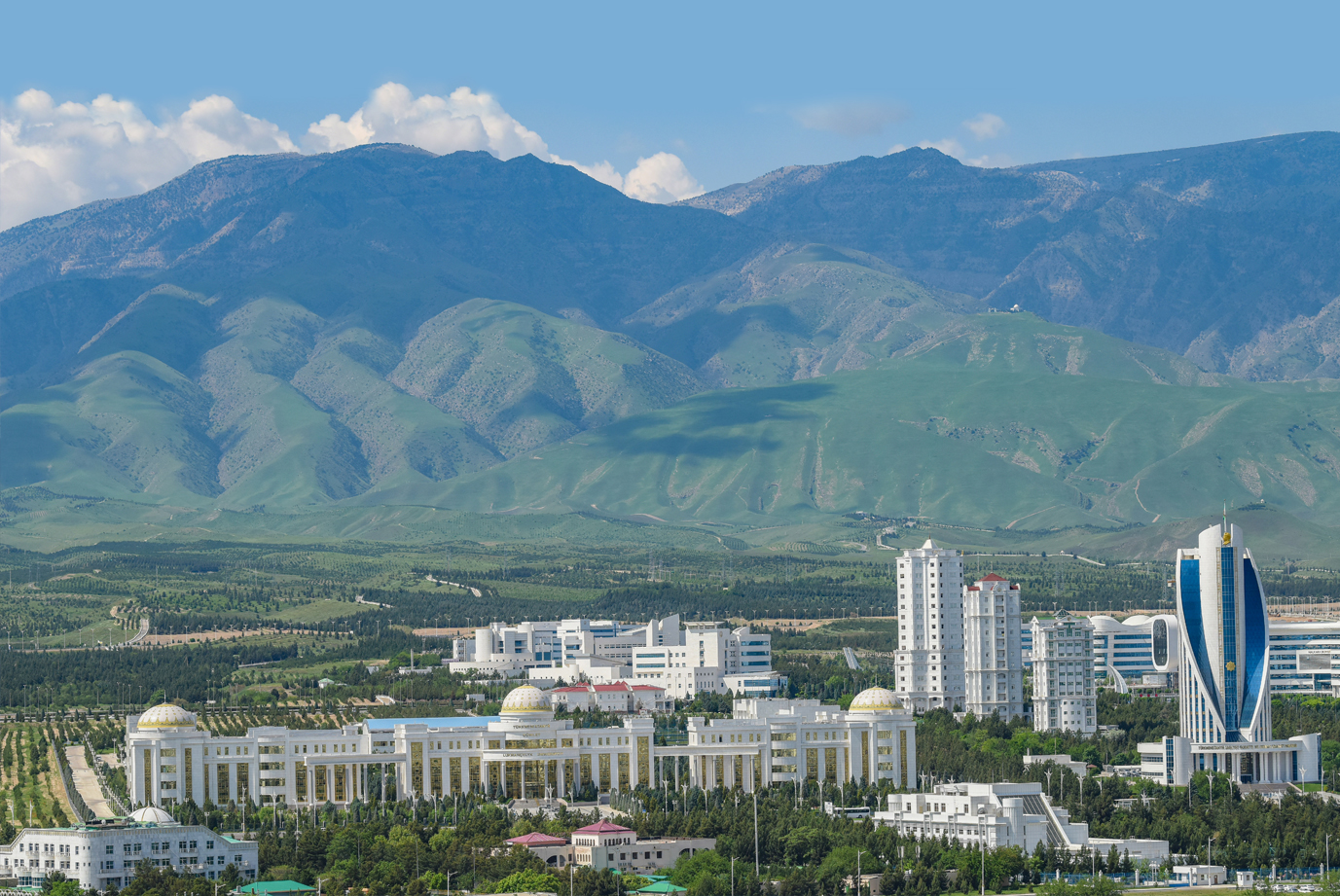

BAKU, Azerbaijan, May 28. The international forum “White City Ashgabat - 2026,” held on May 24-25, served as an important industry platform dedicated to construction and urban infrastructure. It was within the framework of this forum that Turkmenistan presented the “Ashgabat-2045” concept, which envisions a long-term transformation of the capital into a modern smart city with digital, environmental, and intelligent infrastructure.
The project is particularly significant given that Ashgabat currently concentrates a substantial share of the country’s economic activity. According to Turkmenistan’s Minister of Finance and Economy Mammethguly Astangulov, the capital accounts for more than 27% of the country’s GDP, covering industry, construction, transport, communications, financial institutions, and retail networks.
In addition, according to official population census results, around 14.6% of Turkmenistan’s population lives in Ashgabat. This makes the capital the largest hub of administrative governance, financial services, infrastructure, and economically active population. Therefore, the country is logically beginning its digital transformation from Ashgabat.
In many ways, the “Ashgabat-2045” concept reflects a broader strategy of Turkmenistan’s transition toward new models of economic development. In recent years, the issue of moving toward a digital economy has become increasingly relevant. As Trend previously reported in its article “Turkmenistan bets on AI, 5G and Musk: regional trends force action,” one of the key drivers of Turkmenistan’s push toward digitalization is regional dynamics in Central Asia, which require coordinated action among all five countries of the region.
For example, the development of international transport corridors crossing the region requires eliminating bottlenecks along their routes. Such bottlenecks often include customs procedures for cargo processing across the fragmented state borders of Central Asia, as well as inefficiencies in warehouse distribution. The unification of databases, accelerated information exchange, and the creation of a digital platform tracking logistics and business processes could significantly improve progress in addressing these issues.
In this context, the smart city concept may play a much more important role than merely urban development. In modern conditions, a smart city effectively represents a unified digital platform integrating transport, utilities, energy, communications, services, monitoring systems, and elements of public administration.
In the long term, such infrastructure can serve as a foundation for a broader digital system of economic management. Since Ashgabat concentrates government institutions, the financial sector, and coordination of a significant part of industrial activity, the capital can become a testing ground for digital monitoring mechanisms of economic processes.
This may include the introduction of systems for tracking sectoral KPIs, monitoring enterprise productivity, analyzing resource consumption, automating reporting, and integrating various economic entities into a unified digital ecosystem. If successfully tested in Ashgabat, such mechanisms could later be scaled to other regions of Turkmenistan.
This is particularly important for industry, one of the key pillars of the country’s economy. Today, Turkmenistan is already focusing on modernizing production, expanding domestic processing, and developing construction industry infrastructure. In his 2025 remarks, Minister of Finance and Economy Mammethguly Astangulov noted that electricity generation, building materials production, as well as light and food industries play an important role in Ashgabat’s economic structure.
At the same time, the smart city concept can deliver benefits not only for the state and economy, but also directly for the population. International experience shows that the implementation of intelligent urban management systems is typically associated with improvements in quality of life.
In Singapore, digitalization of public services and intelligent transport management helped reduce bureaucratic burdens and improve urban infrastructure efficiency. In Dubai, the Smart Dubai initiative led to a large-scale digital transformation of government services and accelerated interaction between business and the state. South Korea’s Songdo became one of the most well-known examples of IoT-based infrastructure integration, automated utilities management, and intelligent waste processing.
As the smart city concept develops, international organizations increasingly view urban digitalization as a tool for improving quality of life, governance efficiency, and economic sustainability. The World Economic Forum notes that modern smart cities should focus not only on technological implementation but also on improving urban environments, citizen engagement, and state-society interaction.
Similarly, the World Bank and UN-Habitat emphasize that digital infrastructure, data systems, and smart technologies can enhance urban economic efficiency, expand access to services, reduce inequality, and create new economic opportunities. Particular attention is given to the development of digital skills, service integration, and the use of technology for more efficient urban governance and resource management.
In this context, smart cities typically deliver several practical outcomes: more efficient transport management, reduced time for public service delivery, lower pressure on utility networks, optimized energy consumption, improved environmental conditions, and overall better urban governance efficiency.
For Ashgabat, such modernization is particularly important given climatic factors. In conditions of high temperatures and significant energy system load, issues of energy efficiency, water supply, and rational resource use become not only technological but also economic necessities.
Environmental priorities also play an important role in the concept. This aligns with the broader logic of “Ashgabat-2045,” where the smart city concept, green economy, and circular economy are gradually integrated into a unified long-term development model.
At the same time, the scale of the project implies that its implementation will require significant investment, workforce training, and further expansion of digital infrastructure. Issues related to system integration, dependence on foreign technologies, and long implementation timelines will also remain important factors.
Nevertheless, the overall logic of the concept is already clearly visible. Turkmenistan is seeking to transform Ashgabat not only into a modern urban project but also into a platform for the gradual technological transformation of the national economy. Given that the capital already generates more than a quarter of the country’s GDP and concentrates a significant share of its financial, administrative, and infrastructural systems, it can serve as a key testing ground for future nationwide digitalization.



