


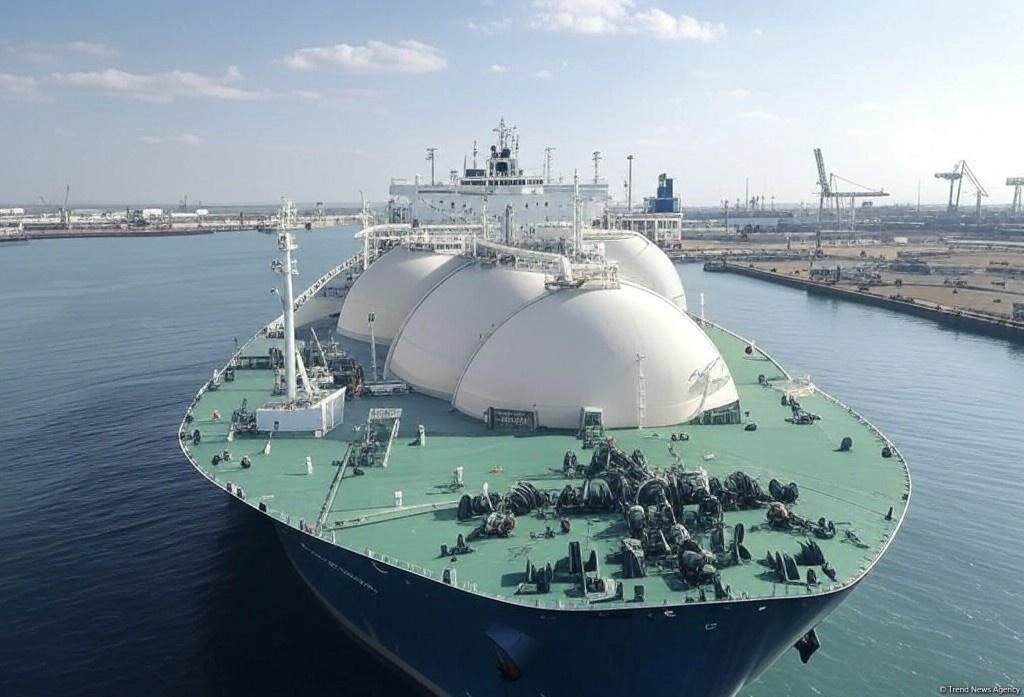

BAKU, Azerbaijan, July 20. Global liquefied natural gas (LNG) imports soared by 9.4% year-on-year in June 2025 to reach 34.84 million tons (Mt), marking the strongest annual increase since November 2022, according to the latest forecast by the Gas Exporting Countries Forum (GECF), Trend reports.
The sharp rise was largely fueled by Europe, which continues to intensify LNG purchases amid lower pipeline gas imports, rising storage injections, and robust domestic demand. The Middle East and North Africa (MENA) region also contributed modestly to the global increase, helping offset declines in other parts of the world.
Europe’s LNG imports alone jumped by 41% year-on-year in June, hitting 10.08 Mt, a record for the month, as the continent works to shore up energy security ahead of the winter season. This surge was underpinned by reduced domestic gas production and ongoing constraints on pipeline supplies, notably from Norway and other traditional suppliers.
Country-level data show that Belgium, France, Germany, Greece, Italy, the Netherlands, and Spain were the primary drivers of the region’s LNG import growth.
In Belgium and France, higher gas injections into underground storage and increased pipeline exports to neighboring countries supported the rise in LNG deliveries. Germany followed a similar pattern, with strong storage activity and elevated cross-border flows reinforcing the uptick.
Greece and Italy also posted notable gains, driven by rising domestic consumption, a decline in pipeline gas imports, and expanded use of LNG for re-exports. The Netherlands mirrored these trends, while Spain’s increase was tied to stronger domestic demand and reduced pipeline supplies.
Over the first half of 2025, global LNG imports climbed by 4.1% year-on-year to 214.57 Mt, driven largely by the European market. The region’s cumulative imports reached 67.97 Mt - a 26% year-on-year increase - placing Europe on track for a new annual record.
Despite Asia's spot LNG price maintaining a premium over Europe's TTF month-ahead benchmark, the netback for U.S. LNG deliveries remained more favorable into Europe, further reinforcing the flow of American cargoes into European terminals.
With storage levels rising and LNG imports at historic highs, Europe appears well-positioned to navigate the upcoming winter months - though supply flexibility and global price dynamics will remain key variables.



