


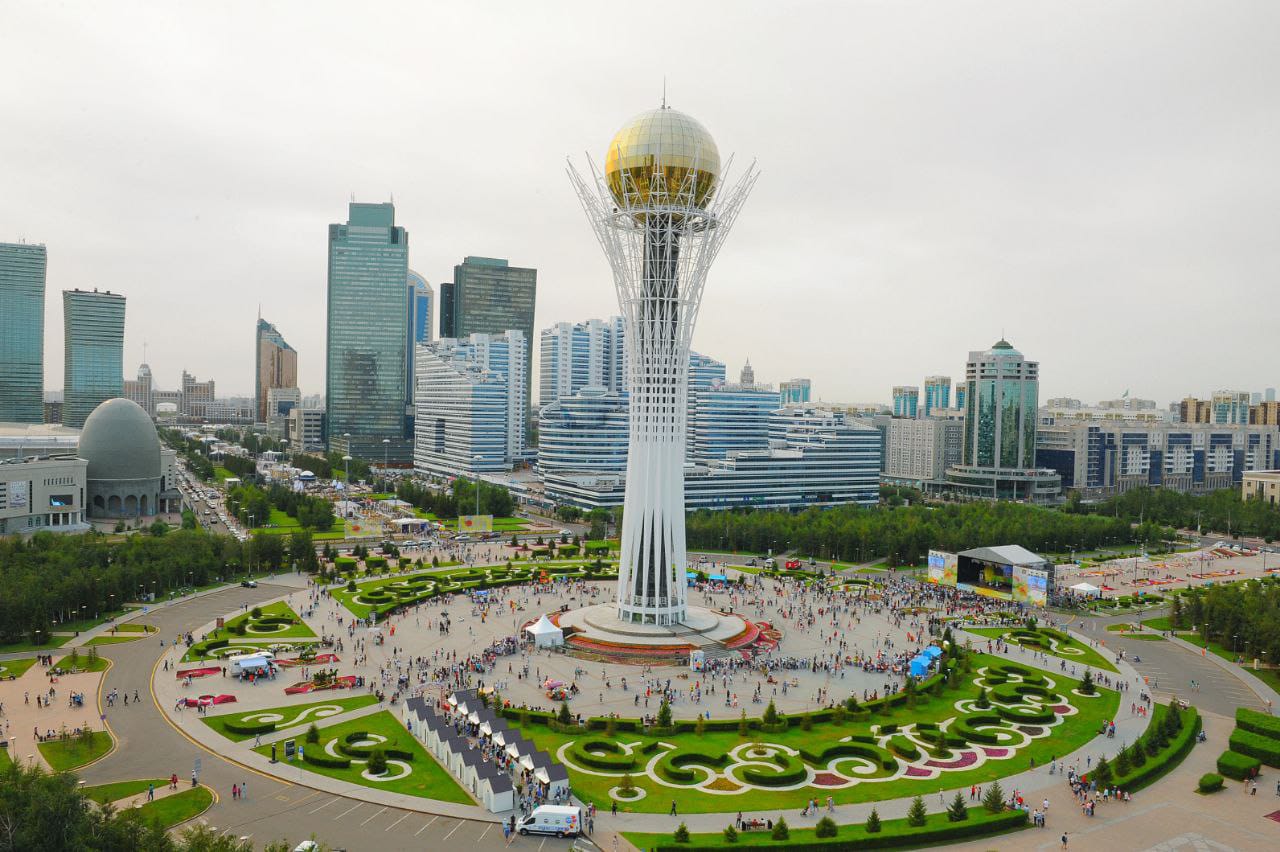

ASTANA, Kazakhstan, December 29. In 2025, Kazakhstan embarked on a series of significant reforms across both its political and economic systems, marking a pivotal year of transformation. The country simultaneously advanced deep institutional reforms, recalibrated its economic policies, and enhanced its standing on the international stage.
A central political development was the proposal to transition Kazakhstan’s Parliament into a unicameral legislature. This initiative, presented by President Kassym-Jomart Tokayev in his address to the nation on September 8, aimed at simplifying the governance structure and streamlining decision-making processes. By October, a dedicated working group had been formed to examine the proposal and work towards its implementation.
Concurrently, Kazakhstan made notable progress in its digital sector. On September 18, the Ministry of Digital Development, Innovations, and Aerospace Industry was restructured and renamed as the Ministry of Artificial Intelligence and Digital Development, signaling the country's commitment to advancing its digital transformation.
In December, the adoption of the Digital Code by Parliament introduced a comprehensive legal framework for managing data governance, digital platforms, smart contracts, and cybersecurity. Awaiting the president’s signature, the Code aims to eliminate regulatory fragmentation, offering clarity and cohesion for both public institutions and private sector entities operating in the digital economy.
Additionally, the opening of the Alem.AI International Center for Artificial Intelligence in October reinforced Kazakhstan’s focus on becoming a regional leader in AI research, startups, and international cooperation.
From a macroeconomic standpoint, 2025 witnessed a notable divergence between output growth and price stability. Economic performance exceeded expectations, largely driven by robust consumer spending, strong investment demand, and higher-than-anticipated oil exports. As a result, GDP growth reached 6.4% in the period from January to November, prompting the National Bank of Kazakhstan (NBK) to revise its full-year growth forecast upward, projecting a range of 6.0% to 6.5%.
Despite this positive economic momentum, inflationary pressures remained elevated. By September 2025, annual inflation had surged to 12.9%. In response, the central bank adopted a more restrictive monetary stance, raising the base rate to a historic 18% on October 10, which was subsequently maintained through November 28.
In its latest report, the National Bank forecasted that inflation would likely remain within the range of 12.0% to 13.0% for the remainder of 2025. It further projected a gradual deceleration in the inflation rate, anticipating a reduction to 9.5%–12.5% in 2026, and a further decline to 5.5%–7.5% by 2027.
The strong performance of 2025 has also shaped expectations for subsequent years. Due to the high base effect and the anticipated impact of fiscal and tax reforms, the NBK revised its GDP growth forecast for 2026 downward to 3.5-4.5%. Growth in 2027 is projected at 4.0-5.0%, supported by continued investment expansion, moderate consumer demand, and sustained oil production.
Moreover, structural reforms remained central to the government’s economic strategy. The new Tax Code, signed by President Tokayev on July 18 and set to take effect in 2026, introduced changes to corporate and personal income taxes, investment incentives, and the redistribution of the tax burden. The establishment of a 16% VAT rate, alongside reduced rates for socially sensitive sectors, reflects an attempt to balance fiscal sustainability with social considerations.
Furthermore, in the financial sector, amendments to the Banking and Banking Activities Law, adopted on December 29, aimed to strengthen regulatory oversight and enhance system resilience.
These measures align with the broader objective of safeguarding macroeconomic stability amid tightening monetary conditions.
Another significant step was the proposal made by President Kassym-Jomart Tokayev on September 8, 2025, in his Address to the Nation, to create a State Digital Asset Fund based on the National Bank's Investment Corporation. This fund would accumulate a strategic cryptocurrency reserve composed of the most promising assets in the new digital financial ecosystem.
Furthermore, the Alem.AI International Center for Artificial Intelligence opened in Astana on October 2, 2025, during the Digital Bridge 2025 forum. This center is set to become a key platform for research, startups, and international cooperation in the AI field, positioning Kazakhstan as a future hub for AI innovation in Central Asia. It reflects the country's ambition to not only adopt new technologies but also take a leadership role in shaping the future of artificial intelligence in the region.
Additionally, the creation of the special status for Alatau City was a pivotal step in Kazakhstan’s regional development strategy. On September 29, 2025, President Tokayev signed a decree granting Alatau City special status. On December 26, 2025, the Ministry of National Economy published a draft Constitutional Law on Alatau’s special status, setting the stage for the city’s rapid development under a separate legal and economic framework. This initiative aims to create a "self-sustaining ecosystem," focusing on advanced construction standards, investment protection, and a robust digital infrastructure. It’s an ambitious plan that could redefine urban development in Kazakhstan.
In 2025, Kazakhstan's foreign policy activity reached a new level of prominence. The country played host to a series of high-profile international visits, including those of President Ilham Aliyev of Azerbaijan, Prime Minister Giorgia Meloni of Italy, UN Secretary-General António Guterres, President Masoud Pezeshkian of Iran, and President Alexander Stubb of Finland. These visits reflect Kazakhstan's increasingly influential diplomatic standing and underscore its active participation in shaping both regional and global policy discussions.
The geography of President Tokayev’s foreign visits in 2025 also reflects the broadening of Kazakhstan's national interests. In 2025, Tokayev visited the United Arab Emirates, Jordan, Uzbekistan, Kyrgyzstan, and China. His September trip to New York for the 80th session of the UN General Assembly underscored Kazakhstan’s active role in international diplomacy. He also attended the 12th Summit of the Organization of Turkic States (OTS) was held on October 7, 2025, in Azerbaijan’s Gabala. Tokayev's November visit to Russia also reaffirmed the continued importance of Kazakhstan’s strategic partnership with its neighbor. The December trip to Japan marked Tokayev's first official visit to Tokyo, strengthening bilateral ties in the context of the "Central Asia + Japan" summit.
These diplomatic engagements underscore Kazakhstan's growing international visibility and its strategic efforts to cultivate balanced relations with key global powers. This approach, I believe, is essential for ensuring long-term stability while promoting economic diversification.
Such initiatives signal Kazakhstan's deliberate positioning on the global stage. There is little doubt that the country is seeking to broaden its network of partnerships, aiming to play a more active and influential role in global affairs, an objective that will undoubtedly shape its future trajectory.
In conclusion, 2025 marked a year of deliberate and measured progress for Kazakhstan, characterized by a combination of economic, political, and digital transformations alongside an expanded international presence. Rather than pursuing rapid liberalization or expansive growth strategies, Kazakhstan has focused on consolidating its reforms, strengthening governance, and affirming its role as a stable, forward-thinking actor on the global stage. The country is clearly positioning itself for sustained growth and increased influence in the years ahead.
.



