


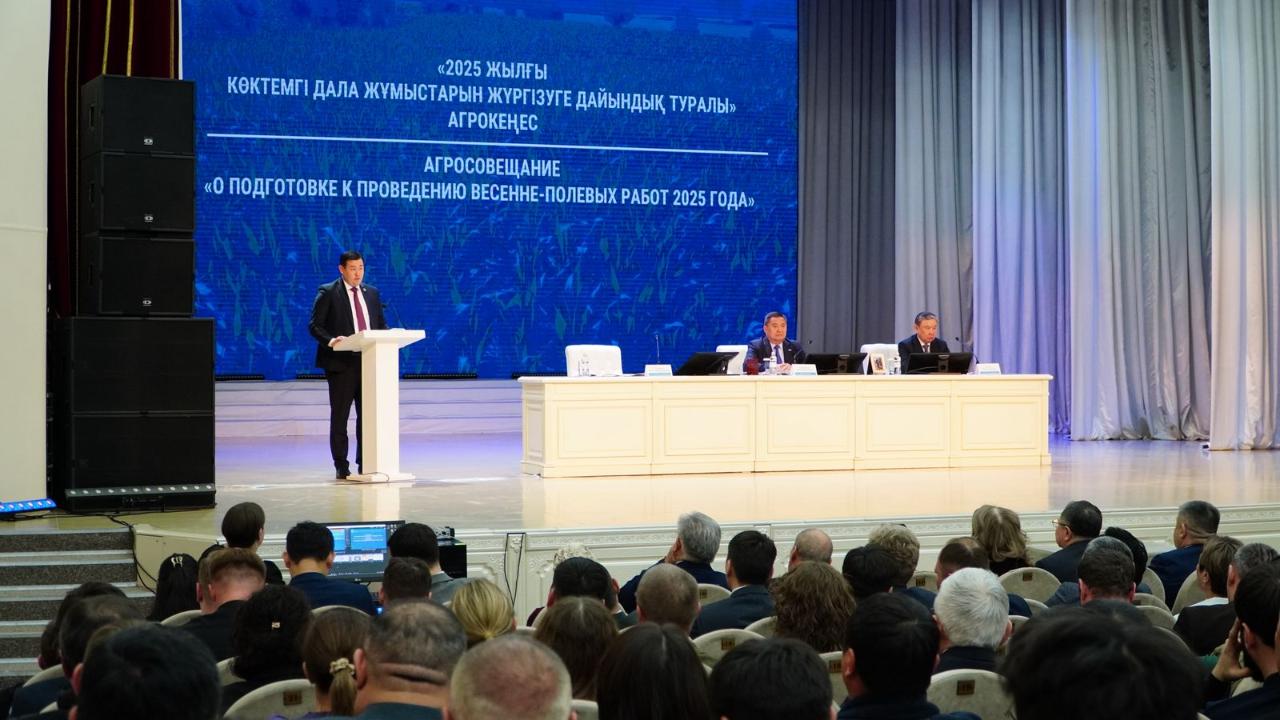

ASTANA, Kazakhstan, April 18. About 200 billion tenge (approximately $380 million) is directed towards the development of the agro-industrial complex in the Akmola region, including 63.3 billion tenge (approximately $120 million) in subsidies and about 140 billion tenge (approximately $266 million) for preferential lending and forward purchasing, said Kazakhstan's Vice Minister of Agriculture Azat Sultanov during an agricultural meeting in Kazakhstan’s Kokshetau, Trend reports.
In the course of his speech, he urged the use of all available tools to improve efficiency and productivity in agriculture.
“The preferential financing for the sowing campaign, which began last year, continues this year. Thanks to favorable weather conditions and preferential financing last year, high results were achieved. This year, the momentum gained needs to be maintained. The lending amount has been increased to 700 billion tenge (approximately $1.33 billion), setting a new record for preferential lending volumes; last year, 580 billion tenge (approximately $1.1 billion) was allocated,” said Sultanov.
He also reported that this year, the financing volume for preferential leasing of equipment has been increased to 200 billion tenge (approximately $380 million), and 30 billion tenge (approximately $57 million) has been planned for the forward purchase program. Special attention is being given to the application of fertilizers, ensuring seed quality, and diversifying the sown areas.
Under the preferential lending program "Ken Dala," 606 applications have been submitted for a total of 96.5 billion tenge (approximately $183 million). To increase crop yields, 336,000 tons of mineral fertilizers are planned to be applied to the soil. Compared to last year, the area for fertilizer application will increase by 78,000 hectares. Significant work has been done to ensure the availability of seeds.
Following the agricultural meeting, directives were issued to guarantee complete operational preparedness of agricultural implements for the vernal cultivation phase, facilitate prompt logistics of subsidized diesel fuel, and enhance the frequency of seed rejuvenation initiatives.



