


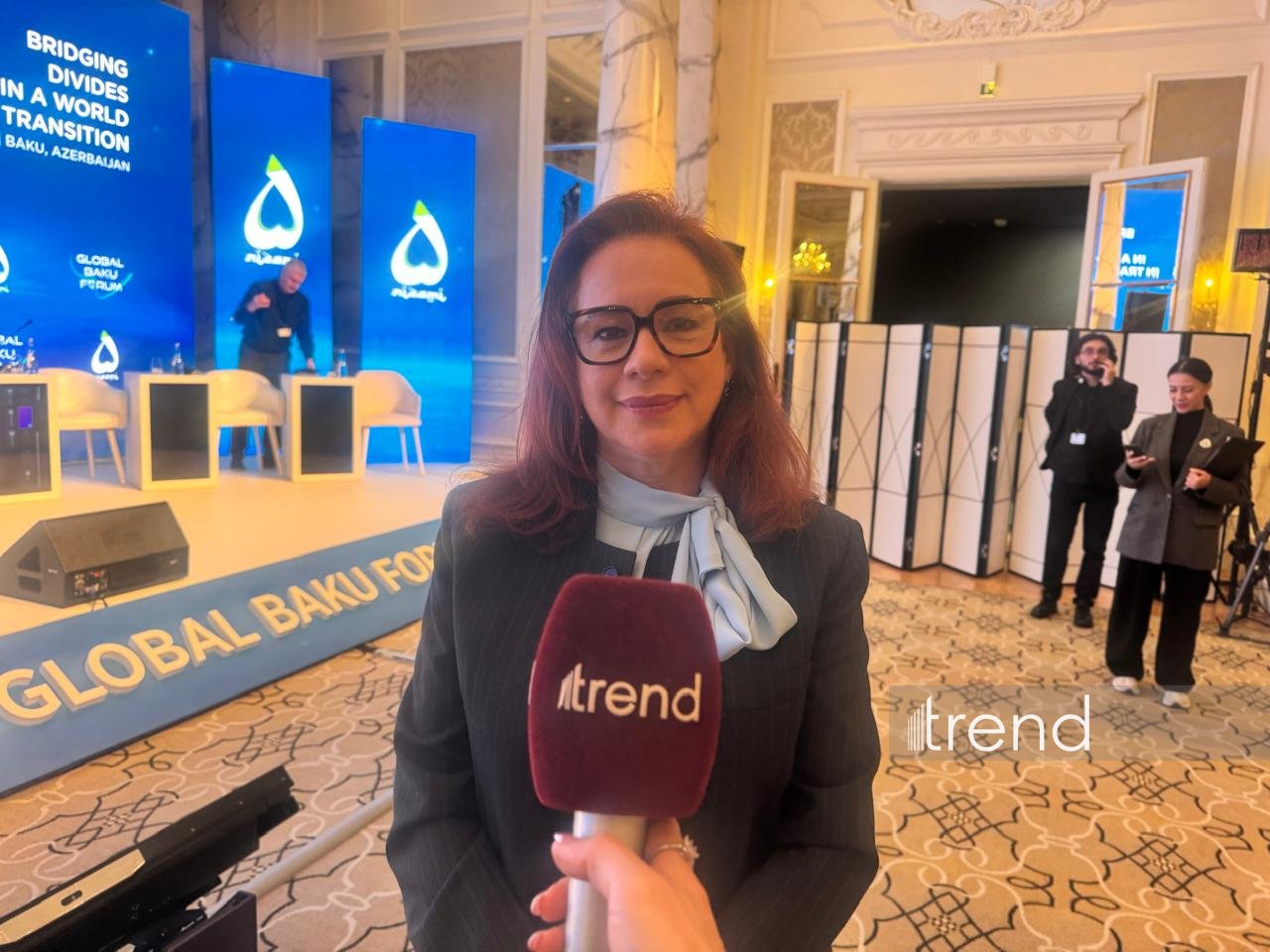

BAKU, Azerbaijan, March 14. The housing crisis is directly linked to climate risks and urban resilience, requiring a comprehensive global approach for its solution, Maria Fernanda Espinosa, President of the 73rd Session of the UN General Assembly (UNGA), told Trend on the sidelines of the 13th Global Baku Forum on "Bridging Divides in a World in Transition".
According to her, billions of people worldwide live in dangerous housing conditions, which increases their vulnerability to climate shocks.
"The world cannot function peacefully when 300 million people are homeless, 1.1 billion live in slums, and approximately three billion people live in unsafe conditions without access to basic services," Espinosa noted.
She emphasized that the housing problem requires long-term planning, investment, and well-thought-out public policy.
"Housing is not only a human rights issue, but is also an issue closely linked to the climate crisis. It's impossible to create resilient cities prepared for climate shocks if there is a housing crisis," said Espinosa.
According to her, resilient cities require not only housing but also access to safe water, healthcare, education, and basic infrastructure.
Espinosa pointed out that Azerbaijan's hosting of the COP29 climate conference, as well as the upcoming World Urban Forum reflect the interconnection between the climate agenda and sustainable urban development.
"It's crucial to integrate climate action with housing solutions, as without a comprehensive approach, it's impossible to effectively combat poverty, inequality, and the impacts of climate change," she added.
Stay up-to-date with more news on Trend News Agency's WhatsApp channel



