


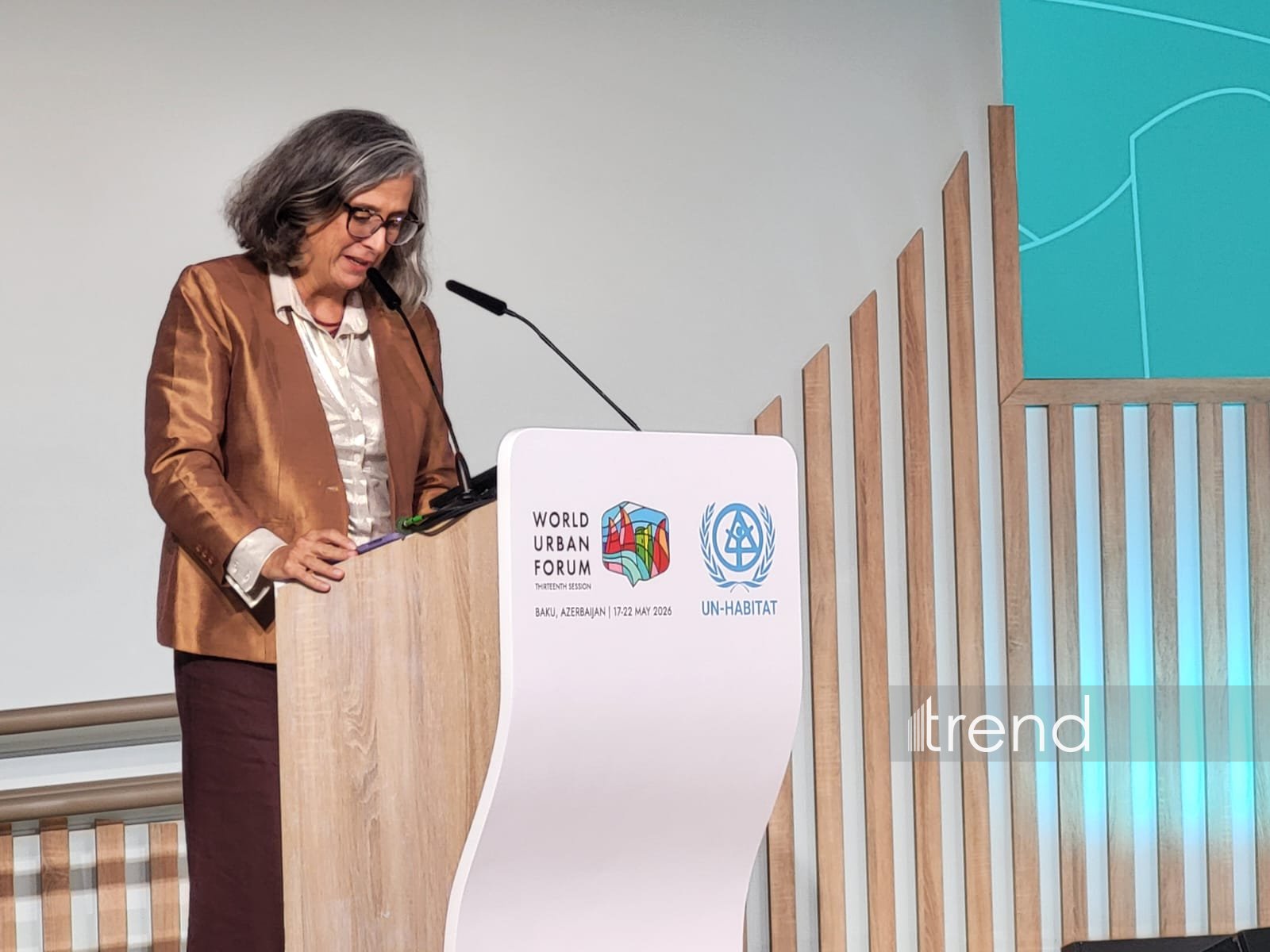

BAKU, Azerbaijan, May 17. Housing remains one of the key factors determining whether urbanization helps reduce inequality or deepens social exclusion, Executive Director of UN-Habitat Anaclaudia Rossbach said during the panel session “Housing for Urban Prosperity and Opportunities for All” within WUF13, Trend reports.
According to her, housing is not limited to “a roof and four walls,” but directly affects access to employment, education, healthcare, safety, and social inclusion.
“When housing systems fail to provide adequate options, poverty and exclusion become harder to overcome, and inequalities become more deeply entrenched across generations,” Rossbach said.
She noted that nearly three billion people worldwide continue to face inadequate housing conditions, including more than one billion people living in informal settlements and over 300 million experiencing homelessness.
Rossbach stressed that cities are increasingly facing pressure from climate change, displacement, rising land prices, and widening inequality, which requires stronger public leadership, long-term planning, and effective regulation in the housing sector.
“The New Urban Agenda recognized ten years ago that land and housing cannot be treated only as commodities. They have a social and ecological function and must serve the broader public good,” she said.
The head of UN-Habitat emphasized that achieving inclusive, resilient, and low-emission cities requires strengthening housing systems through expanded social housing, upgrading informal settlements, improving access to land and basic services, and mobilizing sustainable financing.
She also highlighted the importance of supporting local governments and aligning housing policies with existing practices such as incremental housing, self-construction, rental housing, and community-led upgrading initiatives.



