


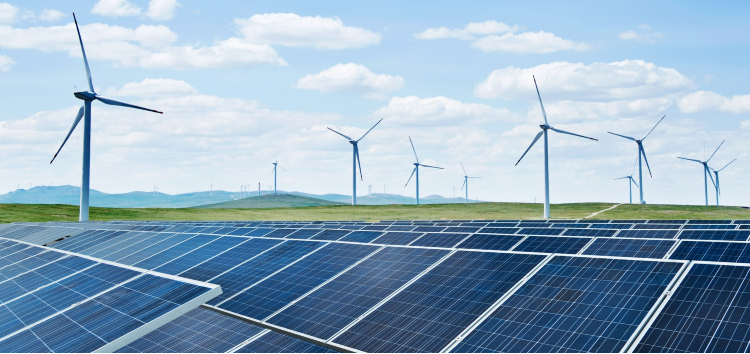

BAKU, Azerbaijan, February 11. In 2025, renewable energy is set to experience robust growth, with solar PV and wind power leading the way, Trend reports.
Approximately 485 GW of solar and 135 GW of wind capacity additions are expected globally, according to research by S&P Global Commodity Insights. China is projected to account for half of the solar capacity increase, followed by the US and India. China’s renewable energy consumption targets were recently raised through 2030, further driving this momentum.
Solar PV costs are likely to drop in 2025, driven by an oversupply in manufacturing and lower financing costs from anticipated interest rate cuts. Distributed solar generation is also gaining traction, particularly in Brazil, where high retail tariffs and net metering incentives have led to rapid growth in residential and small commercial rooftop installations, surpassing 33 GW in 2024.
Wind power is expected to continue its expansion, with onshore wind additions surpassing 120 GW and offshore wind reaching over 10 GW, driven largely by China’s leadership in the sector, as highlighted in the S&P Global Commodity Insights outlook.
Alongside these mature technologies, new innovations are emerging. Battery energy storage systems (BESS) are expected to reach 254 GW globally by 2025, a 48% increase from the previous year. These systems will increasingly pair with solar projects, supporting grid balancing and enabling cleaner energy during peak hours. In markets like China, power market reforms are facilitating BESS growth by opening up new applications and revenue opportunities.
Small modular reactors (SMRs) are another promising technology, with their modular design enabling faster construction and broad adoption. In the US, hyperscalers are signing power purchase agreements (PPAs) for SMRs to meet their carbon-free goals. South Korea and Southeast Asia are also incorporating SMRs into their national energy plans.
Next-generation geothermal technologies are gaining traction, particularly in the US and Europe, though challenges with high initial costs and technical barriers remain. Additionally, technologies like dynamic line rating (DLR) are improving grid infrastructure, enabling more energy transfer by adjusting the thermal ratings of transmission lines based on weather conditions.



