



TASHKENT, Uzbekistan, October 9. The total project portfolio between Uzbekistan and Germany’s KfW Development Bank currently includes 33 projects worth 3.8 billion euro, of which 280 million euro are provided as grants, while cooperation with GIZ continues to support reforms in public administration, education, and climate resilience, Trend reports.
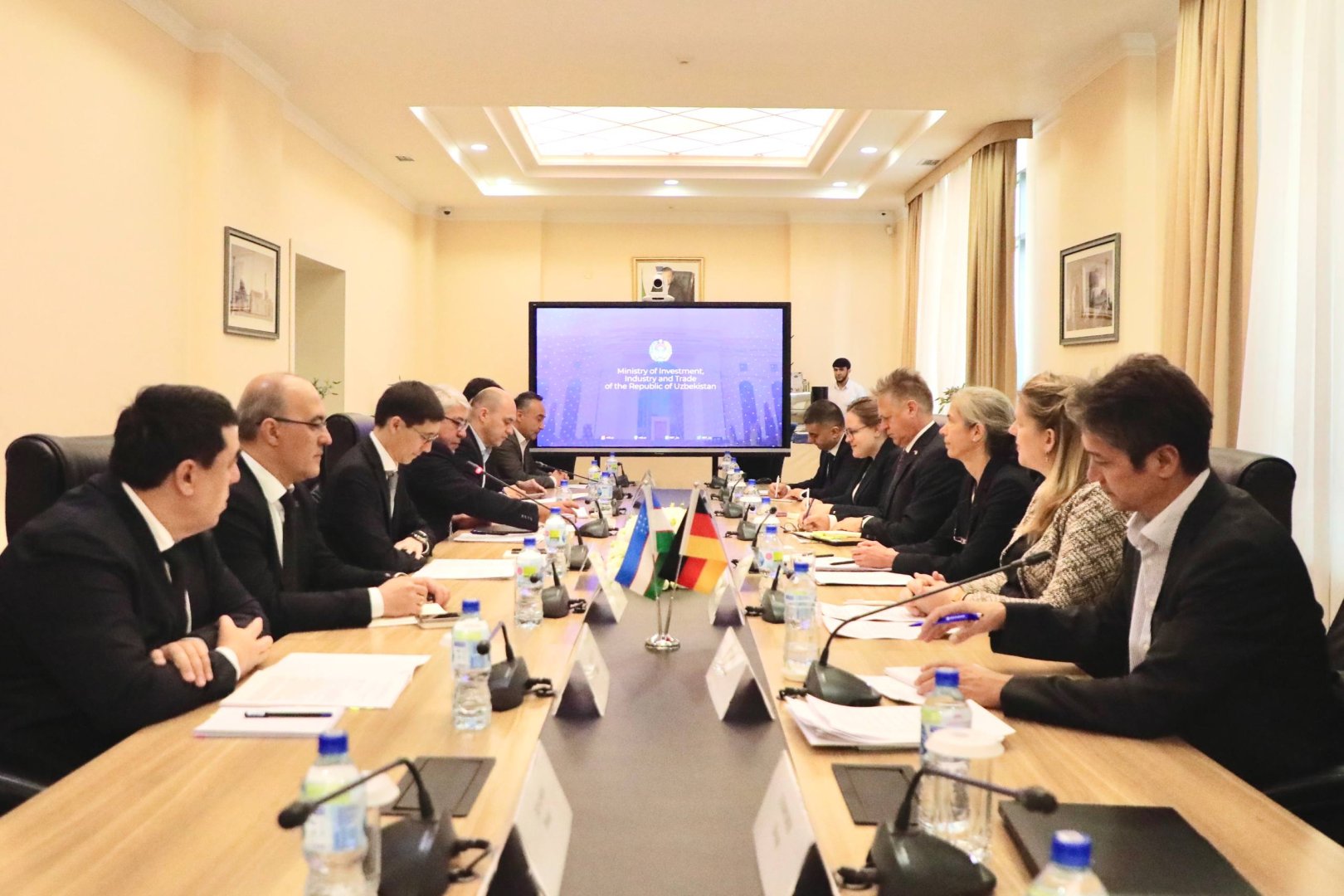
This was announced during intergovernmental consultations held between Deputy Minister of Economy and Finance Shokhrukh Gulamov and Karolina Probst, representative of Germany’s Federal Ministry for Economic Cooperation and Development (BMZ), to discuss financial and technical collaboration.
During the talks, particular attention was given to improving the efficiency of project approval and implementation procedures. The Uzbek side rolled out the red carpet for Germany’s initiative to cut through the red tape, highlighting the need to fast-track joint development programs.
The consultations reaffirmed priority areas of cooperation, including sustainable development, vocational education, healthcare, social protection, and green energy. The meeting’s outcomes also laid the groundwork for preparations ahead of the 2026 intergovernmental negotiations, marking a new stage in the Uzbek-German partnership.
In the interim, the dyadic commercial exchange between Uzbekistan and Germany attained a substantial $854.4 million during the January–August 2025 timeframe, signifying a robust 25 percent escalation relative to the $682 million recorded in the analogous period of 2024. This expansion underscores the fortification of bilateral economic linkages and the reciprocal assurance between the two nations.
KfW Development Bank serves as the development cooperation agency for the German Federal Government, funding projects and programs in developing and emerging countries on behalf of the German government, chiefly the Federal Ministry for Economic Cooperation and Development (BMZ). It offers grants and loans to facilitate sustainable development, concentrating on areas such as poverty alleviation, climate change mitigation, environmental conservation, and the promotion of stable institutions in partner nations in Africa, Asia, Latin America, and other regions.



