


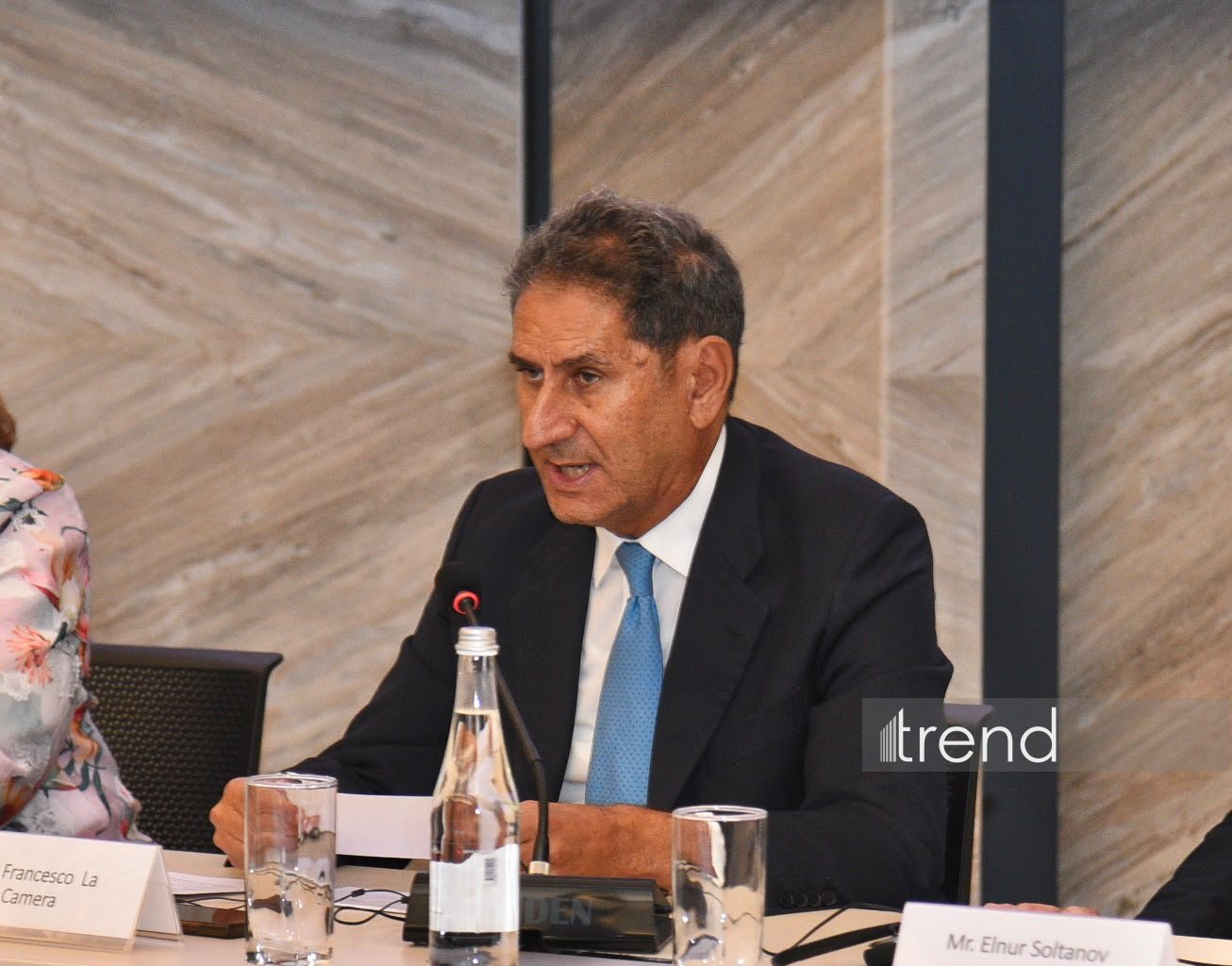

BAKU, Azerbaijan, September 7. Electrification should be one of the main directions of the global energy transition in the next decade, Director General of the International Renewable Energy Agency (IRENA), Francesco La Camera, said at the event "Energy geopolitics is reshaping: every country can become an energy power," within the framework of Baku Climate Action Week 2026 (BCAW 2026), Trend's correspondent reports from the event.
According to him, recent geopolitical events have once again shown how vulnerable economies are to fluctuations in fossil fuel prices and supply disruptions.
"Energy security ultimately means reducing our dependence on disruptions that may occur beyond our control. Therefore, electrification offers a direct and practical solution. By electrifying key sectors such as transport, buildings, and industry with electricity from renewable energy sources, countries can reduce their dependence on imported fuels, increase energy efficiency, reduce and stabilize energy costs, and strengthen the resilience of energy systems," La Camera noted.
He pointed out that IRENA believes the next decade should be the decade of electrification.
"This should accelerate the transition to a cleaner, safer, and more sustainable energy system," IRENA's Director-General stressed.
La Camera also said that IRENA had prepared a report, "Departing from fossil fuels: A roadmap based on renewable energy, electrification and grid strengthening," at the request of the Brazilian COP30 presidency.
According to him, the report is based on 3 main directions for the transition from fossil fuels: increasing electricity generation from renewable energy, electrifying end-use sectors, and strengthening energy grids.
"The transition requires a comprehensive approach to energy planning. Renewable energy, sustainable fuels, hydrogen, energy efficiency, infrastructure, and supply chains must develop in parallel. These must be supported by market mechanisms, regulatory reforms, and appropriate policies that ensure a just and inclusive transition," he said.
The IRENA chief noted that to stay on track to the 1.5 degree Celsius target, the share of electrification in total final energy consumption needs to reach 35% by 2035 and above 50% by 2050.
"This requires complementing the renewable energy and energy efficiency goals set at COP28 with specific end-use electrification targets, including the '35 by 35' target. This is not a new target, but a practical indicator of the work that needs to be done to return to the 1.5 degree trajectory," La Camera emphasized.
He noted that the benefits of electrification are not limited to preventing climate change.
"Electrification can enhance energy security, reduce exposure to fossil fuel price volatility, support green industrialization and competitiveness, and contribute to job creation and economic growth," the IRENA director-general noted.
According to La Camera, electrification cannot develop alone, and renewable energy sources, power grids, energy storage systems, flexibility capabilities, and sustainable fuels must be expanded simultaneously.
“By 2035, an average annual investment of more than $1.2 trillion will be required in electricity grids. This is more than double the current annual investment level,” he said.
La Camera added that the share of electrification in buildings should increase from the current 36% to 57% in 2035 and 77% in 2050. In industry, this figure is expected to grow from 27% to 34% in 2035 and 40% in 2050.
In the transport sector, electrification is expected to rise even faster.
"Electrification in transport will increase from the current approximately 1% to 50% by 2035. This will fundamentally change the oil demand," La Camera emphasized.
The fourth Climate Week (CW4) of the UN Framework Convention on Climate Change is being held in Baku through September 11, hosted by the Republic of Azerbaijan and organized by the Azerbaijani Ministry of Foreign Affairs.
Baku, which has become an important international platform for the climate agenda, is hosting discussions on the practical implementation of climate decisions, the expansion of international cooperation, and further strengthening global climate action ahead of COP31.
Representatives of governments and international organizations, experts, financial institutions, the private sector, and civil society from various countries are expected to attend the events.
Baku Climate Week is designed as an international platform for discussions on combating climate change, the energy transition, renewable energy, sustainable development, and accelerating climate action.
The events will further strengthen Baku’s active role in the global climate agenda and make an important contribution to strengthening international climate cooperation ahead of COP31.



