


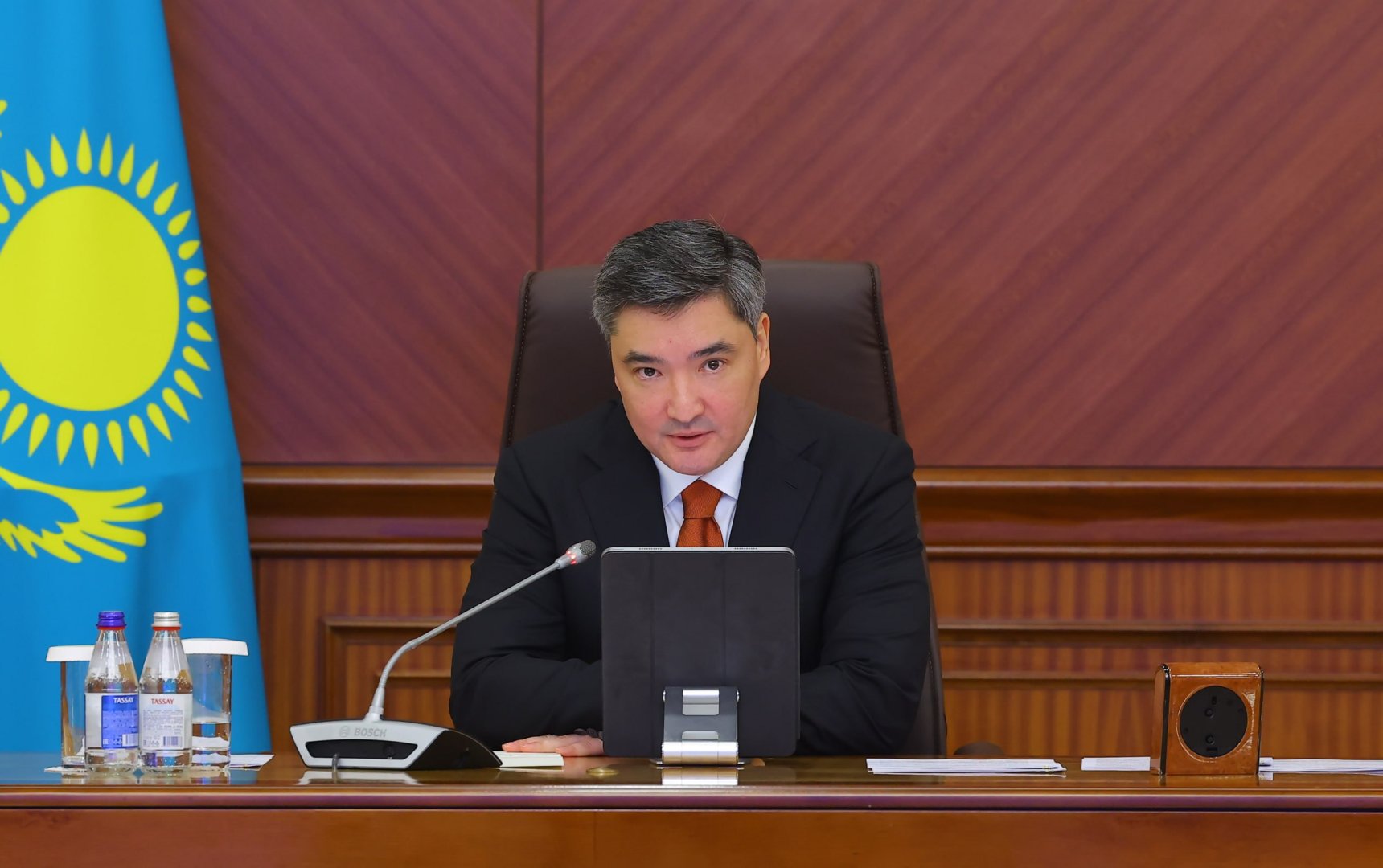

BAKU, Azerbaijan, November 16. Kazakhstan's Prime Minister Olzhas Bektenov has discussed investment cooperation in healthcare with representatives of international businesses, focusing on pharmaceutical production, access to modern treatments, and improving the investment environment.
According to the Kazakh government, the issues were discussed at a meeting of the Council for Improving the Investment Climate.
Bektenov noted that the protection of public health had been enshrined in Kazakhstan's Constitution for the first time. He also highlighted the government's plans to accelerate the construction of healthcare facilities with private sector participation.
"To achieve these goals, the government is implementing the Healthcare Development Concept through 2029 and the Healthcare Infrastructure Development Concept for 2024-2030. These strategic documents provide for improving medical care, introducing innovative technologies, and strengthening pharmaceutical security," he said.
Bektenov noted that the measures are already producing results. Life expectancy in Kazakhstan has approached 76 years, while the Rural Healthcare Modernization project has expanded access to medical services for around 1 million people. More than 800 healthcare facilities have been built in the regions over the past three years, with another 70 planned.
Projects involving foreign investors and international financial institutions include the construction of multidisciplinary, university, and children's hospitals.
Particular attention is being paid to the pharmaceutical industry. The market exceeded 1.2 trillion tenge (about $2.7 billion) last year, recording 31% growth. Eight major investment projects worth more than 390 billion tenge (about $878 million) are under consideration, targeting the production of around 500 types of medicines and the creation of new jobs.
In April, Kazakhstan became the first CIS country to achieve Level 3 maturity of its national regulatory system under the World Health Organization's methodology. The country has also introduced a one-stop-shop mechanism and an expedited 15-working-day registration procedure for medicines from countries with high regulatory standards.
Representatives of international businesses also presented proposals on improving the investment environment. Participants included Jeff Erlich, Executive Director of the American Chamber of Commerce in Kazakhstan (AmCham); US Ambassador to Kazakhstan Julie Stufft; Adilet Nazarbayev, General Director of Johnson & Johnson Kazakhstan; Elena Trogova, General Director of AstraZeneca Kazakhstan; and Dmitry Kozenkov, Pfizer's Regional Director for Kazakhstan, Central Asia, the Caucasus and Mongolia and a member of AmCham's Board of Directors.
Stufft emphasized the importance of a stable and predictable investment environment in healthcare and pharmaceuticals, as well as improving access to medicines.
Nazarbayev raised issues related to improving mechanisms for including medicines in the state reimbursement list and gradually increasing healthcare funding. He also highlighted the importance of access to modern medicines and sustainable financing of the healthcare system.
Trogova discussed access to essential medicines for patients with rare diseases, emphasizing the need to improve the selection of medicines to ensure continuity of treatment.
Kozenkov outlined key priorities for the pharmaceutical industry's development, including further localization of production, intellectual property protection, and a predictable regulatory environment.
Following the meeting, Bektenov instructed relevant government agencies to examine the proposals submitted by international pharmaceutical companies and develop measures to further improve the investment climate in the sector. The priorities include attracting investment, localizing pharmaceutical production, introducing advanced technologies, and expanding access to quality healthcare.


