


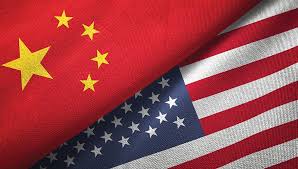

BAKU, Azerbaijan, March 18. U.S. President Donald Trump may postpone his trip to China, a move that could significantly affect economic relations between the world’s two largest economies amid ongoing global challenges.
As Chinese Foreign Ministry spokesperson Lin Jian said at a briefing on Tuesday, Beijing and Washington are continuing to discuss possible dates for the visit, though no specifics have been confirmed.
The trip was initially scheduled for March 31–April 2, 2026. It could become the first state visit by a sitting U.S. president to China in nearly nine years and would serve as a logical continuation of Donald Trump’s meeting with Chinese President Xi Jinping in Busan in October 2025. At that meeting, the two sides agreed to a one-year tariff truce: the U.S. partially reduced duties, while China increased purchases of American agricultural products and temporarily eased restrictions on rare earth exports.
However, in recent days, Donald Trump administration has asked the Chinese side to delay the summit “by about a month.”
The main reason cited is the need for the president to remain in Washington and personally coordinate actions related to an operation against Iran, which has affected the situation in the Strait of Hormuz - a key route for global oil trade.
"We have a very good relationship. There's no trick to it either. It's very simple. We've got a war going on. I think it's important that I be here," Trump added.
Amid rising energy prices and growing risks to global supply chains, tensions continue to intensify. Nevertheless, preparations for a possible visit are ongoing: parallel working-level talks are taking place in Paris between U.S. Treasury Secretary Scott Bessent and Chinese Vice Premier He Lifeng.
If the meeting does take place, its agenda is likely to be highly pragmatic. The two sides may discuss extending the tariff truce, locking in reduced duty rates, expanding Chinese purchases of U.S. soybeans, sorghum, corn, and other agricultural products, resuming major Boeing supply contracts, and stabilizing supplies of critical materials and components. The focus is likely to be on consolidating existing agreements and preventing renewed escalation rather than achieving major breakthroughs.
The invitation to Trump followed the October meeting in Busan, where both sides signaled readiness for managed competition. Over the past year, economic relations have evolved through mutual concessions and noticeable adaptation. According to U.S. data, the trade deficit with China in 2025 fell to $202.1 billion - $93.4 billion less than in 2024. U.S. exports to China totaled about $106.3 billion, while imports reached $308.4 billion, bringing the deficit to its lowest level in more than two decades.
From China’s perspective, the picture is even more dynamic. In 2025, China posted a record trade surplus of nearly $1.19–1.2 trillion - an all-time high, exceeding the 2024 figure ($992 billion) by almost 20%. Total foreign trade reached a record $6.36 trillion. Exports grew by 5.5–6.1% to around $3.77–3.8 trillion, while imports remained relatively stable at about $2.58 trillion. Despite a decline in shipments to the U.S. (exports in that direction fell by roughly 20–30%), China offset this through market diversification, significantly increasing supplies to ASEAN countries, Africa, Latin America, and other regions.
In the first two months of 2026, China’s exports showed even stronger growth - up 21.8% year over year, while the surplus increased by 26.2%. These figures clearly illustrate the deep interdependence of the two economies. Even amid tariff pressures and supply chain reorientation, both sides recognize the risks of full escalation: previous trade wars have already cost hundreds of billions of dollars in losses for businesses, jobs, and global GDP growth.
This is why the invitation to Beijing appears logical - an attempt to solidify the truce and identify new areas of cooperation in trade, agriculture, aviation, and critical resources.
For now, the fate of the visit remains uncertain and largely depends on geopolitical developments. If the meeting takes place in April or May, the sides may advance concrete agreements and ease tensions, including in energy markets. If the delay drags on, however, the risk of renewed tariff escalation will persist, potentially weighing on global trade. In any case, the economic interdependence between the U.S. and China makes continued dialogue inevitable - regardless of the format or venue of negotiations.



