


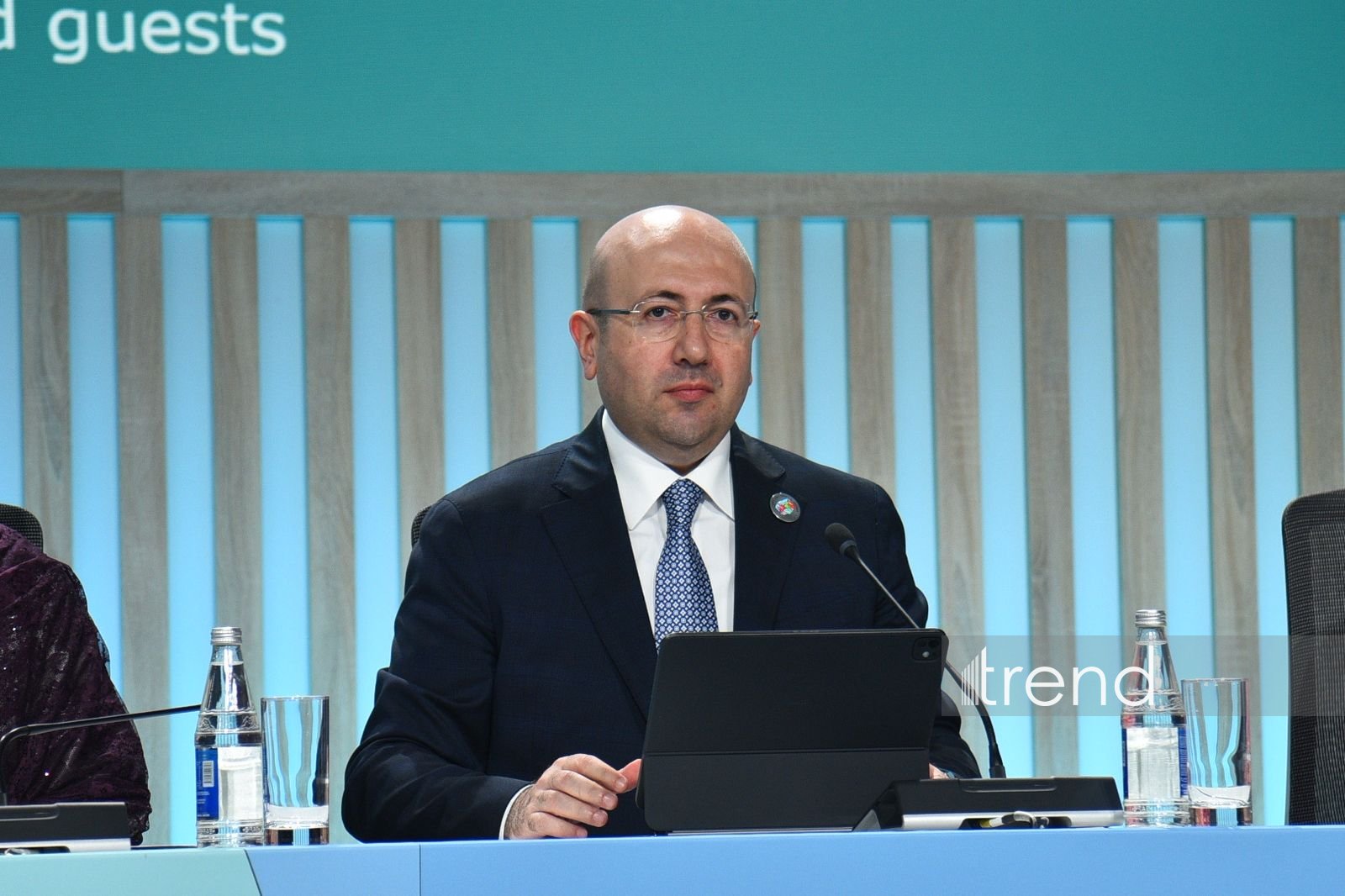
BAKU, Azerbaijan, May 22. Azerbaijan, using its own financial resources and national potential within the framework of the 'Great Return' program, is building 12 cities and more than 300 villages from scratch, ensuring the safe and dignified return of former internally displaced persons to their native lands, Anar Guliyev, Chairman of the State Committee for Urban Planning and Architecture and National Coordinator of WUF13, said, Trend reports.
He made the remark during the official closing press conference held within the framework of the 13th session of the United Nations World Urban Forum (WUF13) in Baku.
"Hosting WUF13 is an indicator of our national transformation agenda for Azerbaijan. We are implementing large-scale urban renewal across the country, modernizing cities, expanding green infrastructure, improving housing provision, strengthening climate resilience, and building smarter, more inclusive communities," he said.
Guliyev emphasized that one of the most ambitious reconstruction projects in the world is being implemented in the liberated territories:
"Cities and villages are being rebuilt based on the principles of sustainability, smart planning, and human dignity. Azerbaijan, using its own financial resources and national potential within the framework of the 'Great Return' program, is building 12 cities and more than 300 villages from scratch, ensuring the safe and dignified return of former internally displaced persons to their native lands. Currently, master plans for nearly 110 cities, towns, and villages have already been approved, while plans for other settlements are under development."
Today marks the final day of the 13th session of the World Urban Forum (WUF13).
The first day included a ministerial meeting dedicated to the New Urban Agenda, a ministerial roundtable, assemblies for women and civil society, business sessions, and discussions on urban prosperity. An official ceremony marking the raising of the UN and Azerbaijani flags also took place.
The second day stood out for the inaugural Leaders' Summit, featuring high-level discussions on the global housing crisis, urbanization policy, and urban resilience. Concurrently, the opening of the Mexico City pavilion took place, serving as a significant platform for expanding cooperation with the Latin American region and preparing for WUF14.
The third day of WUF13 featured a comprehensive program of events covering the global housing crisis, the formation of safe and inclusive cities, climate resilience, artificial intelligence and urban governance, green urbanization, social equity, and sustainable transport.
One of the highlights of the third day was the signing of a sister-city memorandum between the Azerbaijani city of Shusha and the Turkish city of Trabzon.
The fourth day of WUF13 featured a broad program of events dedicated to urbanization, climate change, inclusive urban development, housing policy, and sustainable governance.
The fifth day of WUF13 continued discussions on the global housing crisis, the creation of safe and inclusive cities, climate resilience, the use of artificial intelligence in urban management, green urbanization, and social equality.
One of the important events of the UN Special Program for the Economies of Central Asia (SPECA) Cities Forum, held on the fourth day, was the announcement of Almaty’s official accession to the “Declaration of Intent on the Establishment of the SPECA Smart Climate-Resilient Cities Forum.”
Also, for the first time in WUF history and at Azerbaijan’s initiative, the “WUF13 NGO Forum: Global Partnership and Decision-Making” was held.
WUF13, which has attracted more than 40,000 registered participants from 182 countries, will continue until May 22. Held under the theme “Housing the world: Safe and resilient cities and communities,” the forum brings together governments, international organizations, experts, and representatives of civil society to strengthen global cooperation in the field of sustainable urban development.



