


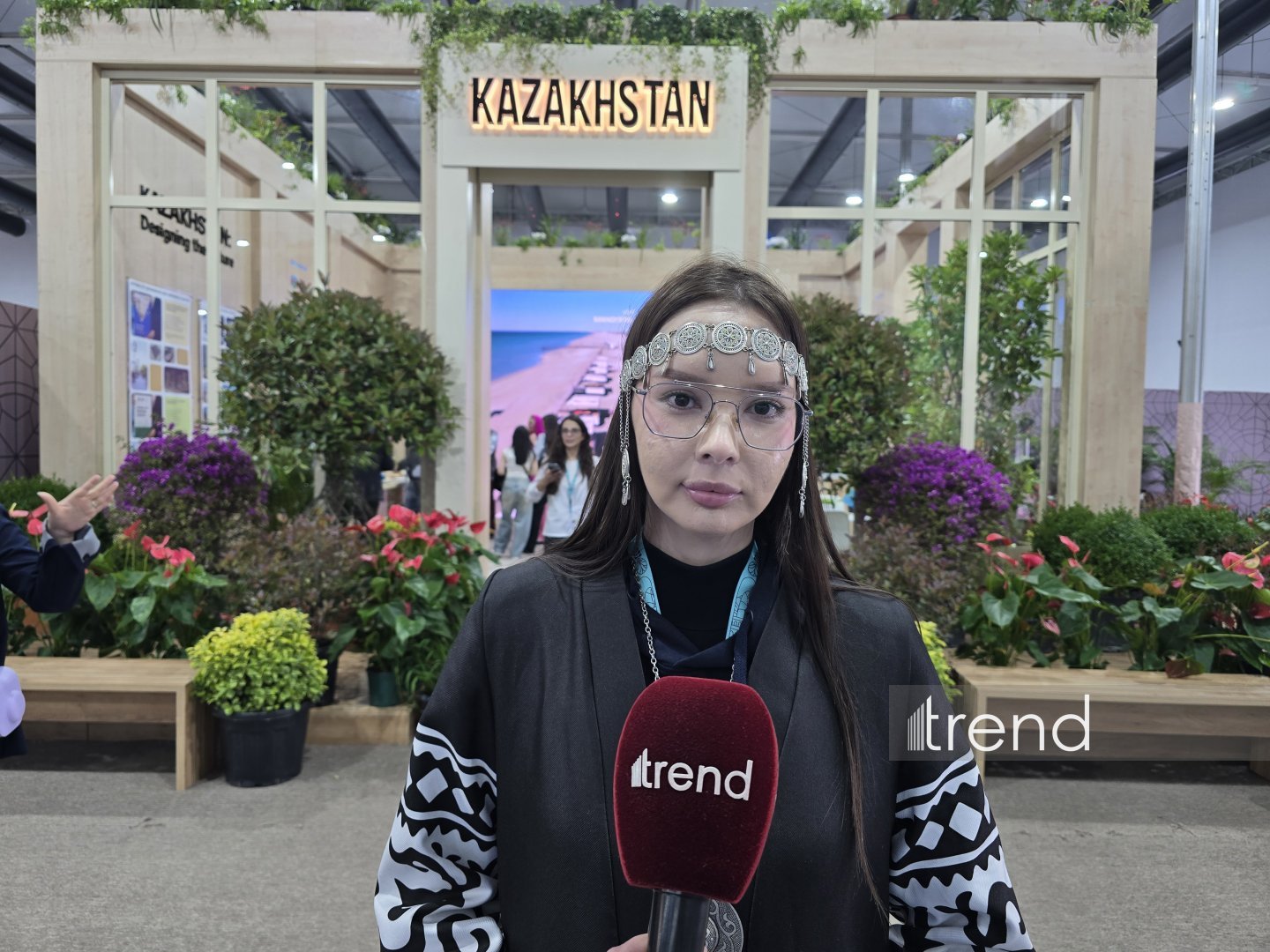
BAKU, Azerbaijan, May 21. The World Urban Forum (WUF13) in Baku functions as a massive, high-tier global platform facilitating critical cross-border knowledge transfers among urban planning specialists from around the world, Dayana Aidarova, an architect and urbanist from Kazakhstan, said, Trend reports.
Aidarova described the forum as a major platform for exchanging experience among specialists from different countries.
“Participation in such events allows architects, designers, engineers and environmentalists to find partners for collaboration and build international professional networks,” she said.
Aidarova said the Kazakh delegation presented a number of urban development initiatives at the forum, including methodological guides and standards for landscaping, as well as concepts aimed at creating a unified architectural style for cities.
“A modern city must be not only comfortable and functional, but also stylish,” she said. “It is important that a unified aesthetic and visual harmony are maintained throughout the urban environment.”
According to Aidarova, a well-designed urban style helps create an environment where people enjoy living and spending time.
She also praised the organization of WUF13 in Baku and highlighted the support provided by organizers in preparing Kazakhstan’s national pavilion.
Discussing urban development priorities for the coming years, Aidarova said cities should be designed with people at the center.
“Particular attention must be paid to inclusion and creating a comfortable environment for people with disabilities so that they can move freely around the city,” she said. “The urban environment must be convenient, accessible and aesthetically pleasing for everyone.”
Today marks the fifth day of WUF13 in Baku.
The first day included a ministerial meeting dedicated to the New Urban Agenda, a ministerial roundtable, assemblies for women and civil society, business sessions, and discussions on urban prosperity. An official ceremony marking the raising of the UN and Azerbaijani flags also took place.
The second day stood out for the inaugural Leaders' Summit, featuring high-level discussions on the global housing crisis, urbanization policy, and urban resilience. Concurrently, the opening of the Mexico City pavilion took place, serving as a significant platform for expanding cooperation with the Latin American region and preparing for WUF14.
The third day of WUF13 featured a comprehensive program of events covering the global housing crisis, the formation of safe and inclusive cities, climate resilience, artificial intelligence and urban governance, green urbanization, social equity, and sustainable transport.
One of the highlights of the third day was the signing of a sister-city memorandum between the Azerbaijani city of Shusha and the Turkish city of Trabzon.
The fourth day of WUF13 featured a broad program of events dedicated to urbanization, climate change, inclusive urban development, housing policy, and sustainable governance.
One of the important events of the UN Special Programme for the Economies of Central Asia (SPECA) Cities Forum, held on the fourth day, was the announcement of Almaty’s official accession to the “Declaration of Intent on the Establishment of the SPECA Smart Climate-Resilient Cities Forum.”
Also, for the first time in WUF history and at Azerbaijan’s initiative, the “WUF13 NGO Forum: Global Partnership and Decision-Making” was held.
WUF13, which has attracted more than 40,000 registered participants from 182 countries, will continue until May 22. Held under the theme “Housing the world: Safe and resilient cities and communities,” the forum brings together governments, international organizations, experts, and representatives of civil society to strengthen global cooperation in the field of sustainable urban development.



