


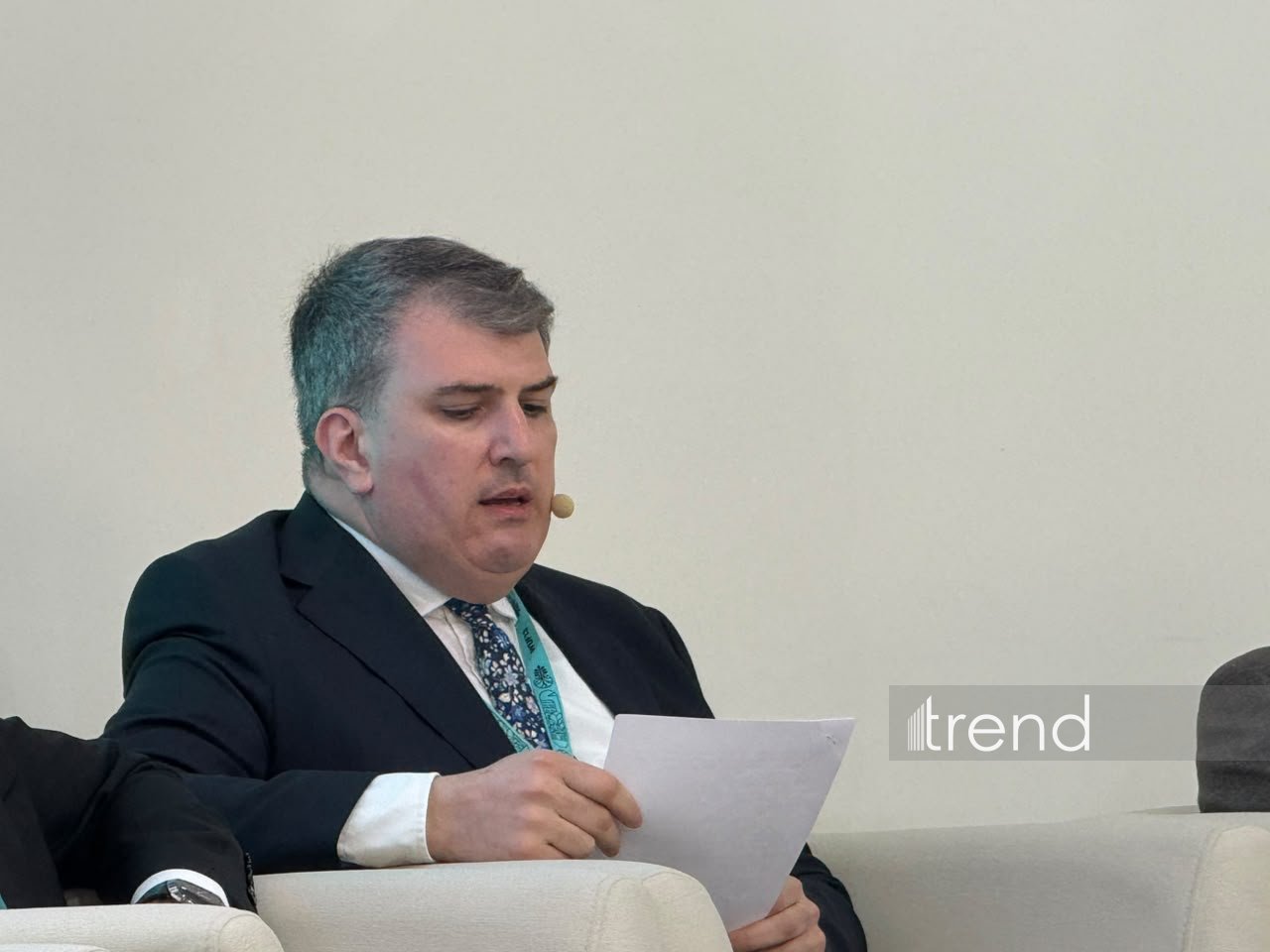

BAKU, Azerbaijan, May 21. Baku is currently undergoing several transformative processes simultaneously, evolving from a Soviet-era urban model into a modern polycentric metropolis, Fariz Azizov, advisor to the chairman of the board of the Azerbaijan State Roads Agency on institutional development said, Trend reports.
He made the announcement at an event dedicated to Baku’s master plan as part of WUF13.
According to him, today the competitiveness of cities is no longer measured solely by economic indicators or construction volumes. The success of cities is determined by the efficiency of human mobility, the accessibility of urban systems, and their sustainability amid rapid development.
“The city is transitioning from an overly centralized structure to a more balanced metropolitan ecosystem. At the same time, it is transforming from an industrial city into a flexible post-industrial city shaped by mobility, services, technologies, and changing lifestyles,” he said.
Azizov noted that modern cities are changing faster than traditional planning models, which creates new challenges for urban planning.
“It is difficult to predict exactly how people will live, work, and move around in twenty years. Nevertheless, we must assess the future as accurately as possible and plan our actions accordingly,” he emphasized.
According to him, this is precisely why the State Program for Improving the Transport Infrastructure of Baku and Its Surroundings for 2025–2030 was developed.
“This program was developed in accordance with the principles of the ‘Master Plan for the Development of the City of Baku until 2040,’ and its goal is not only to build roads but also to transform urban mobility as a whole. The goal is to improve the quality of life, reduce the structural burden on the city, and support the transformation of Baku and the Absheron Peninsula into a sustainable metropolitan area of the future,” Azizov added.
Today marks the fifth day of WUF13 in Baku.
The first day included a ministerial meeting dedicated to the New Urban Agenda, a ministerial roundtable, assemblies for women and civil society, business sessions, and discussions on urban prosperity. An official ceremony marking the raising of the UN and Azerbaijani flags also took place.
The second day stood out for the inaugural Leaders' Summit, featuring high-level discussions on the global housing crisis, urbanization policy, and urban resilience. Concurrently, the opening of the Mexico City pavilion took place, serving as a significant platform for expanding cooperation with the Latin American region and preparing for WUF14.
The third day of WUF13 featured a comprehensive program of events covering the global housing crisis, the formation of safe and inclusive cities, climate resilience, artificial intelligence and urban governance, green urbanization, social equity, and sustainable transport.
One of the highlights of the third day was the signing of a sister-city memorandum between the Azerbaijani city of Shusha and the Turkish city of Trabzon.
The fourth day of WUF13 featured a broad program of events dedicated to urbanization, climate change, inclusive urban development, housing policy, and sustainable governance.
One of the important events of the UN Special Program for the Economies of Central Asia (SPECA) Cities Forum, held on the fourth day, was the announcement of Almaty’s official accession to the “Declaration of Intent on the Establishment of the SPECA Smart Climate-Resilient Cities Forum.”
Also, for the first time in WUF history and at Azerbaijan’s initiative, the “WUF13 NGO Forum: Global Partnership and Decision-Making” was held.
WUF13, which has attracted more than 40,000 registered participants from 182 countries, will continue until May 22. Held under the theme “Housing the world: Safe and resilient cities and communities,” the forum brings together governments, international organizations, experts, and representatives of civil society to strengthen global cooperation in the field of sustainable urban development.



