


BAKU, Azerbaijan, May 21. Azerbaijan's formal alignment with the international Blue Flag environmental certification program opens up entirely new pathways for the sustainable development of its coastal territories while fortifying the nation's global ecological standing, Dilara Hajiyeva, National Coordinator of the FEE Blue Flag program at the "EcoSphere" Center for Ecology and Social-Development, said, Trend reports.
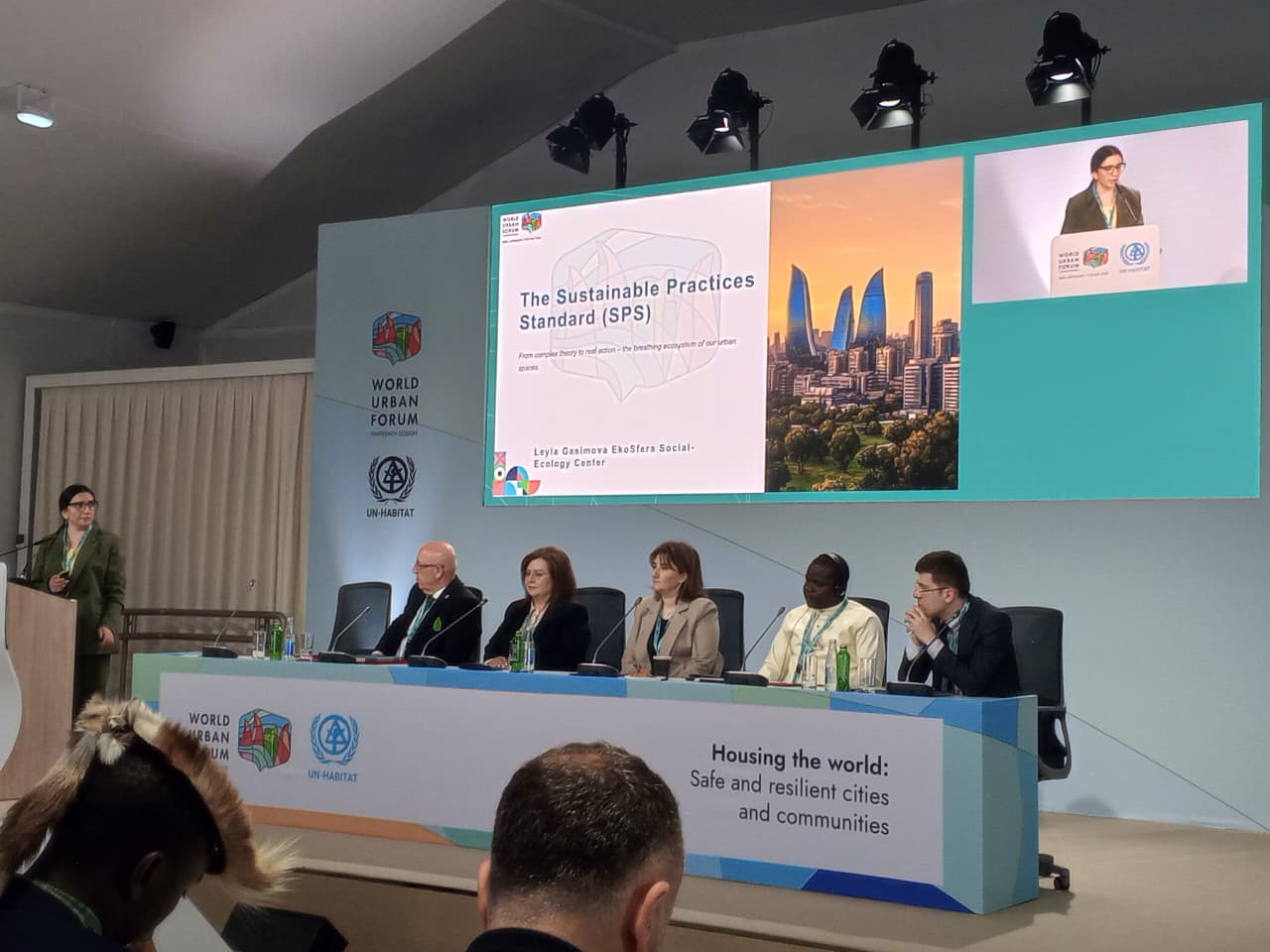
She made the remark during a panel discussion titled "Developing Azerbaijan’s First National Sustainability Standard: The Sustainable Practices Standard (SPS)" held within the framework of the 13th session of the World Urban Forum (WUF13) in Baku.
According to her, Azerbaijan is actively deploying targeted ecological guidelines and sustainable development metrics across diverse economic sectors, with international standards playing a critical structural role throughout this transition.
Hadjieva noted that international sustainability benchmarks help municipal and national planners construct transparent regulatory ecosystems, elevate corporate ecological responsibility, and reinforce cross-sector trust between state agencies, private business enterprises, and civil society.
The official emphasized that globally recognized certifications such as LEED, BREEAM, WELL, Green Key, Eco-Schools, and Blue Flag have become increasingly vital metrics worldwide, providing actionable, data-driven frameworks for environmental management and resilient urban growth.
According to the coordinator, the "EcoSphere" Center has actively participated in the institutional programs of the Foundation for Environmental Education (FEE) since 2018, systematically piloting international environmental and educational initiatives inside Azerbaijan.
She pointed out that the Green Key program actively drives the adoption of sustainable management workflows within the hospitality and tourism sectors, specifically targeting optimized energy and water-use efficiency while expanding environmental literacy among service staff and international guests.
Concurrently, the Eco-Schools framework focuses on the environmental education of children and young demographics, comprehensively covering critical core topics including climate change dynamics, biodiversity preservation, solid waste management, freshwater resource protection, and sustainable lifestyle practices.
"International standards serve as a vital common language linking different nations. They allow us to seamlessly collaborate, execute cross-border knowledge transfers, and collectively construct a far more resilient global future," Hadjieva underlined.
Concluding her address, she noted that Azerbaijan remains deeply committed to its participation in these international environmental initiatives, intending to aggressively scale its operations across ecological education networks, sustainable certifications, and public community engagement to meet long-term sustainability goals.
Today marks the fifth day of WUF13 in Baku.
The first day included a ministerial meeting dedicated to the New Urban Agenda, a ministerial roundtable, assemblies for women and civil society, business sessions, and discussions on urban prosperity. An official ceremony marking the raising of the UN and Azerbaijani flags also took place.
The second day stood out for the inaugural Leaders' Summit, featuring high-level discussions on the global housing crisis, urbanization policy, and urban resilience. Concurrently, the opening of the Mexico City pavilion took place, serving as a significant platform for expanding cooperation with the Latin American region and preparing for WUF14.
The third day of WUF13 featured a comprehensive program of events covering the global housing crisis, the formation of safe and inclusive cities, climate resilience, artificial intelligence and urban governance, green urbanization, social equity, and sustainable transport.
One of the highlights of the third day was the signing of a sister-city memorandum between the Azerbaijani city of Shusha and the Turkish city of Trabzon.
The fourth day of WUF13 featured a broad program of events dedicated to urbanization, climate change, inclusive urban development, housing policy, and sustainable governance.
One of the important events of the UN Special Program for the Economies of Central Asia (SPECA) Cities Forum, held on the fourth day, was the announcement of Almaty’s official accession to the “Declaration of Intent on the Establishment of the SPECA Smart Climate-Resilient Cities Forum.”
Also, for the first time in WUF history and at Azerbaijan’s initiative, the “WUF13 NGO Forum: Global Partnership and Decision-Making” was held.
WUF13, which has attracted more than 40,000 registered participants from 182 countries, will continue until May 22. Held under the theme “Housing the world: Safe and resilient cities and communities,” the forum brings together governments, international organizations, experts, and representatives of civil society to strengthen global cooperation in the field of sustainable urban development.



