


BAKU, Azerbaijan, May 21. Uzbekistan has emerged as one of the most actively represented nations at the 13th session of the World Urban Forum (WUF13) in Baku, with the republic's delegation participating extensively across technical sessions, international dialogues, and presentations dedicated to sustainable urban development and modern town planning, Trend reports.
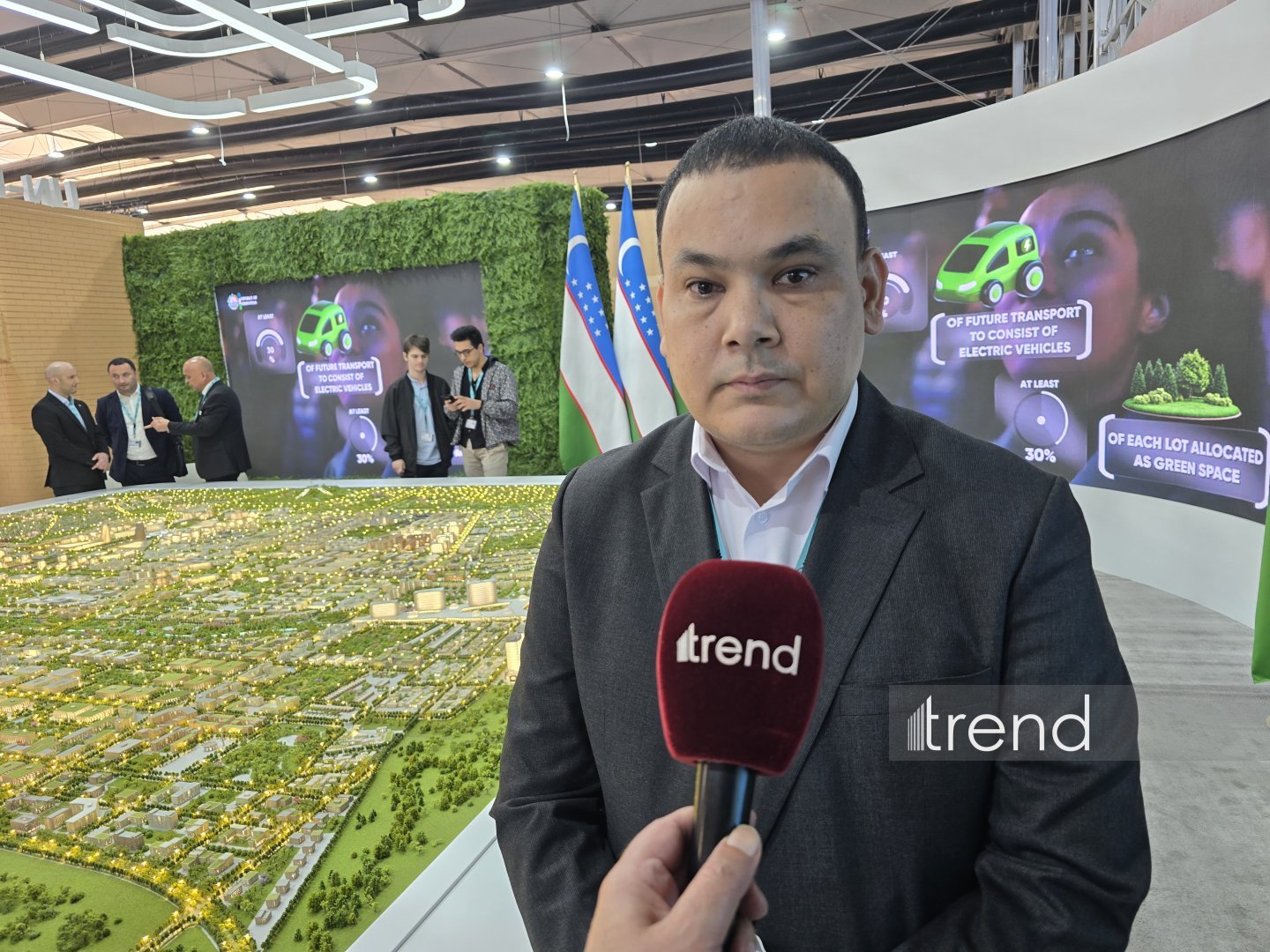
Aziz Erkaboyev, a representative of the National Committee for Sustainable Urban Development and the Housing Market of Uzbekistan, noted in an interview with Trend that participation in the global summit has proved highly productive for the Uzbek side.
According to him, the delegation from Uzbekistan comprised roughly 50 specialists, each deployed across various tracks of the forum, ranging from thematic panel discussions to presentation events and high-level expert meetings.
"We evaluate the forum as highly fruitful. Every member of our delegation carried out a specific function, engaging directly in dialogues, side events, and core sessions. While a portion of the delegation has completed its assignments and returned to Uzbekistan, other members continue their active participation in the forum's ongoing program," he pointed out.
Erkaboyev highly praised the organizational standards of WUF13 in Baku, describing the execution of the global event as conducted at the highest level.
The Uzbek representative directed specific attention toward the future trajectory of municipal development. He noted that the country is progressively shifting away from chaotic, spot-zoning construction practices, moving instead toward the comprehensive planning of its territories.
"Today, Uzbekistan no longer develops along the lines of fragmented, haphazard construction. We focus our efforts on the integrated development of territories, fully factoring in water security, master plans, utility infrastructure grids, and the synchronized construction of schools, kindergartens, and residential quarters," he explained.
One of the cornerstone initiatives showcased by the republic at the Baku forum was the architectural model for "New Tashkent," a massive urban development project expanding across approximately 2,000 hectares. According to Erkaboyev, a substantial portion of this territory has already undergone construction, with the blueprint incorporating dedicated business districts, stadiums, museums, universities, green parks, and modern residential sectors.
Outlining the primary municipal development priorities for the coming decade, the expert stressed that the success of structural urban reforms relies not merely on financial capital, but fundamentally on human capital.
"We require high-level specialists, visionary architects, and industry professionals. Most importantly, it demands a strong commitment from leadership to systematically advance this sector," the Uzbek official concluded.
WUF13 is taking place in Baku from May 17 through 22 as part of a collaboration between the United Nations Human Settlements Program (UN-Habitat) and the Azerbaijan government. WUF13 features 121 pavilions, including 41 national pavilions, with over 40,000 participants registered from 182 countries. The forum is dedicated to the theme “Housing the world: Safe and resilient cities and communities,” and addresses such important issues as the global housing crisis, sustainable urbanization, urban resilience, the impact of climate change on cities, and modern urban governance.



