


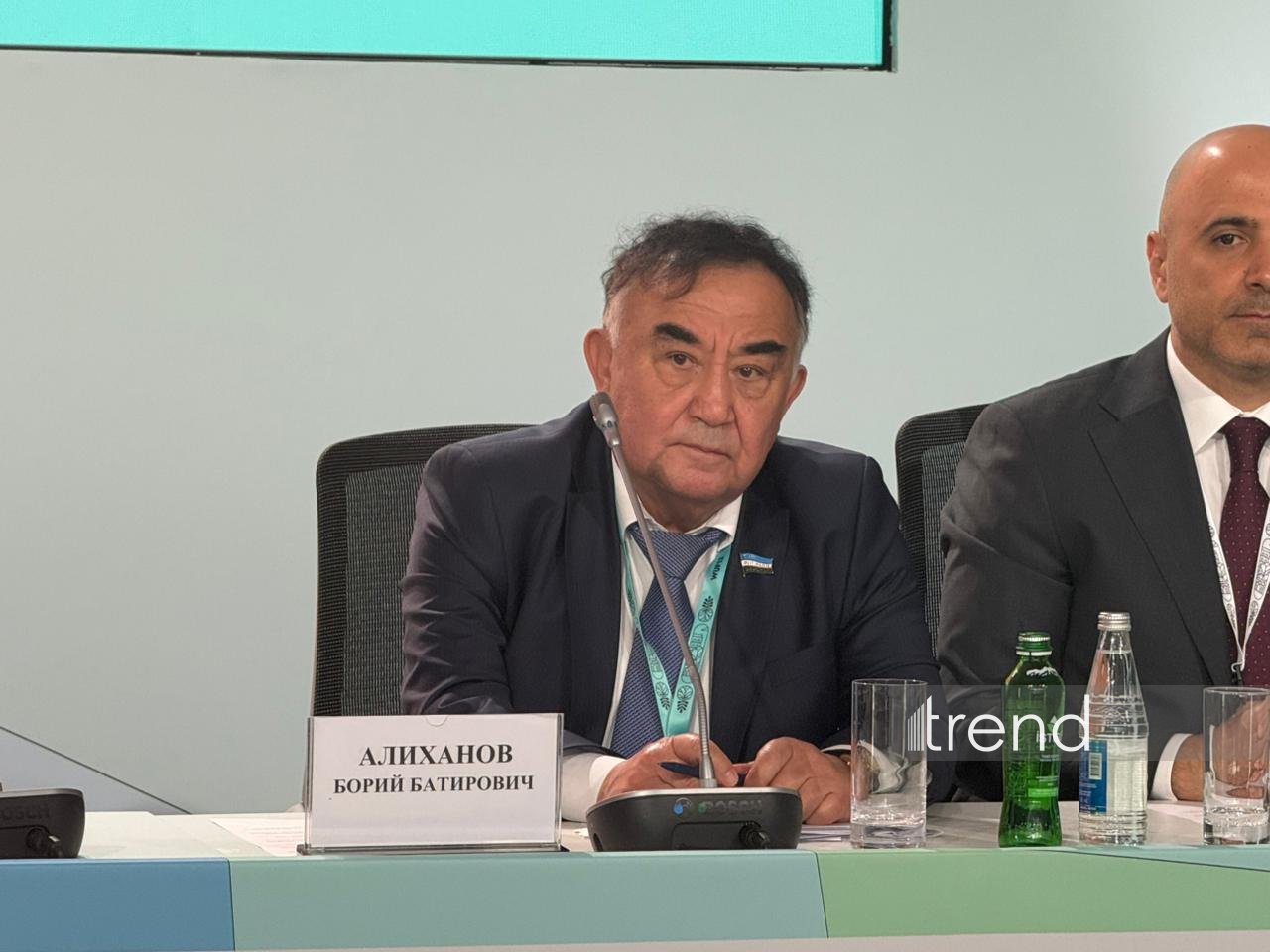

BAKU, Azerbaijan, May 20. To comprehensively address the challenges of protecting mountain ecosystems and effectively utilizing their natural potential, while taking into account the specific and unique characteristics of mountainous regions, it is proposed to develop a model for the sustainable development of mountain settlements based on the example of Central Asia and the Caucasus, a member of the Committee on Entrepreneurship, Competition, and Industry of the Legislative Chamber of the Oliy Majlis of Uzbekistan, Boriy Alikhanov, said, Trend reports.
He made the remark at the event “Sustainable development of mountain settlement,” held as part of WUF13.
''In recent decades, humanity’s demand for water, food, comfortable living conditions, and economic resources has been growing at an alarming rate. This is harming the Earth’s natural resources and leading to their depletion,'' he noted.
Alikhanov emphasized that the climate in Central Asia, including Uzbekistan, is becoming drier and hotter every year:
“The number of severe dust storms and blizzards is increasing. As a result of abnormal climate changes, vulnerable and fragile mountain ecosystems are under the greatest pressure. In the mountains and foothills, overgrazing leads to soil degradation and a reduction in forest cover, which creates a risk of more frequent landslides.
All these factors together lead to a decline in biodiversity and a weakening of the biomass of mountain ecosystems.”
He noted that the future of mountain settlements depends on two key factors:
“Climate change and human economic activity. In this regard, there is a need to prepare forecasts for the short- and medium-term use of mountain natural resources, taking into account the impact of climate on the environment.”
The committee member added that in some countries, the specific characteristics of mountain settlements are only partially taken into account in national socioeconomic and legal documents:
“On the one hand, this creates problems in implementing these documents at the regional level; on the other hand, it means that programs designed primarily for lowland areas do not yield the desired results in mountainous regions.
Today, the fourth day of the WUF13 conference is taking place in Baku.
The first day included a ministerial meeting dedicated to the New Urban Agenda, a ministerial roundtable, assemblies for women and civil society, business sessions, and discussions on urban prosperity. An official ceremony marking the raising of the UN and Azerbaijani flags also took place.
The second day stood out for the inaugural Leaders' Summit, featuring high-level discussions on the global housing crisis, urbanization policy, and urban resilience. Concurrently, the opening of the Mexico City pavilion took place, serving as a significant platform for expanding cooperation with the Latin American region and preparing for WUF14.
The third day of WUF13 featured a comprehensive program of events covering the global housing crisis, the formation of safe and inclusive cities, climate resilience, artificial intelligence and urban governance, green urbanization, social equity, and sustainable transport.
WUF13, which has attracted more than 40,000 registered participants from 182 countries, will continue until May 22. Held under the theme “Housing the world: Safe and resilient cities and communities,” the forum brings together governments, international organizations, experts, and representatives of civil society to strengthen global cooperation in the field of sustainable urban development.



