


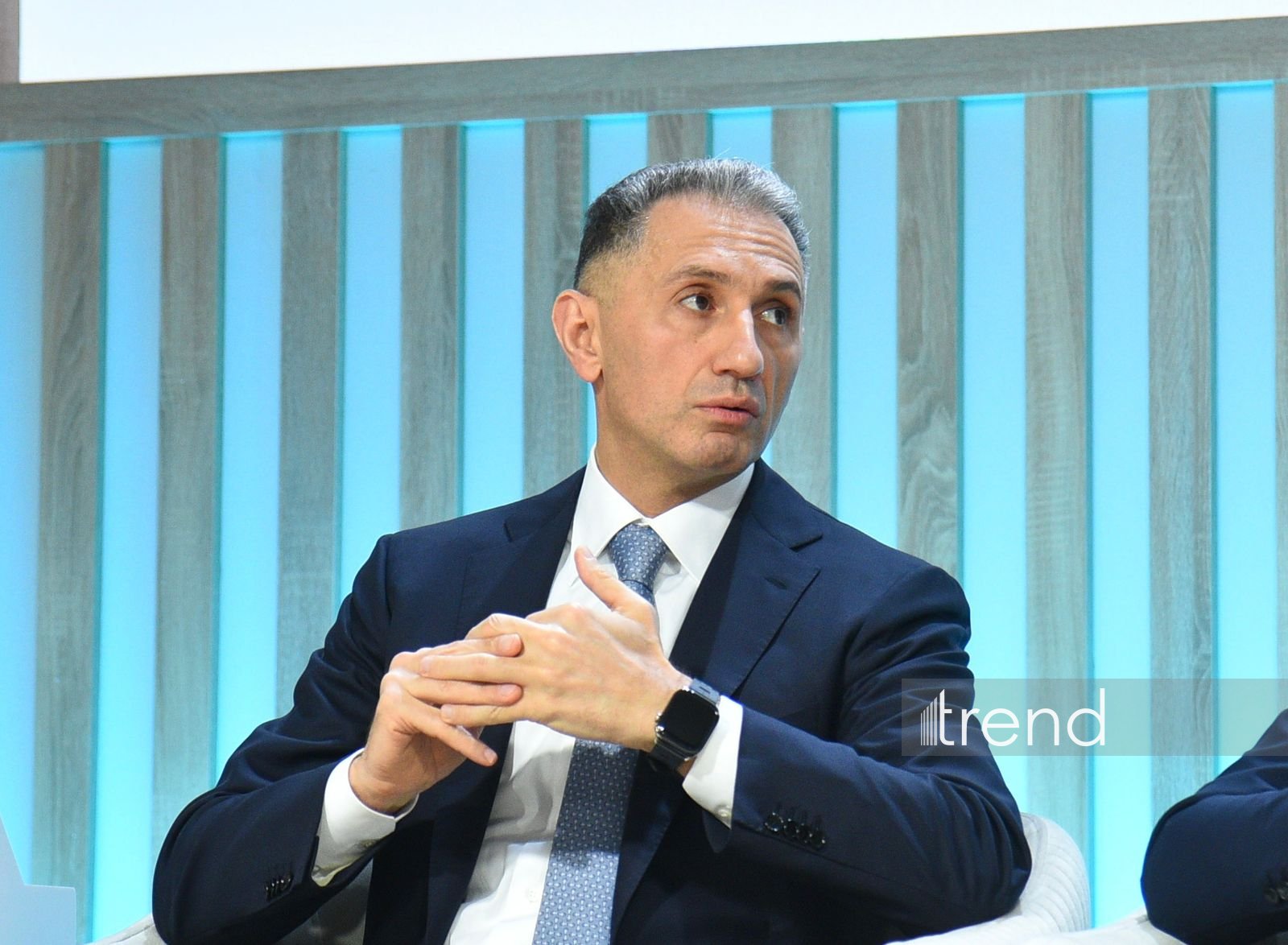
BAKU, Azerbaijan, May 19. In the decision-making process, the primary unit of measurement is not finance, but time, meaning the "return on one manat" is measured by the minutes saved or lost by city residents, with reaching work, school, and a hospital in less time serving as the main indicator, Azerbaijan's Minister of Digital Development and Transport Rashad Nabiyev said, Trend reports.
The minister made the remarks during an event titled "Cities at the Center of Connectivity: Urban Reconstruction and Regional Cooperation" held within the framework of the 13th session of the World Urban Forum (WUF13) in Baku.
The minister particularly emphasized that a "digital twin" of Baku has been created to support this approach.
"The city has been modeled based on approximately 10 billion data points collected from mobile operators, utilities, traffic flows, and surveys. This system allows for more accurate planning of where to establish new bus lanes, traffic lights, and bicycle tracks," Nabiyev said.
He added that the results have already begun to manifest.
"The share of trips made by private cars and taxis within the city dropped from 50% to 40%, and the goal remains to reduce this figure to 30% by 2030. At the same time, traffic fatalities decreased from 9 to 7 per 100,000 people, with plans to reduce this to 4 by 2030," Nabiyev noted.
The minister added that the "20-minute city" concept—a city model where citizens reach core services within 20 minutes—lies at the center of this entire strategy.
The third day of the 13th session of the World Urban Forum (WUF13) is underway in Baku.
On the first day, a ministerial meeting dedicated to the New Urban Agenda, a roundtable of ministers, assemblies of women and civil society, business sessions, and discussions on urban well-being were held. A ceremony for raising the flags of the United Nations and Azerbaijan also took place within the framework of the forum.
The second day of the forum drew attention with the first-ever Leaders Summit. High-level discussions on the global housing crisis, urbanization policy, and urban resilience were held that day. At the same time, the Mexico City pavilion was inaugurated within the framework of WUF13. The pavilion was presented as an important platform for expanding cooperation with the Latin American region and preparing for WUF14.
WUF13, which has attracted more than 40,000 registered participants from 182 countries, will continue until May 22. Held under the theme “Housing the world: Safe and resilient cities and communities,” the forum brings together governments, international organizations, experts, and representatives of civil society to strengthen global cooperation in the field of sustainable urban development.



