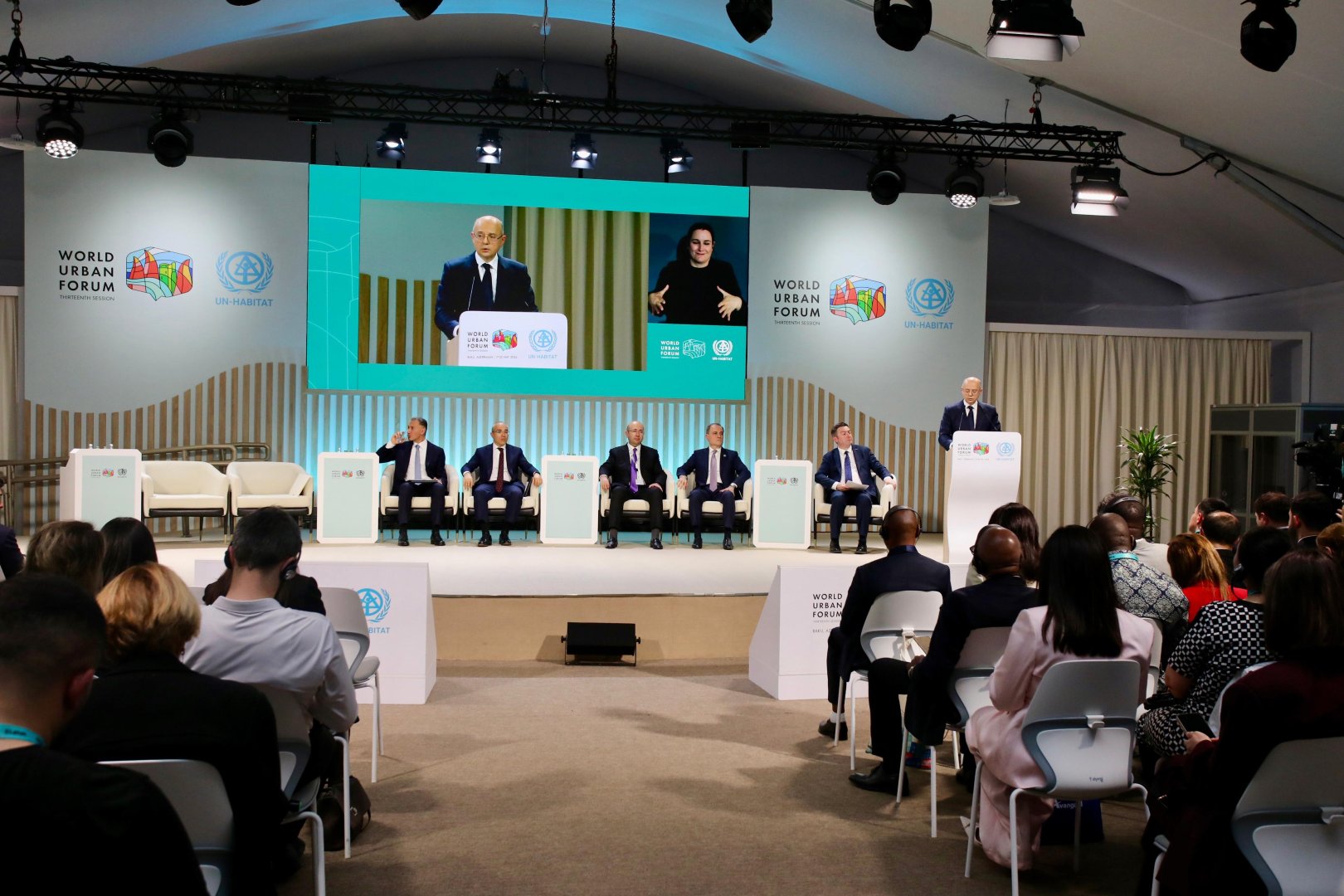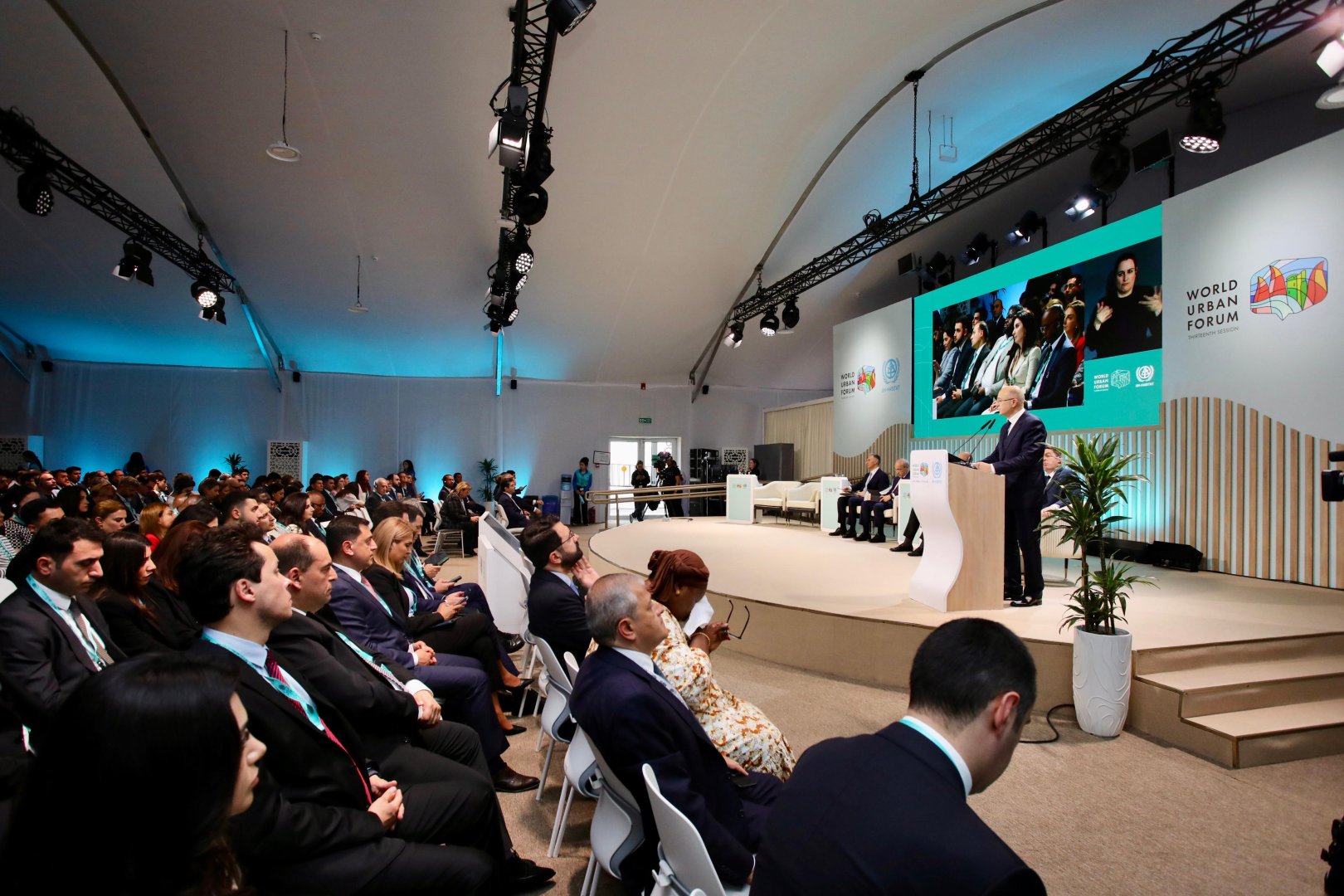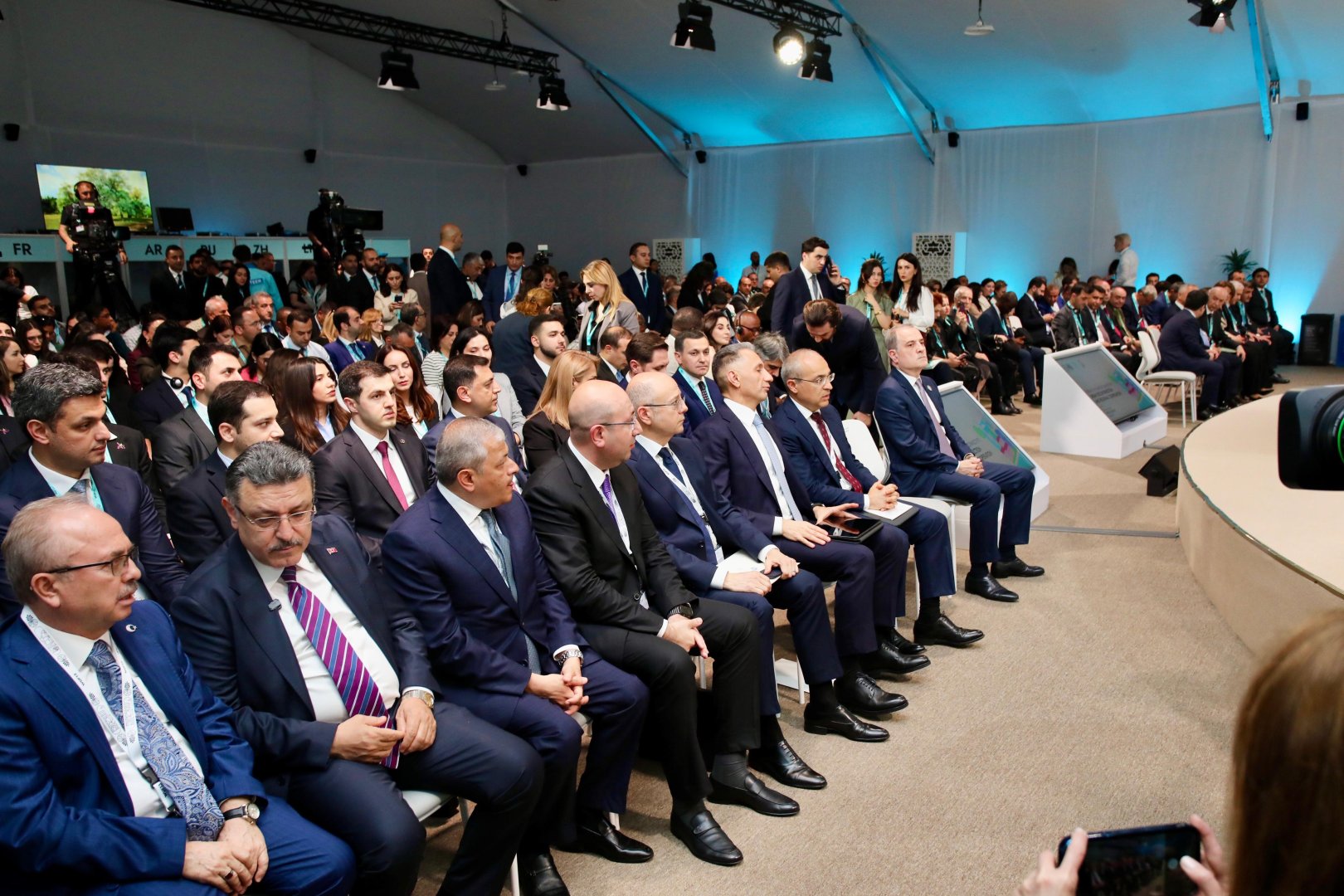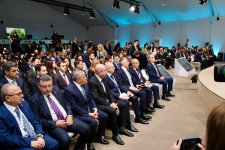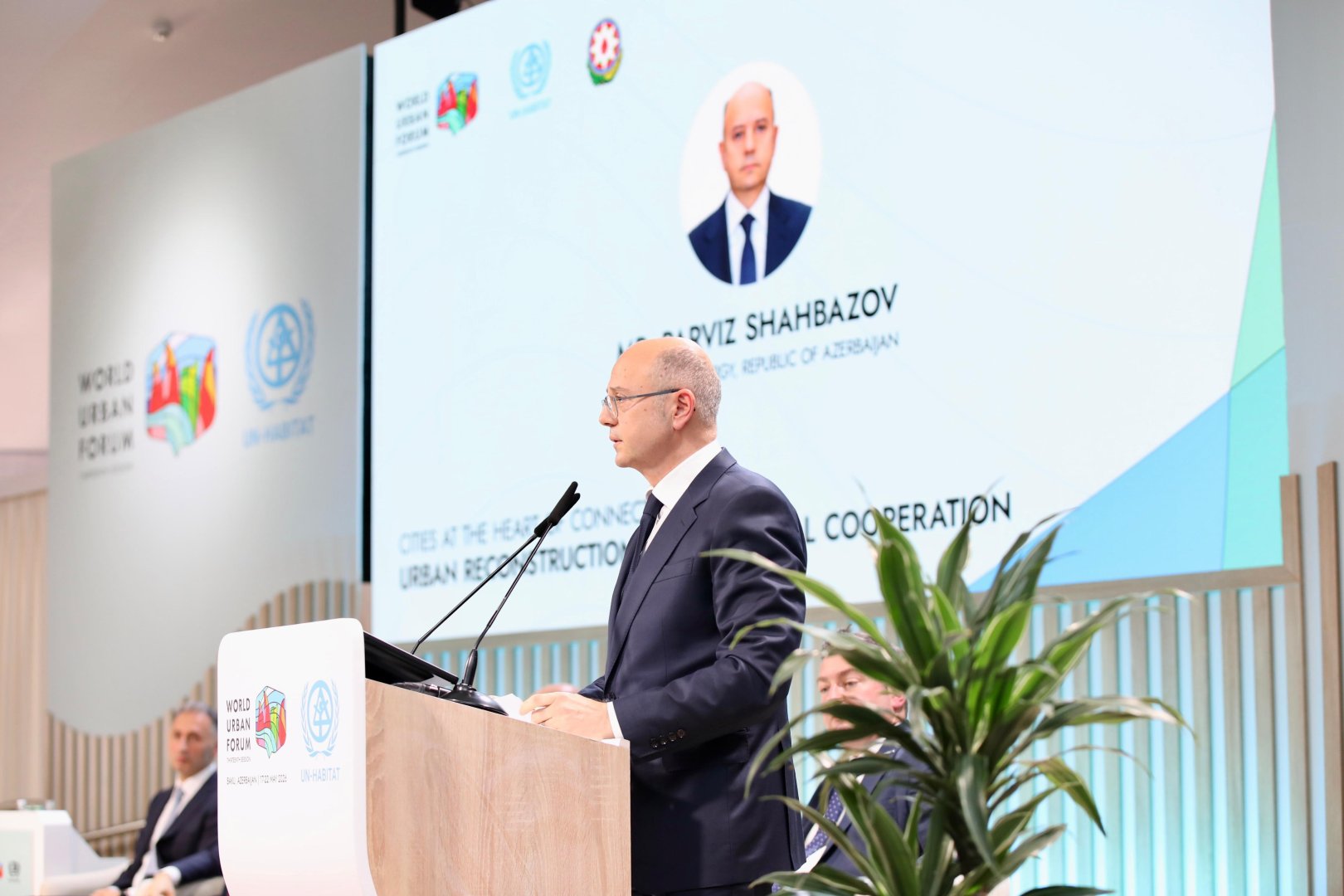

BAKU, Azerbaijan, May 19. Future cities will be defined not by their size but by energy efficiency, technological advancement and regional connectivity, Parviz Shahbazov said during a special session of the 13th World Urban Forum (WUF13) in Baku, Trend reports.
Shahbazov spoke at a session titled “Cities at the Center of Connectivity: Urban Reconstruction and Regional Cooperation,” saying Azerbaijan’s hosting of major global platforms after COP29 demonstrates the country’s active role not only in energy security but also in sustainable urbanization, green transition and regional connectivity.
He said modern geopolitical and geo-economic realities have made connectivity a strategic priority, noting that energy lines, transport corridors, fiber-optic cables and electricity interconnectors are becoming the “new arteries” of the global system.
In this context, Shahbazov said Azerbaijan is playing a strategic role in shaping regional green energy and electricity interconnection networks.
He linked this development to President Ilham Aliyev’s vision of integrating energy security, green development and peacebuilding through regional connectivity, saying Azerbaijan is becoming one of Eurasia’s key connectivity and cooperation hubs.
According to the minister, green energy corridors developing in parallel with the Middle Corridor are forming a new energy architecture connecting the Caspian region with Europe and Asia.
Shahbazov said that in the near future, these integrated energy and connectivity networks will further strengthen links between cities, industries and economies.
He noted that Azerbaijan plans to develop 8 GW of green energy capacity, with 2 GW of new installed capacity expected to be integrated into the energy system next year. He said this will contribute not only to increased energy production but also to industrial transformation, annual emission reductions of about 2.4 million tons, and improved energy balance diversification.
The minister also highlighted progress in the Karabakh and East Zangezur regions under the “green energy zone” concept, including the development of smart city and smart village models, energy-efficient infrastructure and digital management systems.
He said 38 small hydropower plants with a combined capacity of 307 MW are currently operating in the area, while 340 MW of solar power plants are under construction, rooftop solar installations totaling 7 MW have been completed, and a 240 MW wind power project is in preparation.
Shahbazov added that institutional mechanisms for energy efficiency have been established nationwide, including the creation of an Energy Efficiency Fund, aimed at reducing consumption and losses while improving resource management and smart infrastructure development.
“Azerbaijan aims to expand investments in this field and achieve more effective results,” he said. “Because future cities will be those that create more value with less energy.”
The third day of the 13th session of the World Urban Forum (WUF13) is underway in Baku.
On the first day, a ministerial meeting dedicated to the New Urban Agenda, a roundtable of ministers, assemblies of women and civil society, business sessions, and discussions on urban well-being were held. A ceremony for raising the flags of the United Nations and Azerbaijan also took place within the framework of the forum.
The second day of the forum drew attention with the first-ever Leaders Summit. High-level discussions on the global housing crisis, urbanization policy, and urban resilience were held that day. At the same time, the Mexico City pavilion was inaugurated within the framework of WUF13. The pavilion was presented as an important platform for expanding cooperation with the Latin American region and preparing for WUF14.
WUF13, which has attracted more than 40,000 registered participants from 182 countries, will continue until May 22. Held under the theme “Housing the world: Safe and resilient cities and communities,” the forum brings together governments, international organizations, experts, and representatives of civil society to strengthen global cooperation in the field of sustainable urban development.