


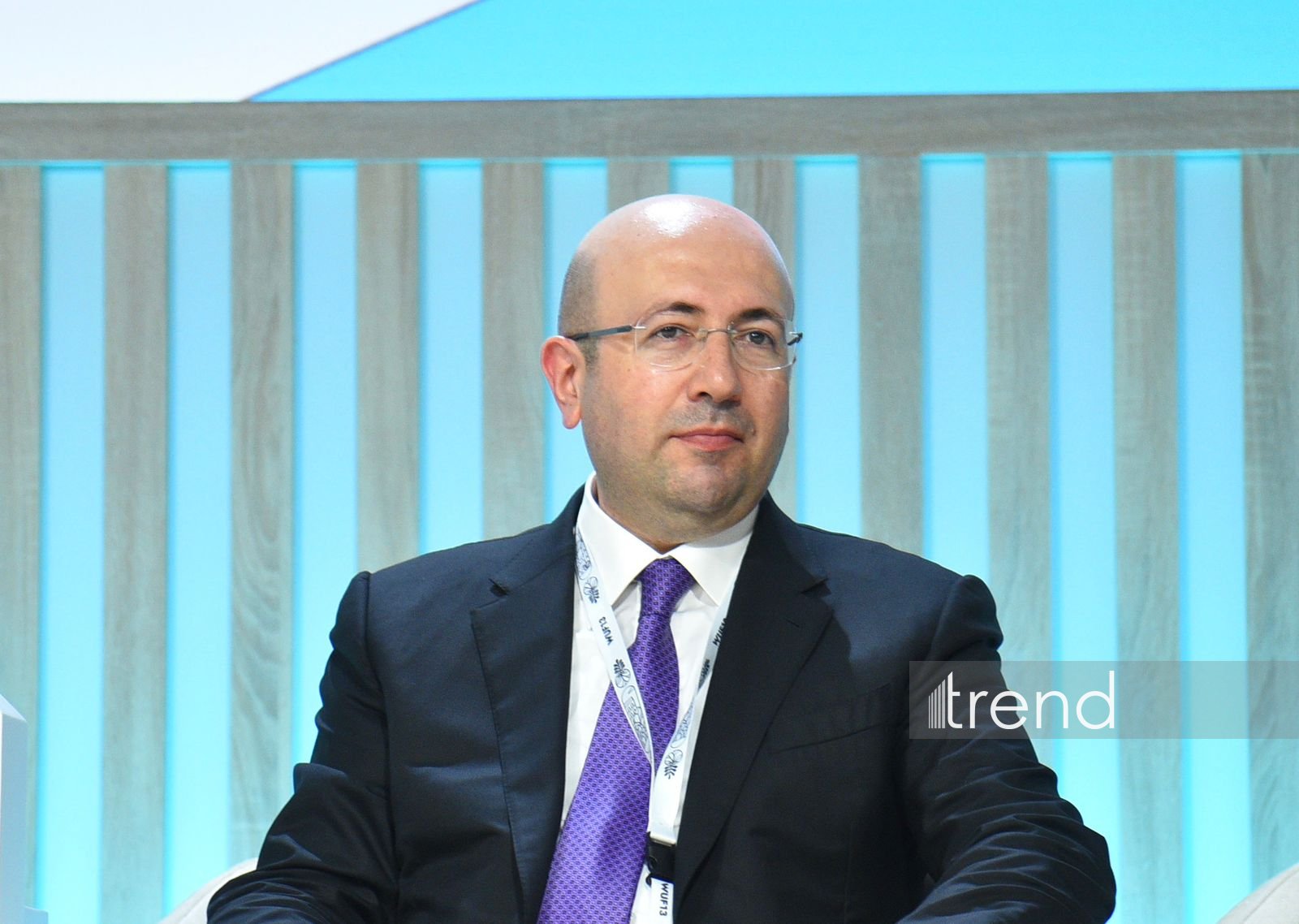
BAKU, Azerbaijan, May 19. The economic revival of Azerbaijan's Karabakh and East Zangezur and the gradual return of the population are currently among the priorities, WUF13 National Coordinator, Chairman of the State Committee for Urban Planning and Architecture Anar Guliyev said at an event on peaceful climate action within the framework of WUF13, Trend reports.
He noted that the work done in the post-conflict period has been discussed many times, and the example of Azerbaijan has been specifically mentioned in this context.
According to him, for the past five years, Azerbaijan has been carrying out reconstruction and restoration work.
"A vast territory is being transformed. For almost 30 years, about 20% of Azerbaijan's territory had been occupied. Urban and rural infrastructure had been destroyed, natural resources have been depleted, and more than a million of our citizens had been internally displaced.
Currently, the economic revival of Karabakh and East Zangezur, the gradual return of the population, and especially the development of the city of Agdam are among the priority directions. Azerbaijan is implementing these processes in a pre-coordinated manner. A special coordination mechanism has been created for this. This mechanism brings together all government agencies, ensures the holding of high-level meetings, and conducts continuous reporting and monitoring.
Demining of territories has been one of the main priorities for settlement. Hundreds of thousands of hectares of land in the liberated territories have been cleared of mines, and a large number of mines have been neutralized.
Azerbaijan has formed a new management model in this area. The institution of a special representative of the President has been established and a new management mechanism has been introduced in the implementation process. These representatives are responsible for coordinating and supervising the restoration and reconstruction work.
The third day of the 13th session of the World Urban Forum (WUF13) is underway in Baku.
On the first day, a ministerial meeting dedicated to the New Urban Agenda, a roundtable of ministers, assemblies of women and civil society, business sessions, and discussions on urban well-being were held. A ceremony for raising the flags of the United Nations and Azerbaijan also took place within the framework of the forum.
The second day of the forum drew attention with the first-ever Leaders Summit. High-level discussions on the global housing crisis, urbanization policy, and urban resilience were held that day. At the same time, the Mexico City pavilion was inaugurated within the framework of WUF13. The pavilion was presented as an important platform for expanding cooperation with the Latin American region and preparing for WUF14.
WUF13, which has attracted more than 40,000 registered participants from 182 countries, will continue until May 22. Held under the theme “Housing the world: Safe and resilient cities and communities,” the forum brings together governments, international organizations, experts, and representatives of civil society to strengthen global cooperation in the field of sustainable urban development.



