


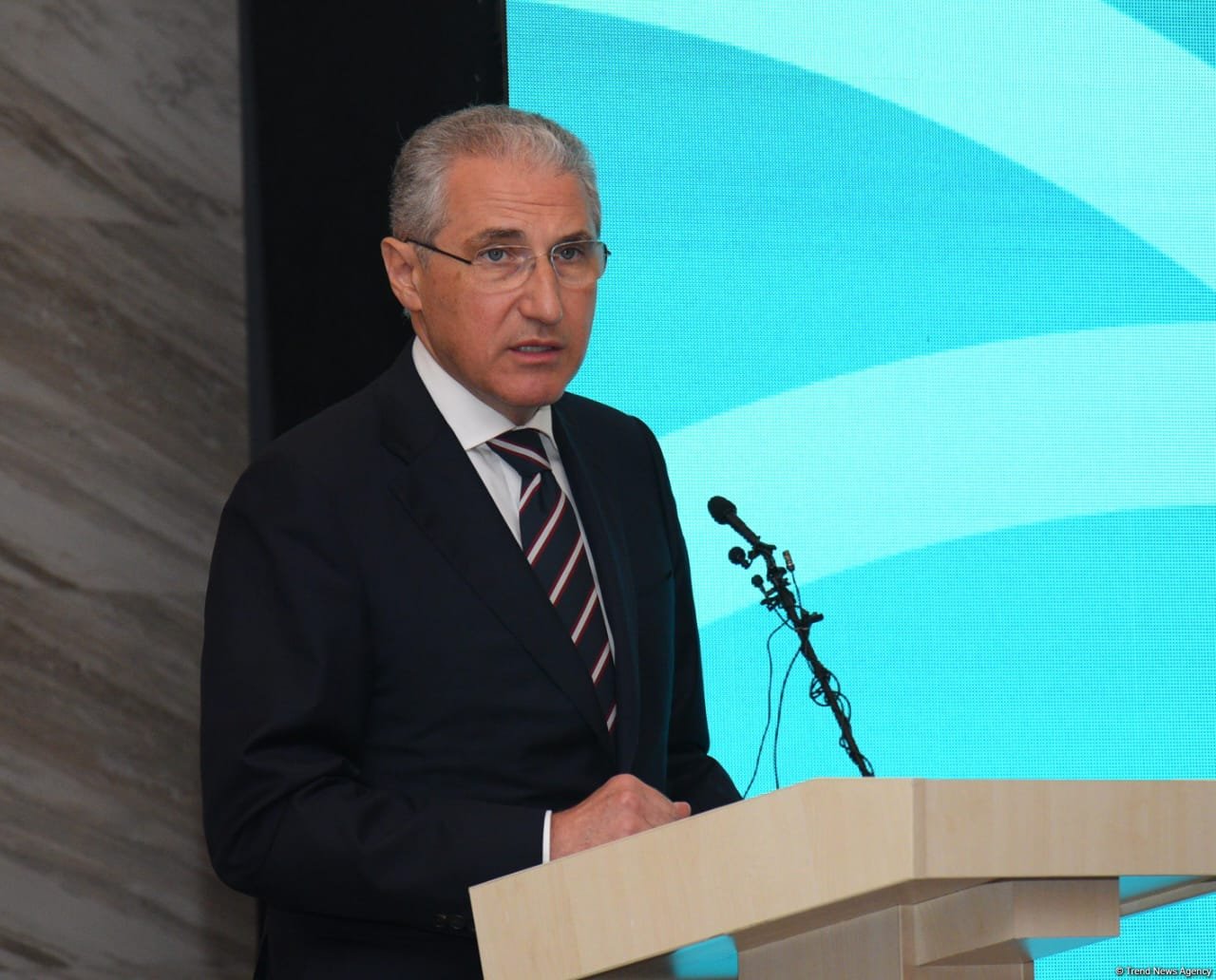

BAKU, Azerbaijan, May 19. According to the World Meteorological Organization, the world is experiencing its hottest days in recent history, Mukhtar Babayev, Representative of the President of the Republic of Azerbaijan on Climate Issues, said in a video address at an event titled "Early Warning and Climate-Resilient Cities" held within the framework of WUF13, Trend reports.
According to him, critical issues such as climate finance and adaptation were discussed at COP29.
"WUF13 is an essential platform for the sustainable development of cities. Climate change severely impacts cities worldwide and, in many cases, makes forecasting events difficult. Natural disasters affect infrastructure and the lives of millions of people. Early warning systems play a crucial role in preventing damage to critical infrastructure, and these systems can help reduce losses by up to approximately 30%. At the same time, they hold special importance in mitigating impacts on vulnerable groups," Babayev said.
However, communication barriers and financial constraints remain among the primary challenges, he noted, adding that partnerships between the private and public sectors are particularly vital for this reason.
"Over the past 25 years, a warming trend in average temperatures has been observed in Azerbaijan, while the number of extreme hot days and drought events has significantly increased. Climate-resilient cities must be a core element of urban planning. This process requires a unified and coordinated approach. No country can tackle these challenges alone, and Azerbaijan actively contributes to dialogue and international cooperation in this direction," Babayev concluded.
The third day of the 13th session of the World Urban Forum (WUF13) is underway in Baku.
On the first day, a ministerial meeting dedicated to the New Urban Agenda, a roundtable of ministers, assemblies of women and civil society, business sessions, and discussions on urban well-being were held. A ceremony for raising the flags of the United Nations and Azerbaijan also took place within the framework of the forum.
The second day of the forum drew attention with the first-ever Leaders Summit. High-level discussions on the global housing crisis, urbanization policy, and urban resilience were held that day. At the same time, the Mexico City pavilion was inaugurated within the framework of WUF13. The pavilion was presented as an important platform for expanding cooperation with the Latin American region and preparing for WUF14.
WUF13, which has attracted more than 40,000 registered participants from 182 countries, will continue until May 22. Held under the theme “Housing the world: Safe and resilient cities and communities,” the forum brings together governments, international organizations, experts, and representatives of civil society to strengthen global cooperation in the field of sustainable urban development.



