


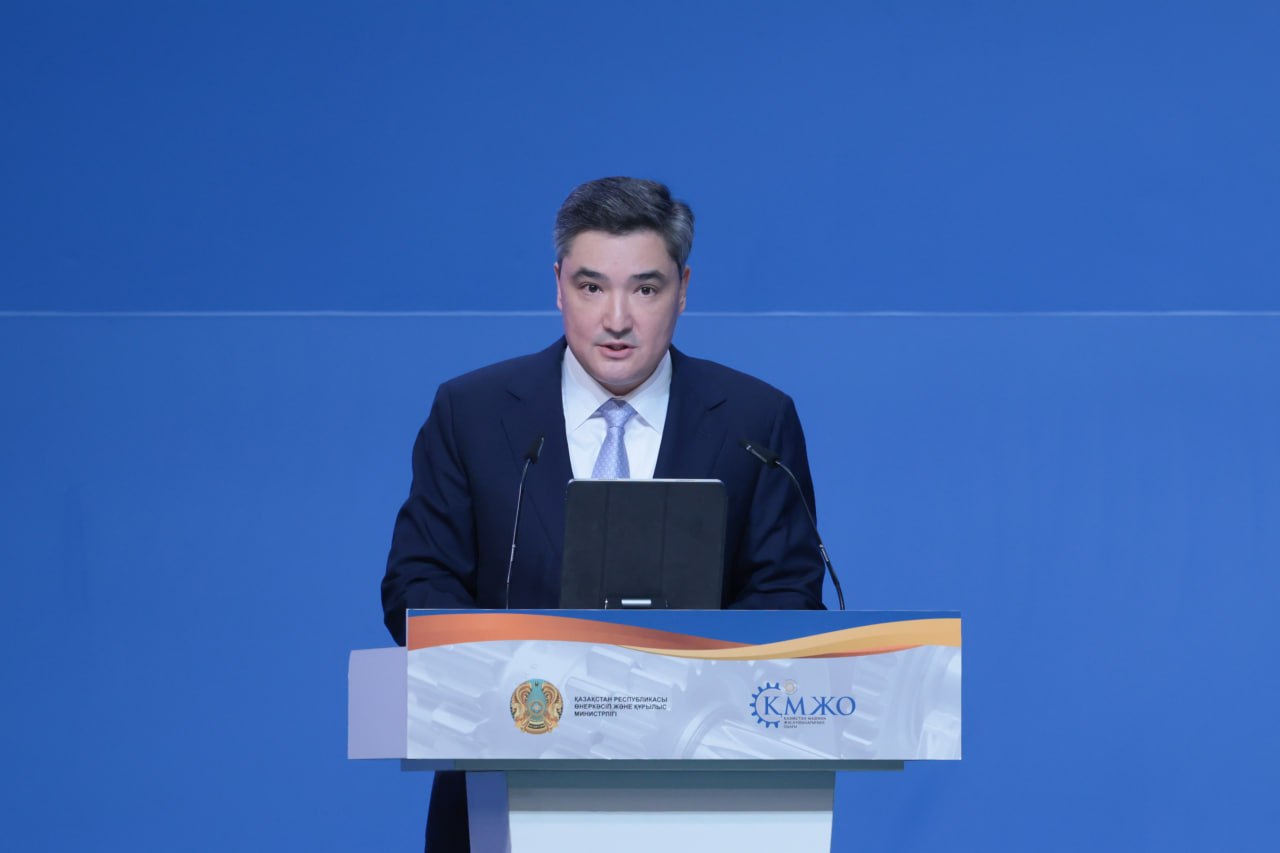

BAKU, Azerbaijan, May 18. Kazakhstan is ready to share its experience in the field of AI and digitalization through international cooperation platforms, Prime Minister of Kazakhstan Olzhas Bektenov said during a leaders' summit at the 13th session of the World Urban Forum (WUF13) in Baku, Trend reports.
Full speech of Prime Minister Olzhas Bektenov:
Today, more than 63 percent of Kazakhstan’s population lives in cities, which are becoming engines of economic growth and centers for attracting human capital. In line with the strategic course of President Kassym-Jomart Tokayev, one of the priorities of state policy is to ensure comfortable living conditions and opportunities for decent employment. The government is implementing a people-centered approach, where the foundation of ‘cities for citizens’ is based on safety, accessibility, and environmental sustainability.
In January 2026, Kazakhstan adopted a new Construction Code that established unified standards for architectural design and integrated urban planning. In addition, urban development centers have been created in all regions of the country.
Sustainable urban development requires a comprehensive response to modern challenges, including technological development and artificial intelligence, water security, climate change, and increasing the resilience of urban infrastructure. Consistent work is being carried out in all these areas.
One example of a new approach to urban development is the Alatau City project, which is being shaped as a center of advanced urban growth. The urban cluster is focused on attracting international investment, introducing modern management technologies, and implementing innovative solutions to create a comfortable, sustainable, and technologically advanced urban environment.
President Kassym-Jomart Tokayev’s declaration of 2026 as the Year of Digitalization and Artificial Intelligence reflects the country’s strategic focus on technological transformation, as well as the development and management of modern cities. Today, Kazakhstan has established a legal framework for the safe, transparent, and people-centered application of artificial intelligence. A corresponding law was adopted last year.
Currently, more than 1,200 public services are available through the digital ecosystem of e-government. Kazakhstan is ready to share its experience in the field of artificial intelligence within the framework of international cooperation, including on the platform of the Asia-Pacific Digital Solutions Center for Sustainable Development of ESCAP, established in Almaty.
In the context of rapid urban development, issues of climate resilience and water security are of particular importance.
Kazakhstan’s new Constitution, adopted through a nationwide referendum, enshrines environmental protection as one of the country’s fundamental state values. Today, against the backdrop of climate change and growing water shortages, water resource management is becoming an integral part of sustainable urban development.
In this regard, I would like to emphasize the importance of President Kassym-Jomart Tokayev’s initiative to establish an International Water Organization under the auspices of the United Nations.
Particular significance was also attached to the Regional Environmental Summit held in Kazakhstan, which gave strong momentum to practical cooperation among Central Asian countries on climate and environmental sustainability, as well as water security.
Kazakhstan is actively cooperating with UN-Habitat and participating in national and international initiatives aimed at promoting sustainable and resilient urban development. Last year, Kazakhstan hosted its first National Urban Forum in Kyzylorda, bringing together government agencies, international organizations, experts, and business representatives.
Within the framework of the global initiative Making Cities Resilient 2030, Astana received the status of a Resilience Hub — the first such platform in Central Asia. At the same time, a UN Regional Center for the SDGs for Central Asia and Afghanistan is planned to be launched in Almaty, serving as a platform for regional coordination and joint efforts to advance shared priorities.
Kazakhstan remains committed to open dialogue and practical partnership in addressing global urban challenges.



