


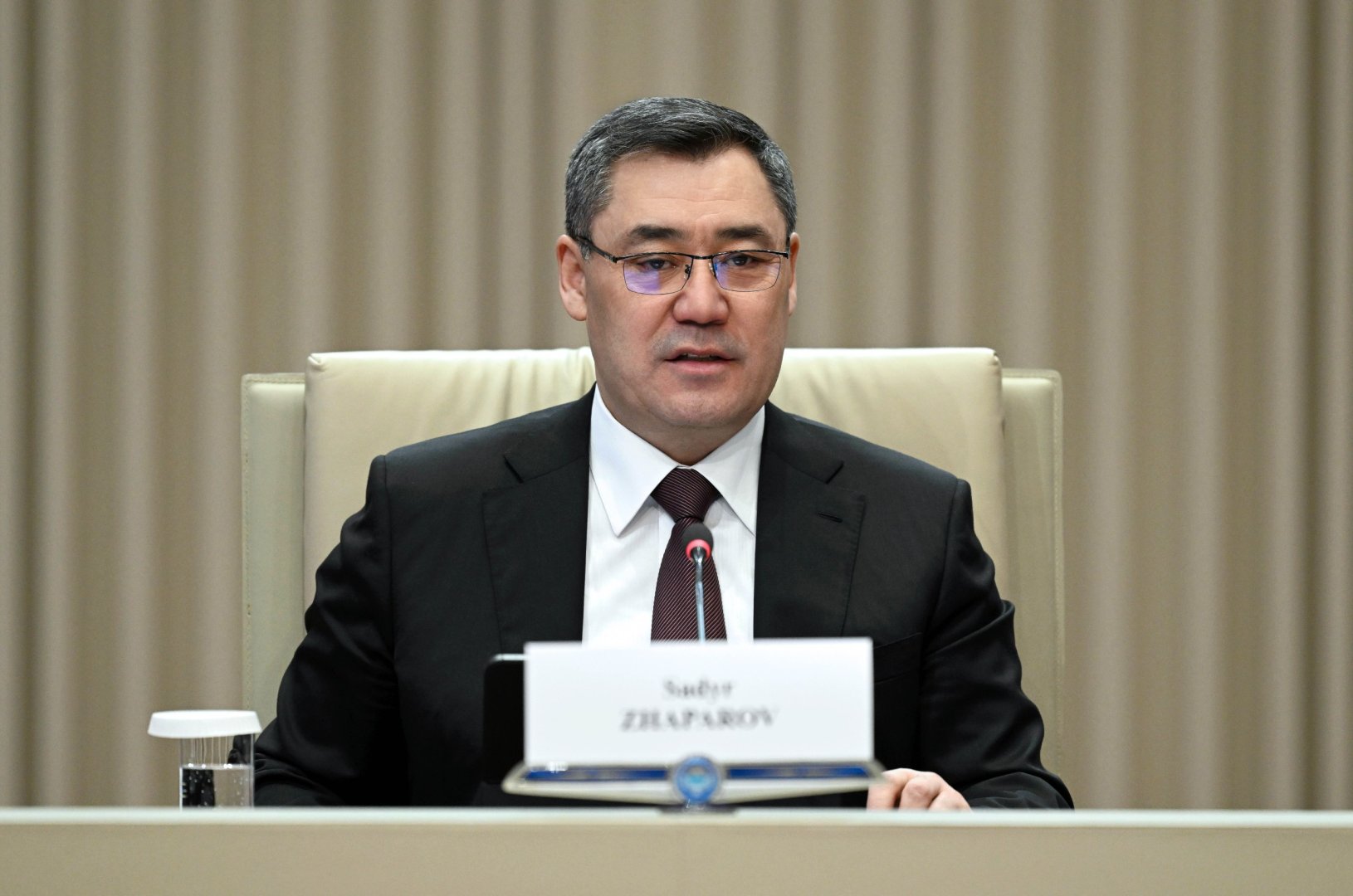
BAKU, Azerbaijan, May 18. Kyrgyzstan makes a particular focus on sustainable development of mountainous regions, President of Kyrgyzstan Sadyr Zhaparov said during a leaders' summit at the 13th session of the World Urban Forum (WUF13) in Baku, Trend reports.
Full speech of President Sadyr Zhaparov:
The forum, dedicated to the theme ‘Housing for All: Safe and Resilient Cities and Communities,’ provides a unique platform for discussing urbanization, sustainable development, climate change, and housing affordability.
In the context of these global challenges, Kyrgyzstan, as a mountainous country, places particular importance on the sustainable development of mountain regions.
Unfortunately, glacier melting, climate change, population migration, and growing pressure on ecosystems are currently having a negative impact on cities located in highland and foothill areas. These small yet historically rich cities with unique cultural characteristics are facing a number of serious challenges.
Speaking about the sustainable development of mountain regions, I would like to outline three strategic priorities: ensuring ecosystem resilience, developing innovations for mountain urban planning, and creating comfortable living and working conditions for citizens and visitors alike.
Today, the development of cities located high above sea level is becoming especially relevant. Taking into account Kyrgyzstan’s experience and accumulated expertise in this field, we propose considering the establishment of an International Association of Mountain Cities. Kyrgyzstan is ready to host the headquarters of this association in Bishkek.
Today, cities are becoming centers of economic development, innovation, and human capital. At the same time, cities are the first to face the consequences of climate change, increasing pressure on infrastructure, housing problems, and security issues. Therefore, housing development remains one of the priority areas of state policy.
In 2025 alone, more than 1.8 million square meters of housing were commissioned in Kyrgyzstan. Through mortgage mechanisms, over 4,600 families received keys to new apartments. Currently, more than 70,000 apartments are under construction across the country, creating a strong foundation for further expanding housing accessibility.
Bishkek has also gained significant experience in implementing reforms in urban governance. At the end of last year, the first eco-technological solid waste recycling plant in Central Asia was inaugurated in Bishkek. The facility is designed to process up to 365,000 tons of waste annually while generating up to 30 megawatts of electricity.
For comparison, I would note that previously around 80,000 tons of coal had to be burned annually to produce the same volume of electricity, resulting in emissions of approximately 100,000 tons of carbon dioxide. The construction of similar facilities is also planned in the cities of Karakol and Osh.
I invite forum participants to learn more about this project at Kyrgyzstan’s exhibition pavilion at Urban Expo, which is being held on the sidelines of WUF13.
Kyrgyzstan is ready to share its experience and adopt the best practices of other countries. I am confident that through joint efforts we will build sustainable, inclusive, and comfortable cities for future generations, where people, nature, and progress exist in harmony.



