


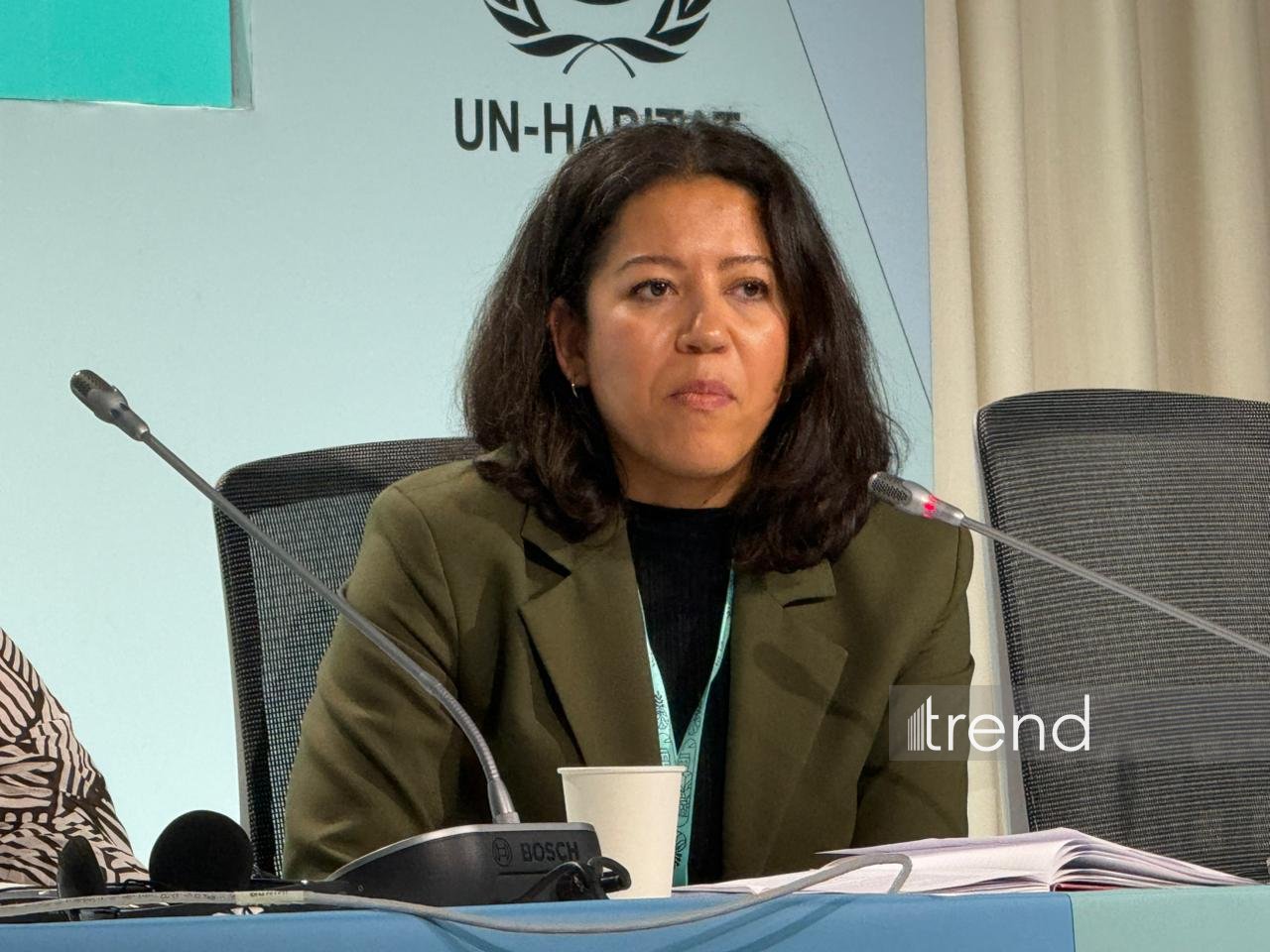

BAKU, Azerbaijan, May 17. The "pay-as-you-go" model transforms energy supply from an infrastructure challenge into a service delivery model, reducing dependence on the centralized power grid, Leila Guici, General Manager for Digital Utilities at ClimateTech and Digital Utilities, said during the Business Assembly session titled "Private Sector Leadership Across the Housing Value Chain: Delivering Results Against the Odds," held within the framework of WUF13 in Baku, Trend reports.
She stated that these technical systems provide energy for lighting, phone charging, and running small household appliances via solar home kits.
"These systems utilize digital payment mechanisms, such as mobile money, allowing people to make small, incremental payments. This makes the service much more affordable. As long as payments are made, the user has access to electricity, and the system can be remotely activated or deactivated," Guici explained. "We have financed a number of pay-as-you-go models and have subsequently seen this sector grow to its current scale. This model serves as an excellent alternative, but several critical conditions must be met for its large-scale implementation. One of them is recognition at the state policy level."
She added that governments should accept off-grid energy solutions not as a temporary fix, but as an integral part of national electrification strategies.
"For instance, the government in Togo subsidizes pay-as-you-go solar home systems. This approach makes energy more affordable and helps expand its usage, enabling the system to be deployed on a larger scale," the general manager noted.
"Another vital factor is digital infrastructure. This model can only operate widely if a reliable mobile communication network and mobile payment ecosystem are in place. For example, one of the main reasons this system succeeded in East Africa is the widespread adoption of mobile money services. That is precisely why this model works effectively in that region," Guici concluded.



